
TTRPG Modules & Worlds
- Genre: TTRPG (D&D, mostly)
- Type: Adventure Modules
- Engine: Roll20, Docs
- Tools: Roll20
- Titles Shown
- Embers of Wrath Campaign
- Shattered Lands of Eir (Module & Setting)
- The World of Iun
- The Soul of Chaos
Role: Designer, Writer, Game Master
Quest Design
Embers of Wrath Goals
Embers of Wrath is a mid-level D&D Campaign, taking players from levels 5 to 10 split across adventurers with a possible “secret ending” that act may act as a 5th and final module. This campaign was written exclusively for Camp Dragon, an online play service.
- Middle Eastern Theme. The Embers campaign is set in a region reminiscent of Islamic Golden Age, circa the 13th Century C.E., drawing on imagery associated with the Abbasid Caliphate.
- Branching Narrative. Players unlock one of two unique paths during play which lead to 5 potential end states.
- Morally Ambiguous Factions. Embers contains 4 major factions, and several minor entities that value goals over alignment.
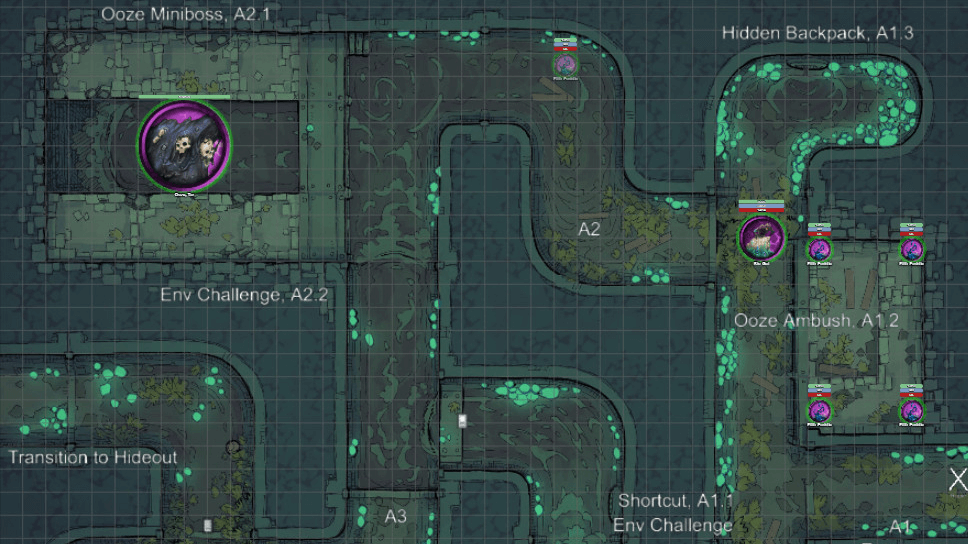
- Exploration and Secrets. Exploration inside locations and on a larger region map is rewarded with content and potential hidden quest and plot elements, teaching players to interact with their environment instead of pass through linearly.
Embers - Overview
Campaign Premise: Embers takes place in the setting of “Iun”, where players spend their early levels forming a guild of adventurers in the free city-state of Mazakath. Once they hit level 5, they receive a a request from a Profesor Icantanthix, a famous Archmage from the university city of Rhyid remarking on their previous exploits. He asks for them to assist his excavation of an ancient ruin, promising an absurd amount of gold should their labors prove fruitful.
As a scalable module, Embers can support anywhere from 3 to 7 players using the D&D 5e system. It prefers its natural setting, but can be pulled into any similar world with minor alterations.
Campaign Highlight: Caravan System
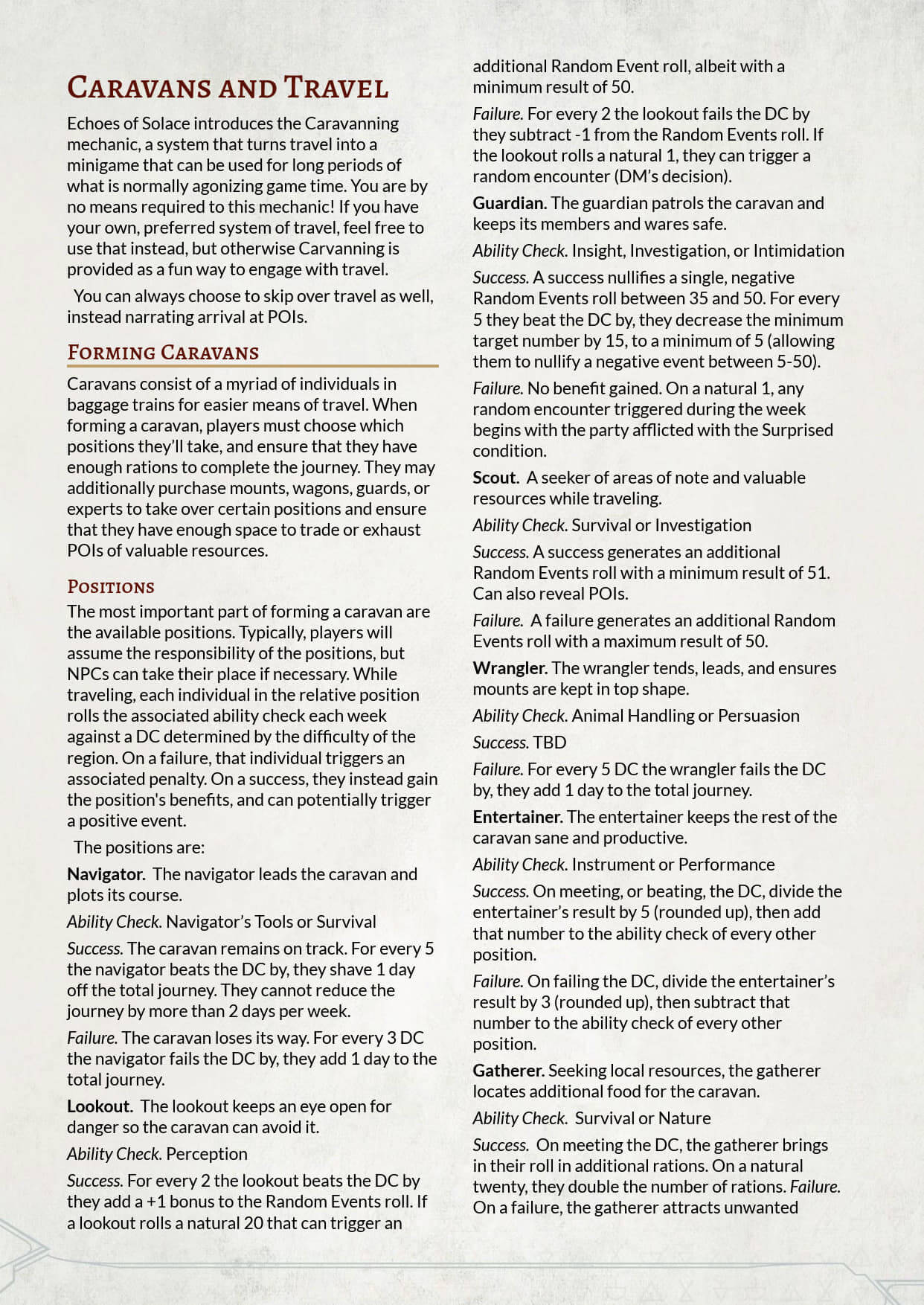
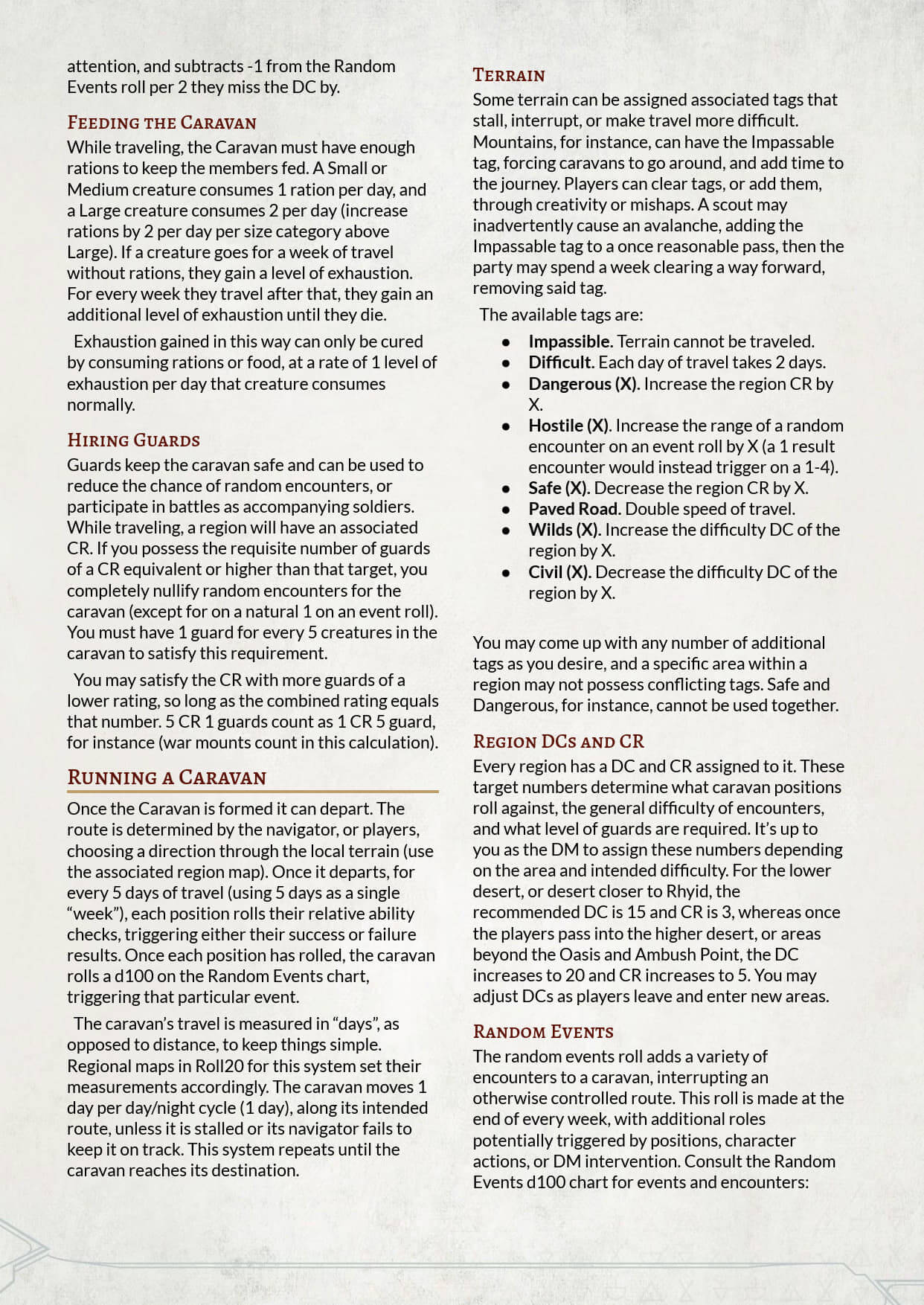
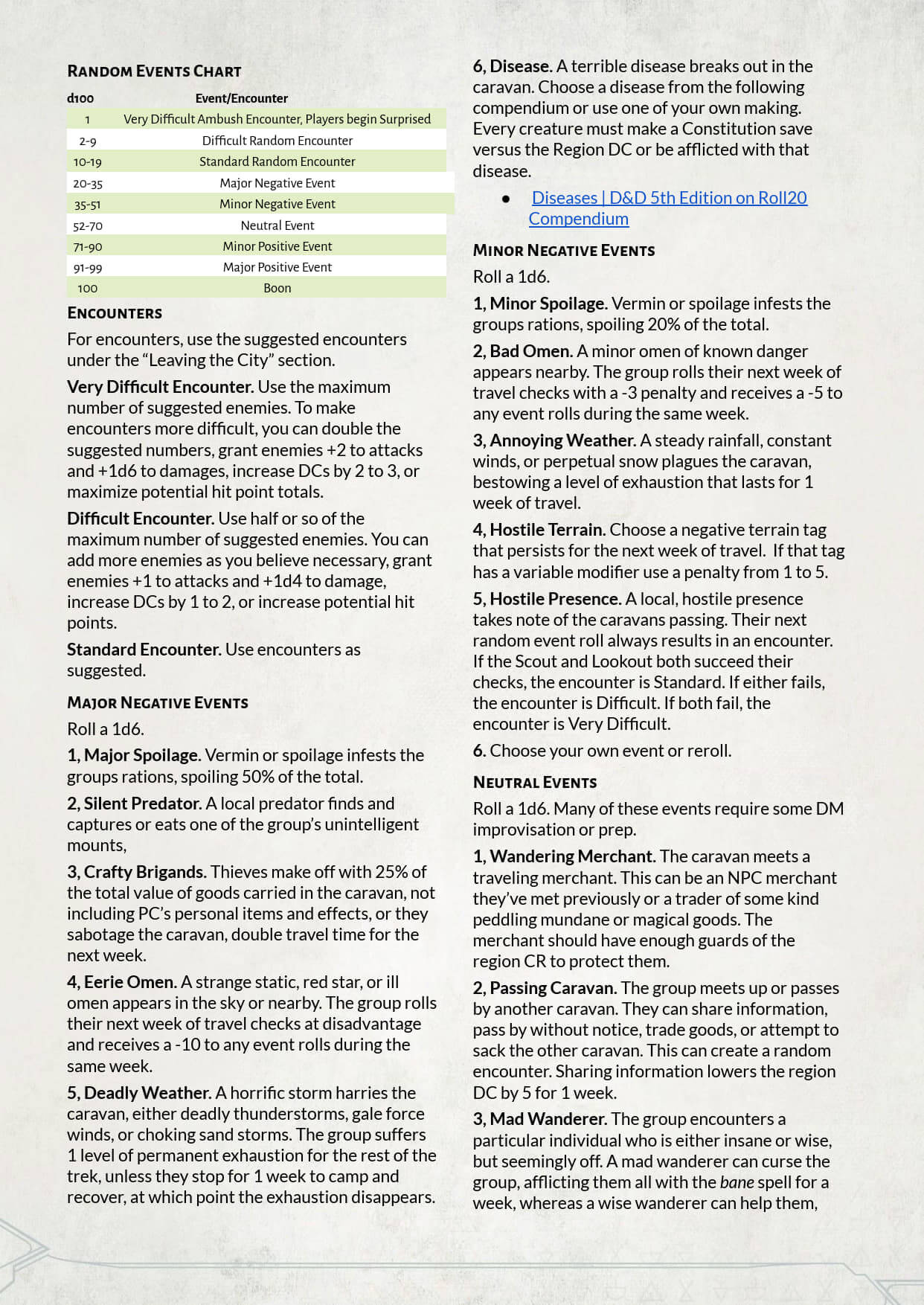
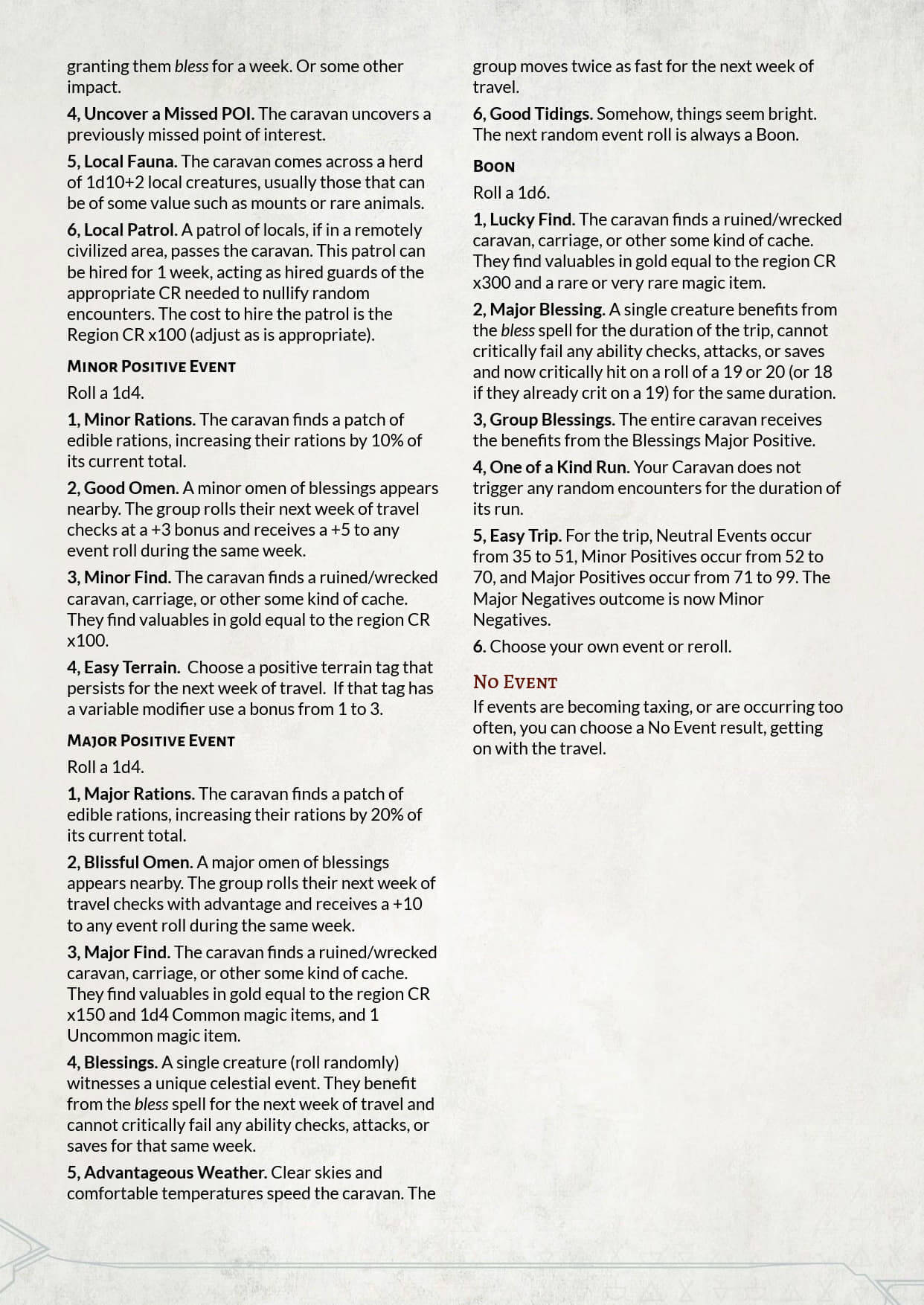
Goal: While on the larger region map of the desert, players simulate overland travel without it being tedious, creating environmental encounters for character classes build for exploration to shine.
Result: Players assign themselves roles with their party, each with a unique job associated with a series of skills that contributes to the success of the caravan. Caravans come with random events that are influenced by successful skill uses and they may reveal hidden locations to explore.
Techniques
- Player Agency. Players decide their roles based on their strengths, with up to 7 positions that all prefer skills with minimal overlap.
- Influenced Random Events. Events occur based on the success or failure of players, influenced by multiple positions. Even if one player fails, another may mitigate that failure or add to it.
- Quick Resolutions. Travel in D&D is often tedious! This system is a loop of roll -> result, much like combat, and can take place day-by-day or week-by-week to control the rate of progression.
- Adaptable Complexity. Caravans have multiple aspects that influence one another, but are designed for parts to be ignored (such as tracking rations) for players less interested in logistics.
Campaign Highlight: Branching Narrative
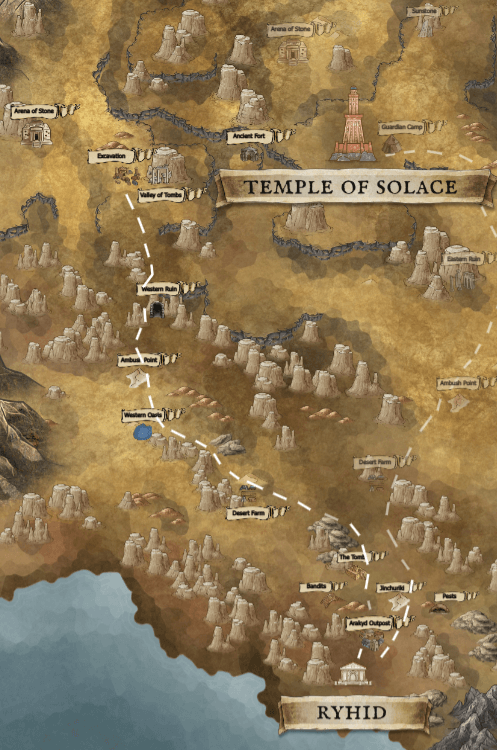
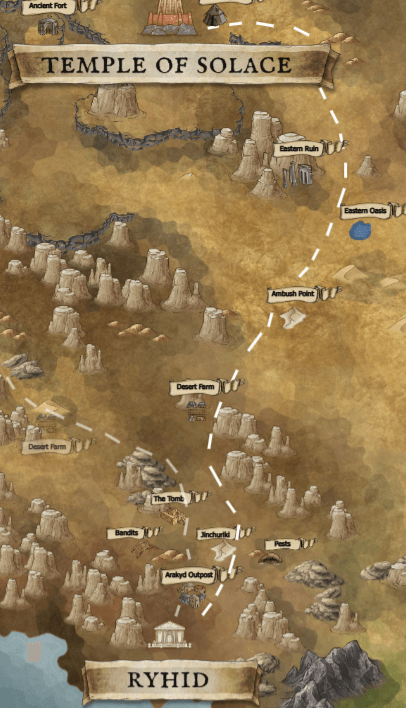
Goal: Players’ decisions should affect the campaign throughout, creating multiple paths to reach one of several possible end states.
Result: Based on their decisions, actions, and who they choose to support, players open up one of two paths through the desert to their objective, each with unique locations and plot elements that show a different side of the same narrative.
- Factions. There are 4 major factions in and around the city of Rhyid. The party’s path depends on which is supported, with major alterations to the plot depending on which is chosen, if any.
- Side Quests. There are regular side quests spread throughout each module. While most provide additional rewards, some are plot relevant and open up additional options for campaign progression. When discovered, players feel accomplished, but they are not necessary for “victory” as to not punish them for missing them.
- Myriad NPCs. There are dozens of named and influential NPCs throughout the campaign that can lead players to side quests or sway them to one faction or another. Some NPCs are associated with the larger world, playing back into the main quest and narrative hub.
Campaign Highlight: Multiple Resolutions & Collecting Allies
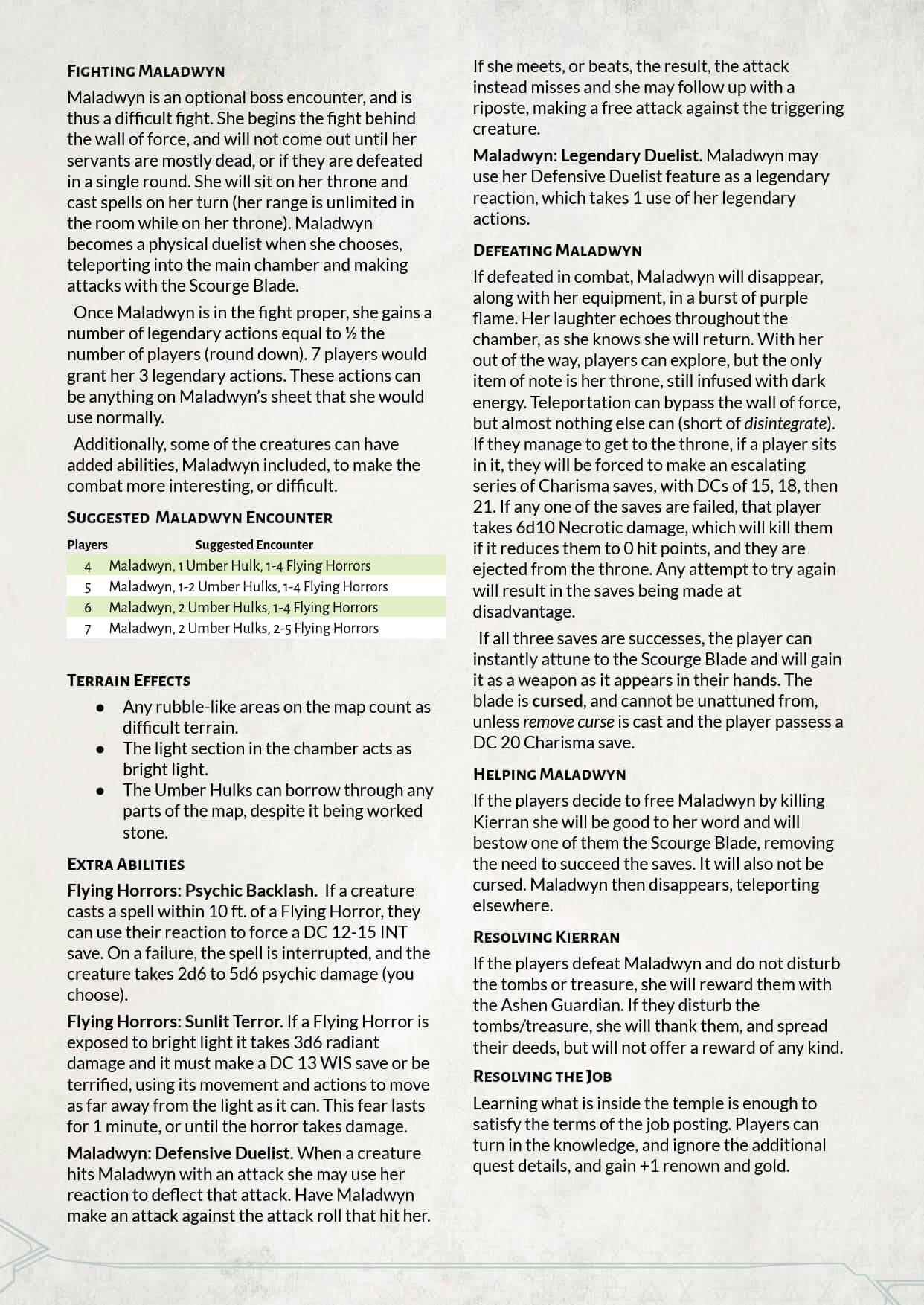
Goal: Create quests with multiple means of resolution and have those resolutions create a meaningful impact on the campaign as a whole.
Result: Quests possess options for their outcomes: players may attempt to resolve a hostile situation peacefully, broker a compromise, change allegiances, or follow the assumed, linear path. Resolving a quest as intended or going against the objective results in forming allegiances and loyalties that are called for favors or as reinforcements in later quests and combats.
Techniques
- Player Alignment. Most quests adhere to the D&D alignment system, allowing a mixture of chaotic, evil, good, lawful, or neutral solutions. This allows players to satisfy their character goals and still succeed quests.
- Staged Quests. Important quests and side quests are completed in stages, further relationships with allies and allowing players to salvage mistakes so that don’t miss out on content because of a single failed roll or a misinterpreted word.
- Ambiguous NPCs. NPCs prefer goals over a black and white alignment system, allowing them to act outside of stereotypes and tempt players into making decisions outside of their assumptions. This also makes them more desierable allies, as “evil” NPCs may be seen in a positive light.
Playtesting and Implementation
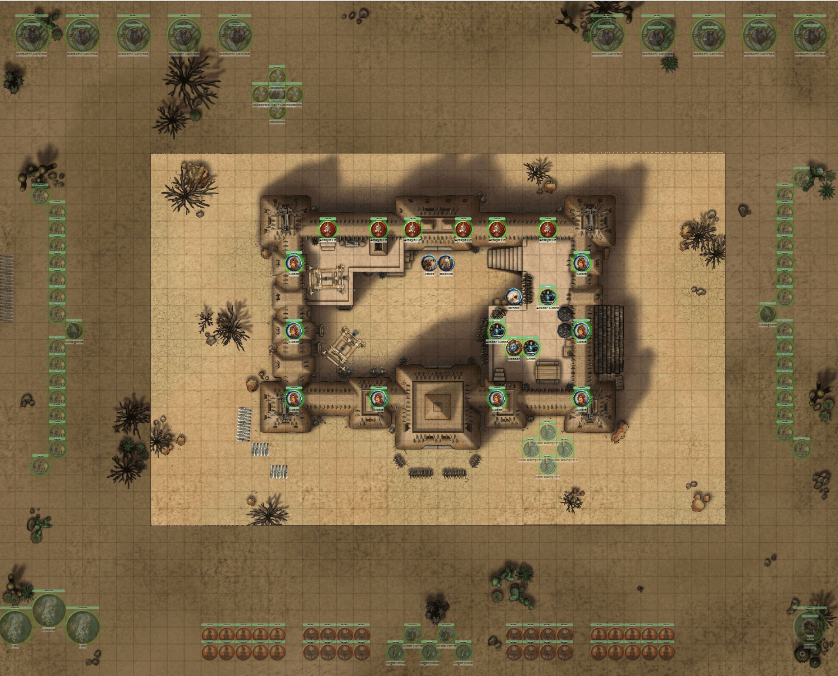
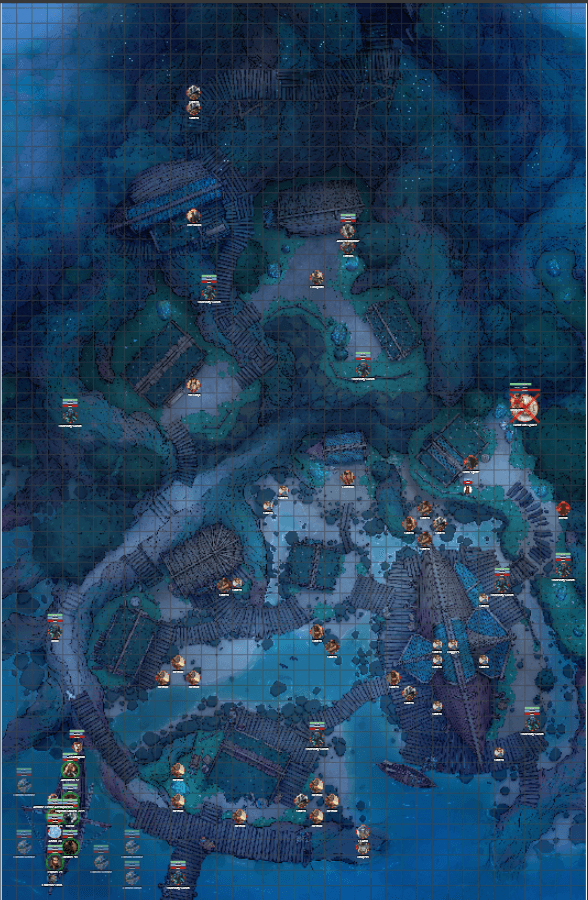
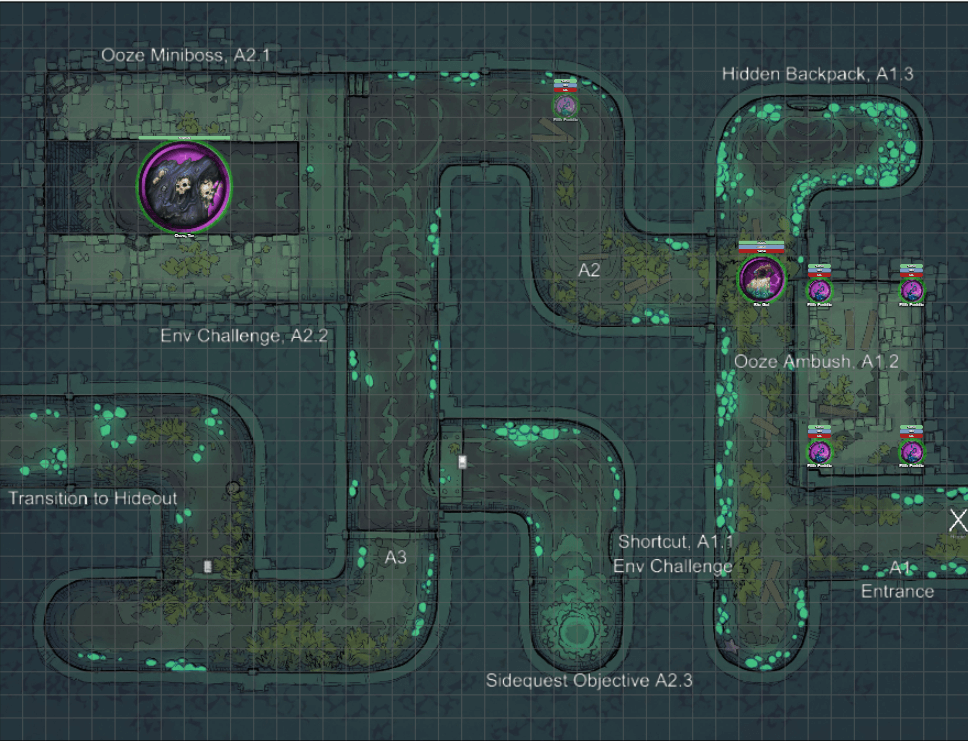
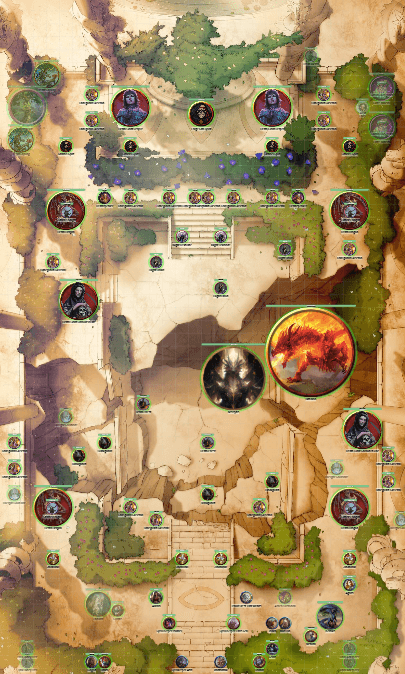
Playtesting: Embers of Wrath went through two separate beta groups that explored each path. This served to test the balance of encounters, how adaptive the campaign was, and to compare each paths’ equivalency.
Results. While only one group experienced the final ending, both were satisfied with their resolutions, rewards, and decisions throughout. Encounters were tweaked after a few iterations, but both paths contained equivalent difficulties and did not favor either approach with more rewards than the other.
- Goal Adaptability. A group began siding with more of the “evil” NPCs despite their overall “good” alignments, agreeing with their methods more than the alternatives.
- Content Flexibility. With the plethora of content, the more exploratory group had everything they needed to satisfy their curiosity, while the more plot-centric group moved faster without missing any of the major beats and story elements.
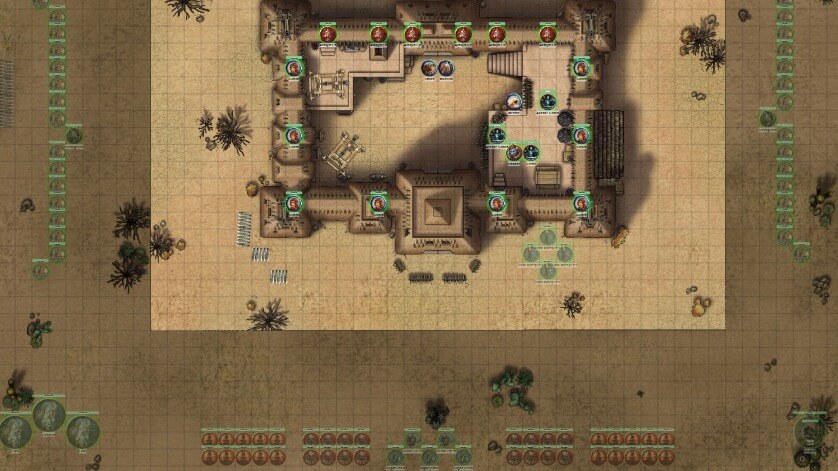
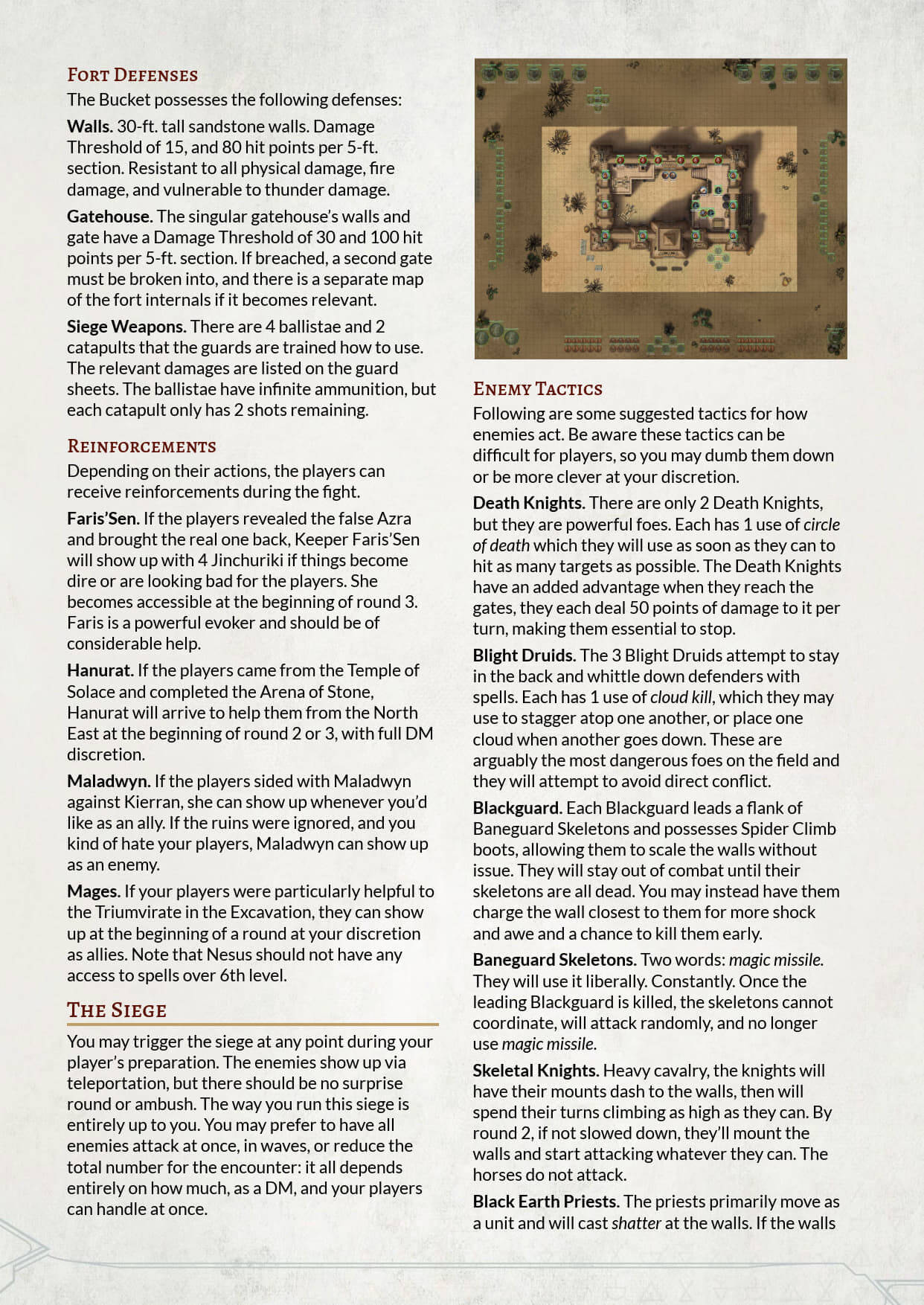
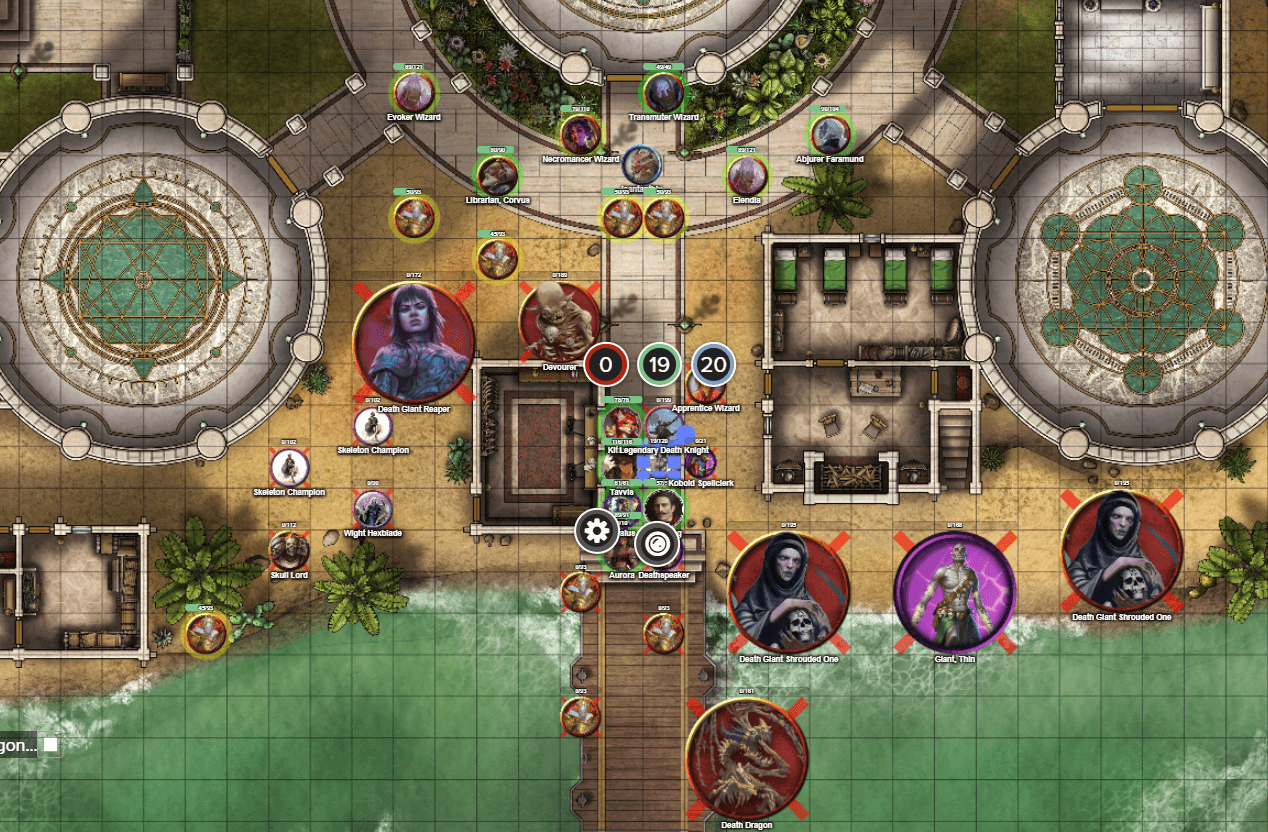
- Dynamic Encounters. Many of the major encounters, including the siege map displayed on the left, were vastly different in practice, as different allies offered aid, and the available resources completely changed the flow of battles.
- Final Release. Multiple groups played through the adventure with a unique experience, with the number of players ranging between 3 and 7, with encounters designed with adjustable difficulty and robust balance testing.
World Building Overview
The Shattered Lands of Eir
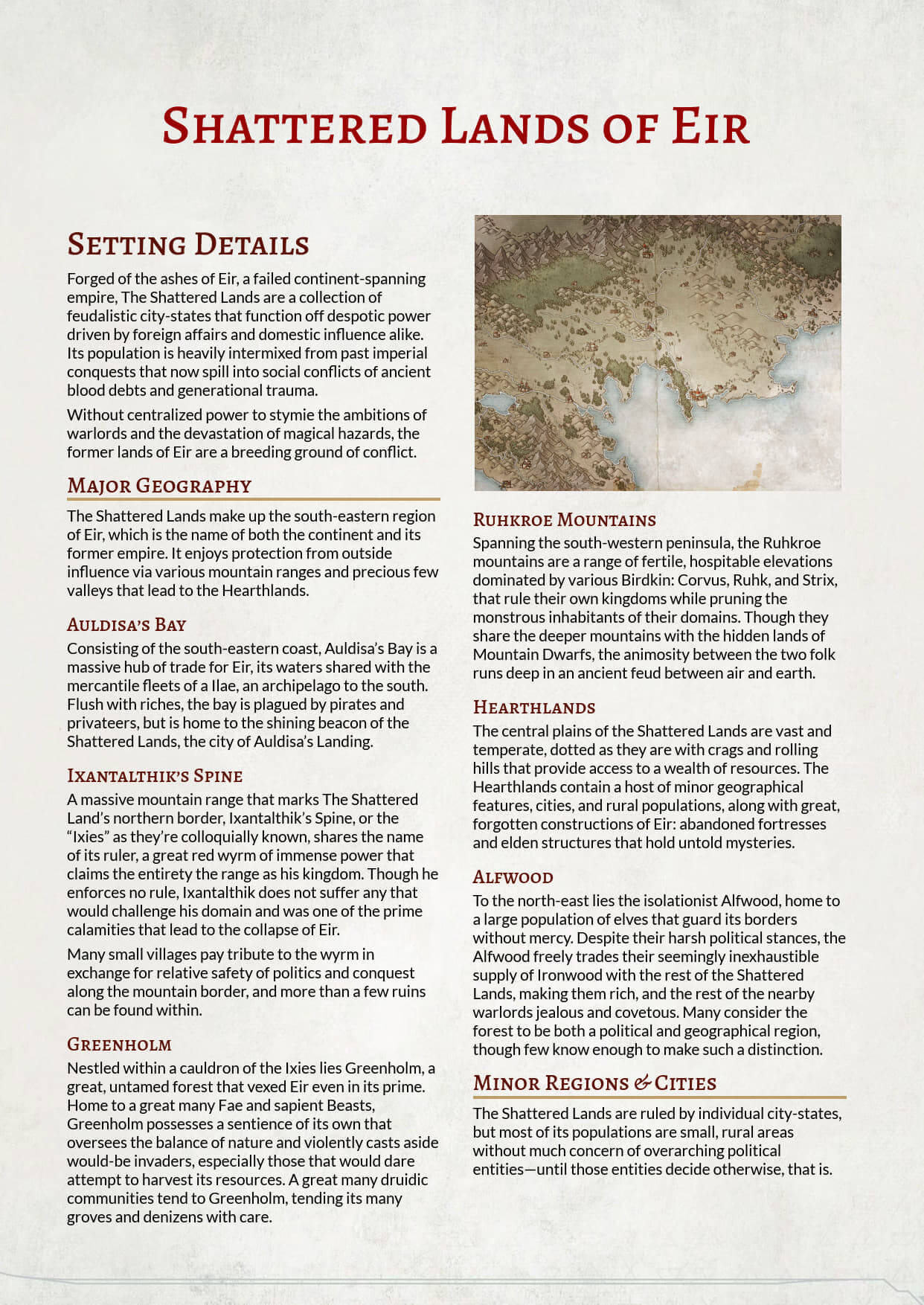
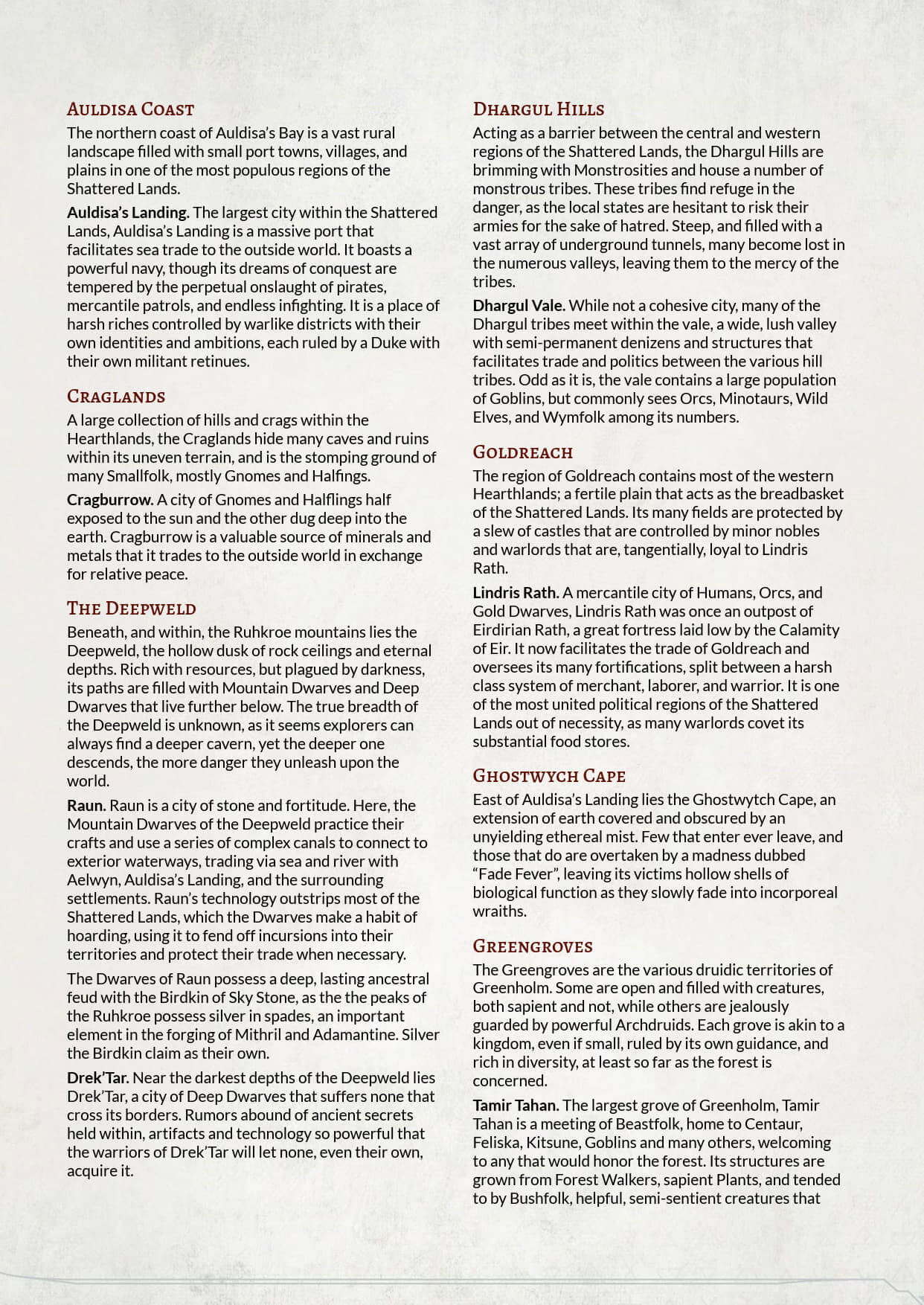
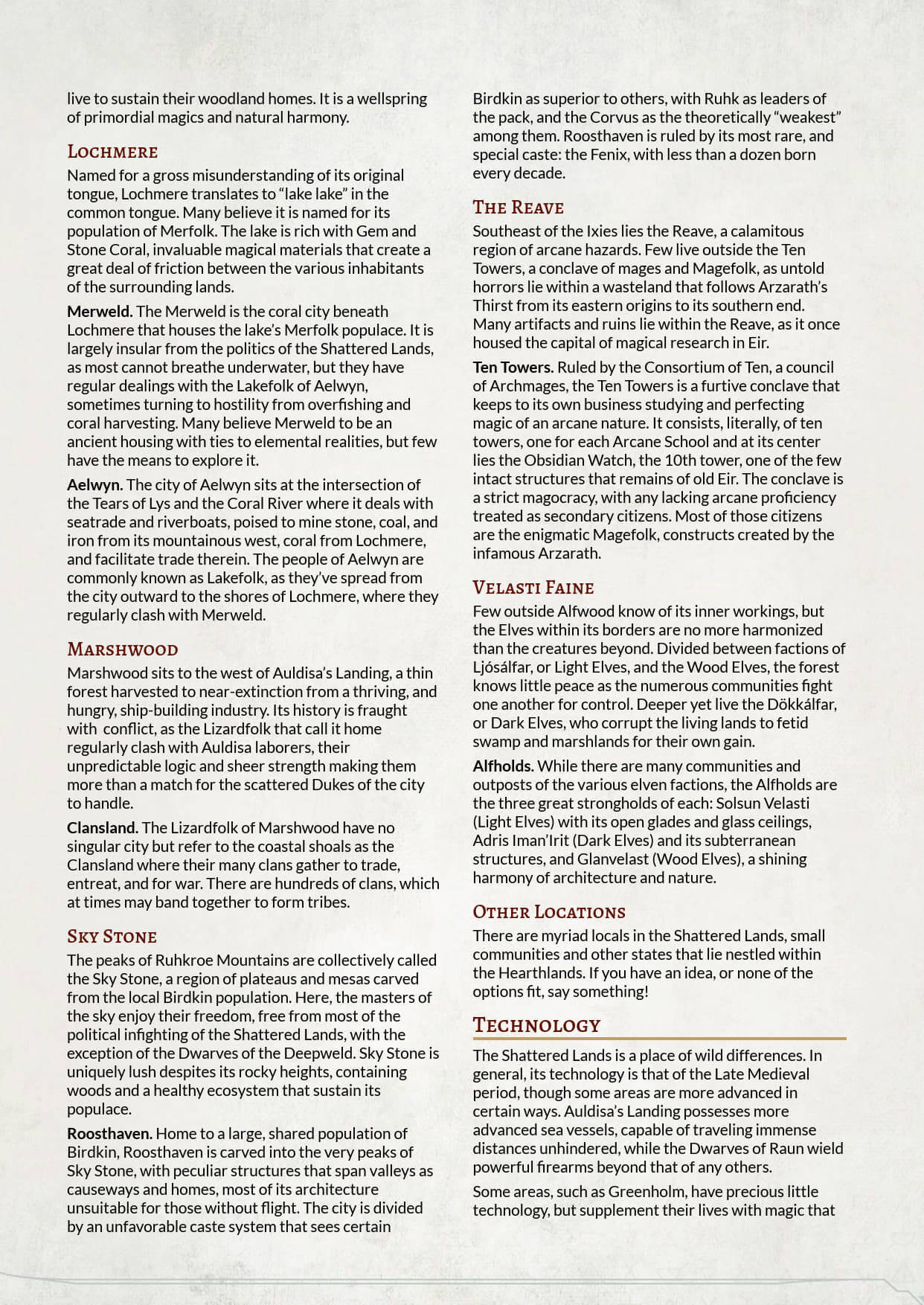
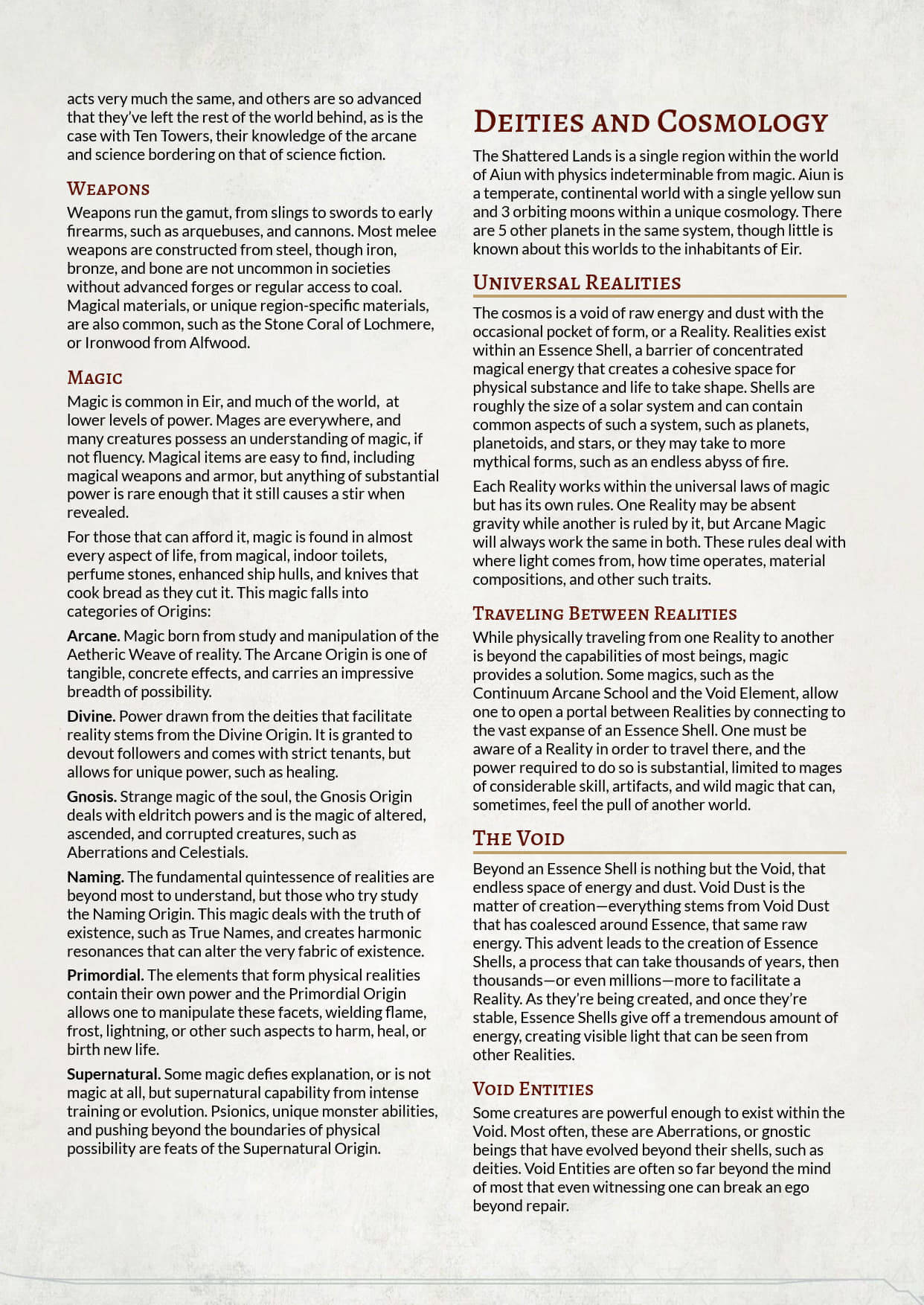
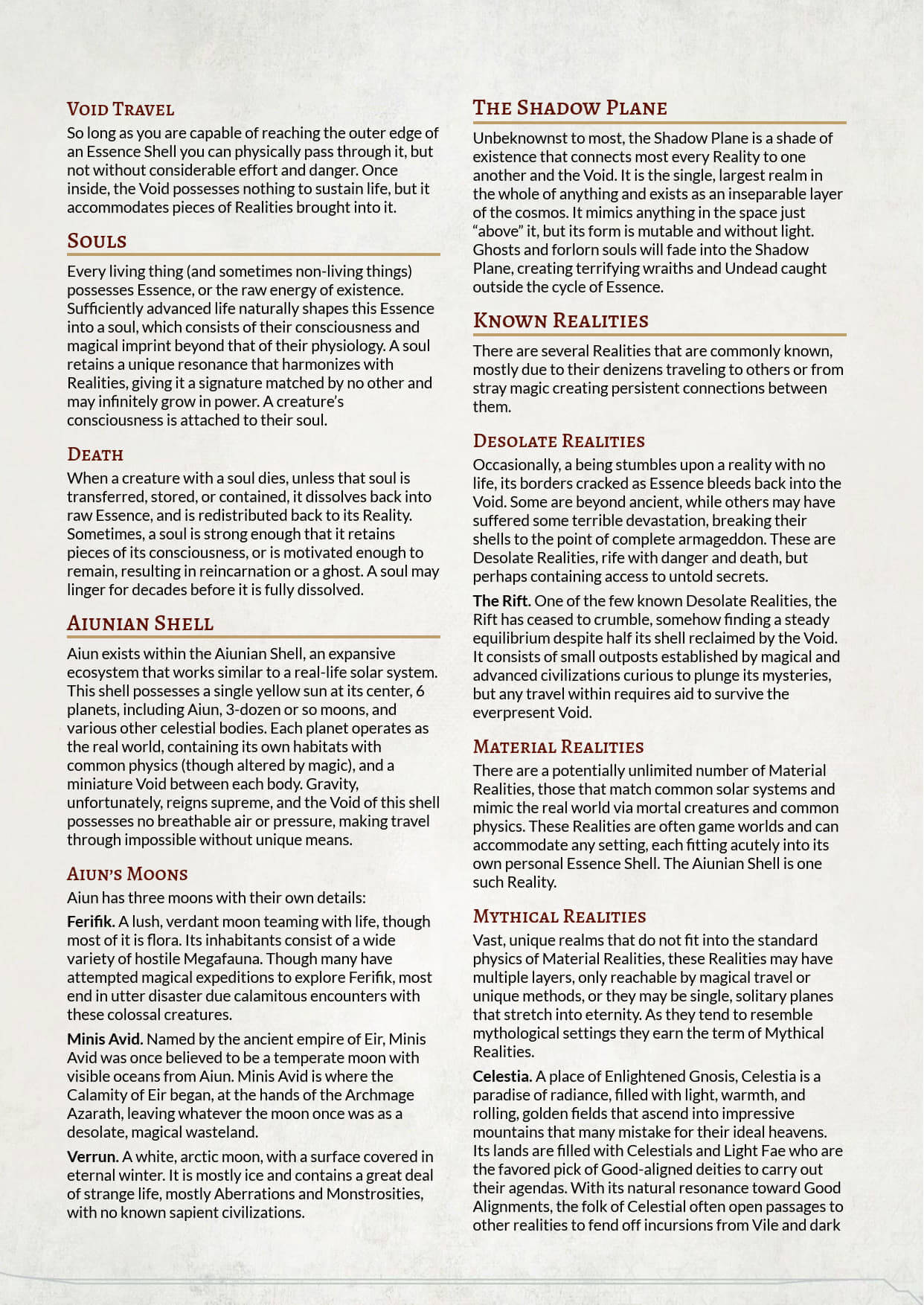
Brief: Forged of the ashes of Eir, a failed continent-spanning empire, The Shattered Lands are a collection of feudalistic city-states that function off despotic power driven by foreign affairs and domestic influence alike. Its population is heavily intermixed from past imperial conquests that now spill into social conflicts of ancient blood debts and generational trauma.
Without centralized power to stymie the ambitions of warlords and the devastation of magical hazards, the former lands of Eir are a breeding ground of conflict.
Iun
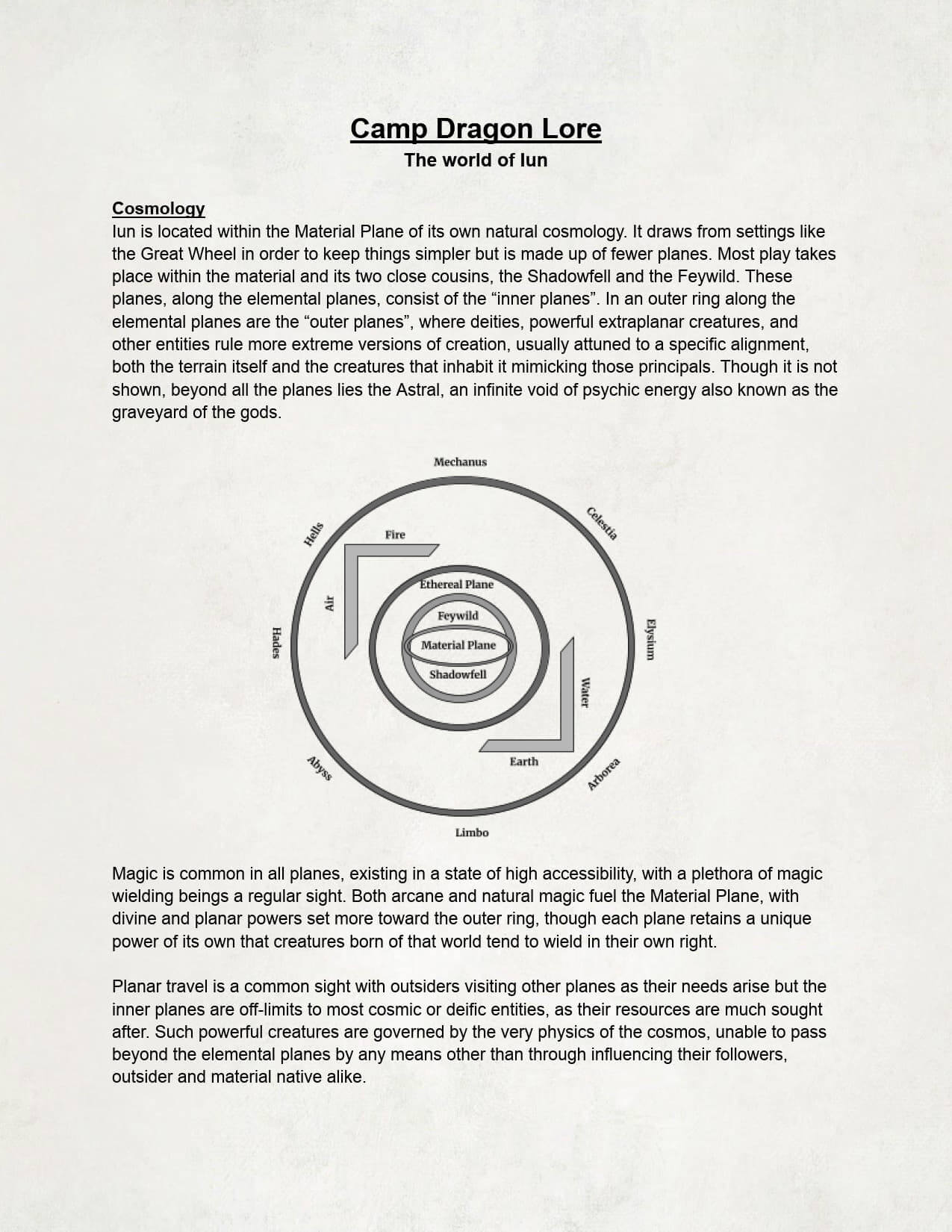
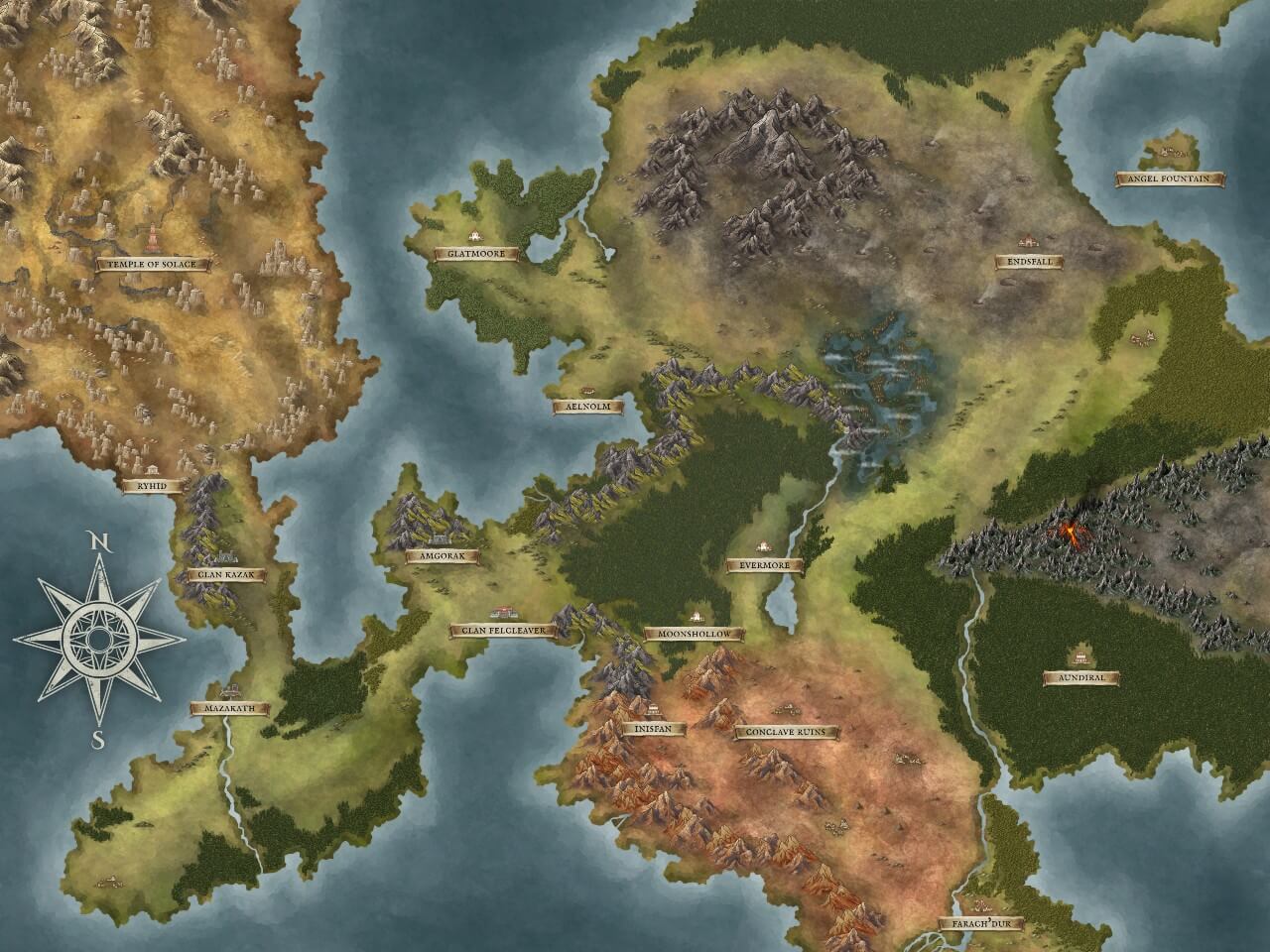
Brief. Built specifically for Camp Dragon Online, Iun adheres to traditional medieval fantasy tropes and contains vast spaces of wilderness for additional authors to fill in with their own adventures. It contains a familiar, yet still distinctive, cosmology, along with a pantheon of custom deities and a rich history spanning focusing on the continent of Dastanir.
Goals
- Create a space that allows any adventure of any kind, including urban, traditional dungeons, or region-spanning conflicts.
- Create a robust framework of lore for others to expand on as necessary but allow for improvision to meet the needs of game masters as they run the setting.
Yaros, the Realm of Order
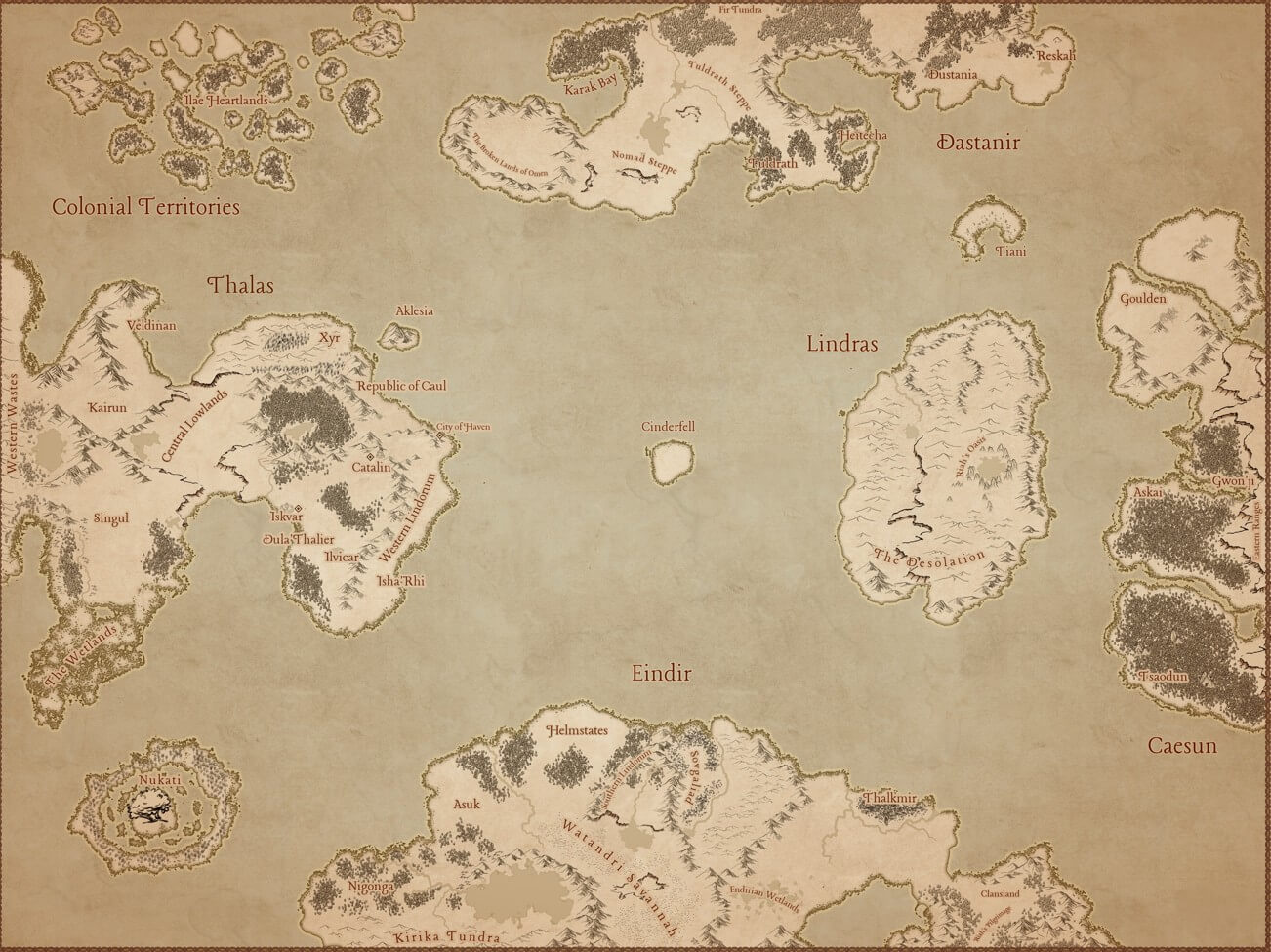
Brief. The Realm of Order is the setting for my novel, The Soul of Chaos. A small pocket inside a dimension of infinite chaos, Order is sustained by an entity known as the Sunstar, a being that appears as a yellow sun that bends energy in a sphere outward from itself. That influence creates a material reality, complete with physical laws and a hierarchy of life.
Day/Night cycles occur as the Sunstar dims, replenishing its energy from dimension’s chaos, and seasons come and go based on the Star’s height. This world has finite edges where the sun’s influence wanes and realities fades to an infinite span of cosmic energy. These sections of the world are peculiar, home to mutated creatures and powers.
Much of the plot lends itself to this setting, gods and folk alike.
Locations
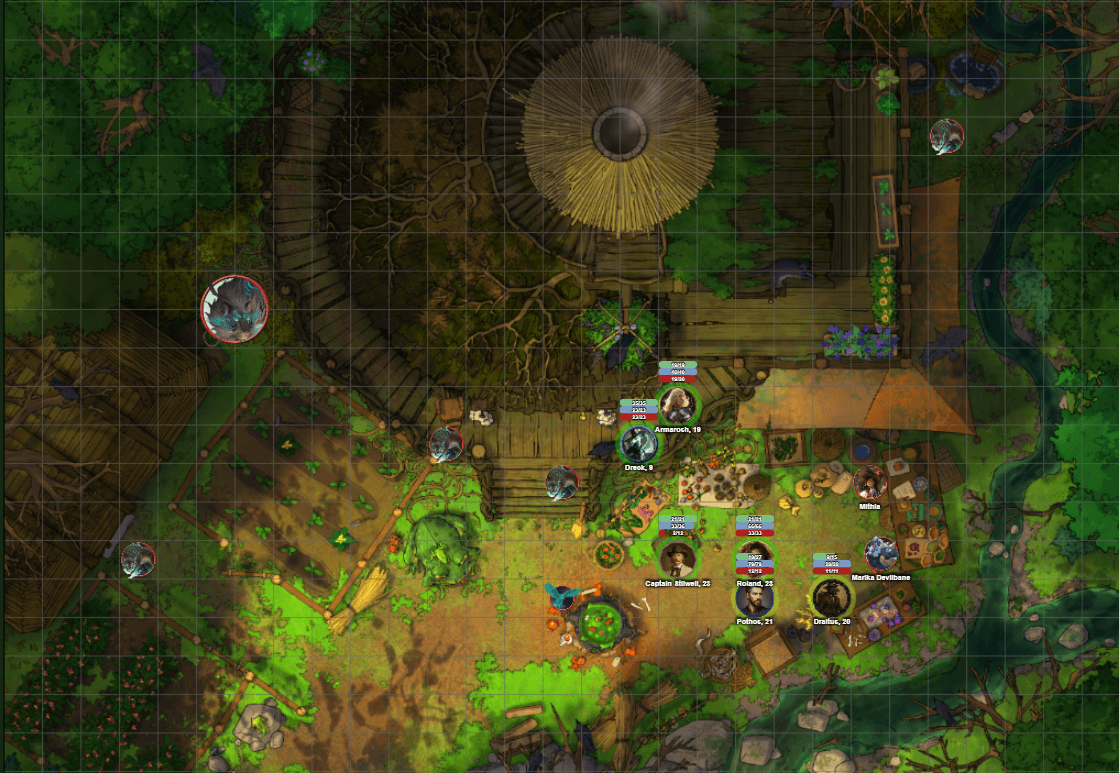
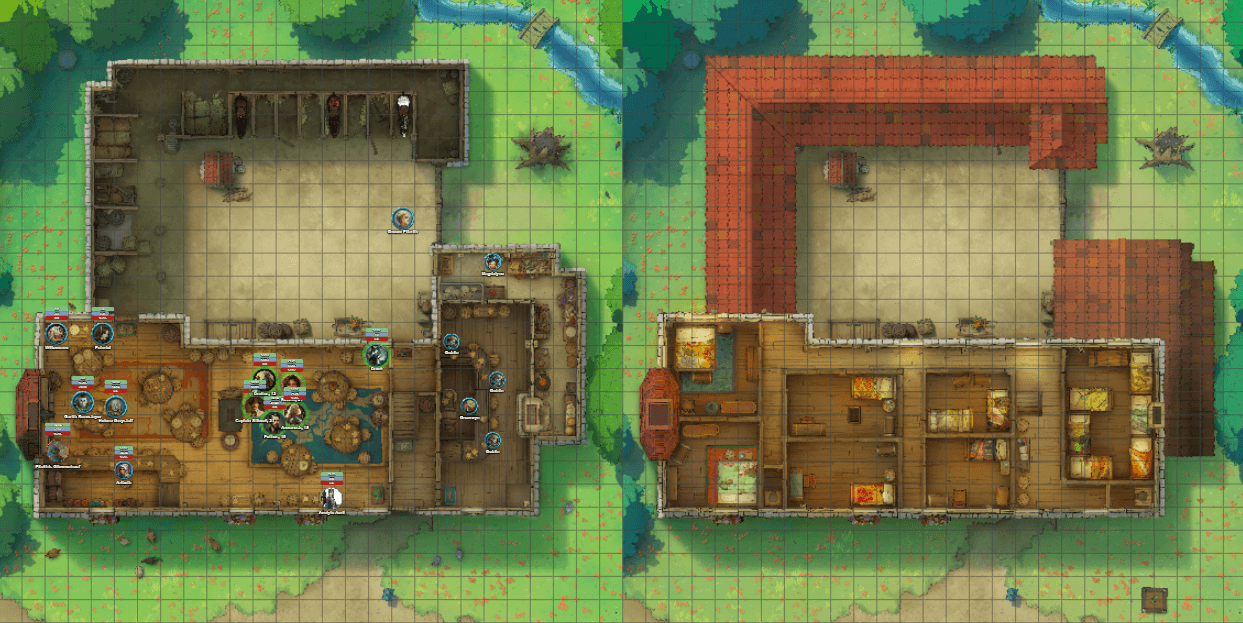
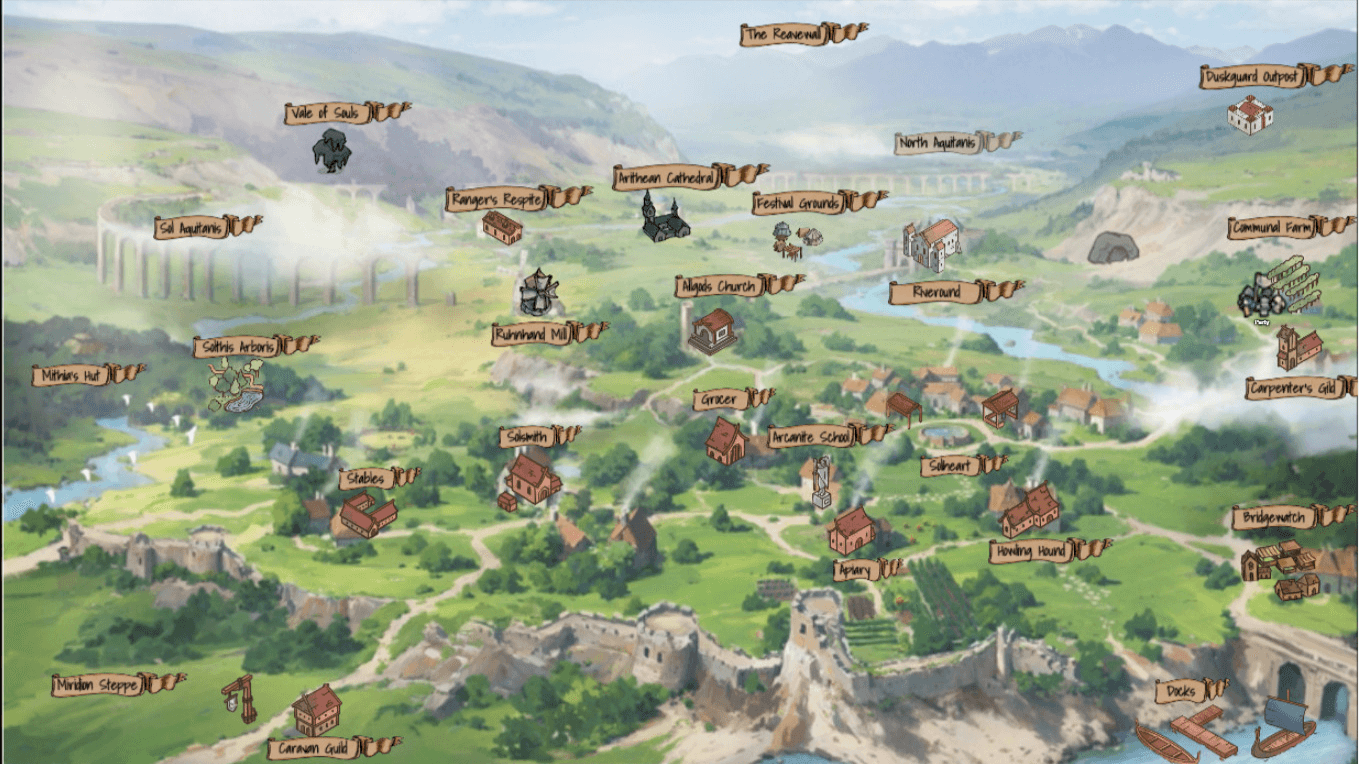
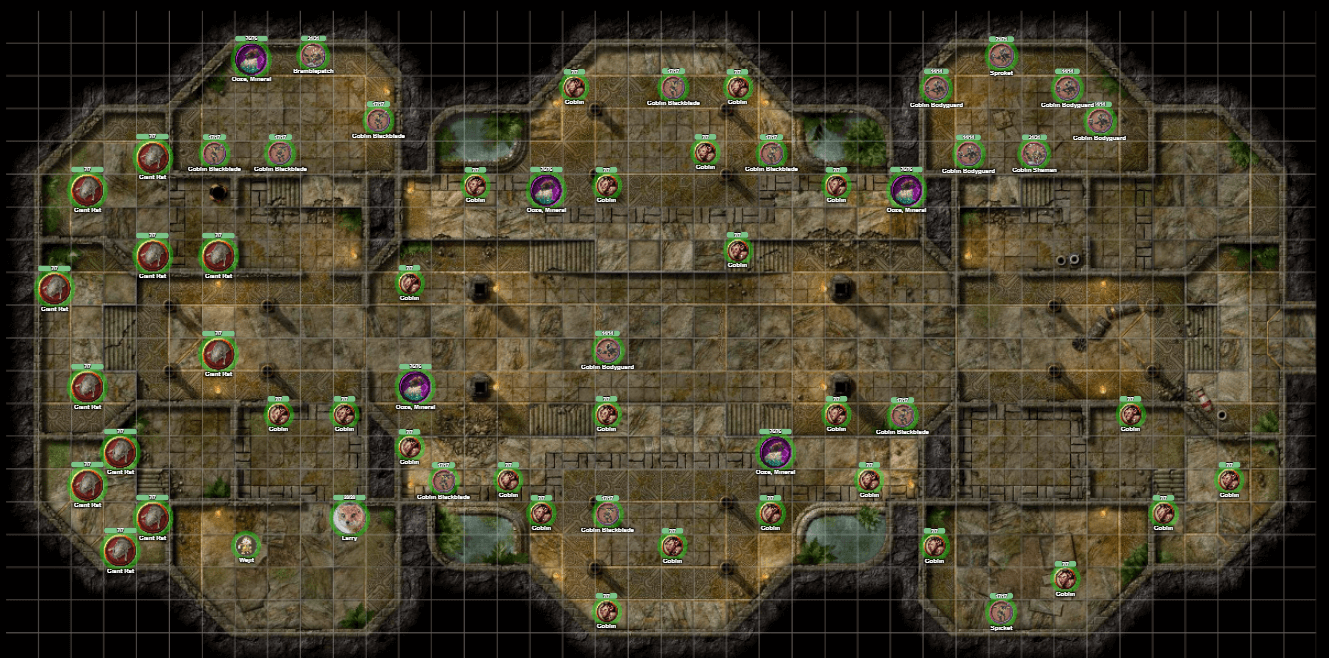
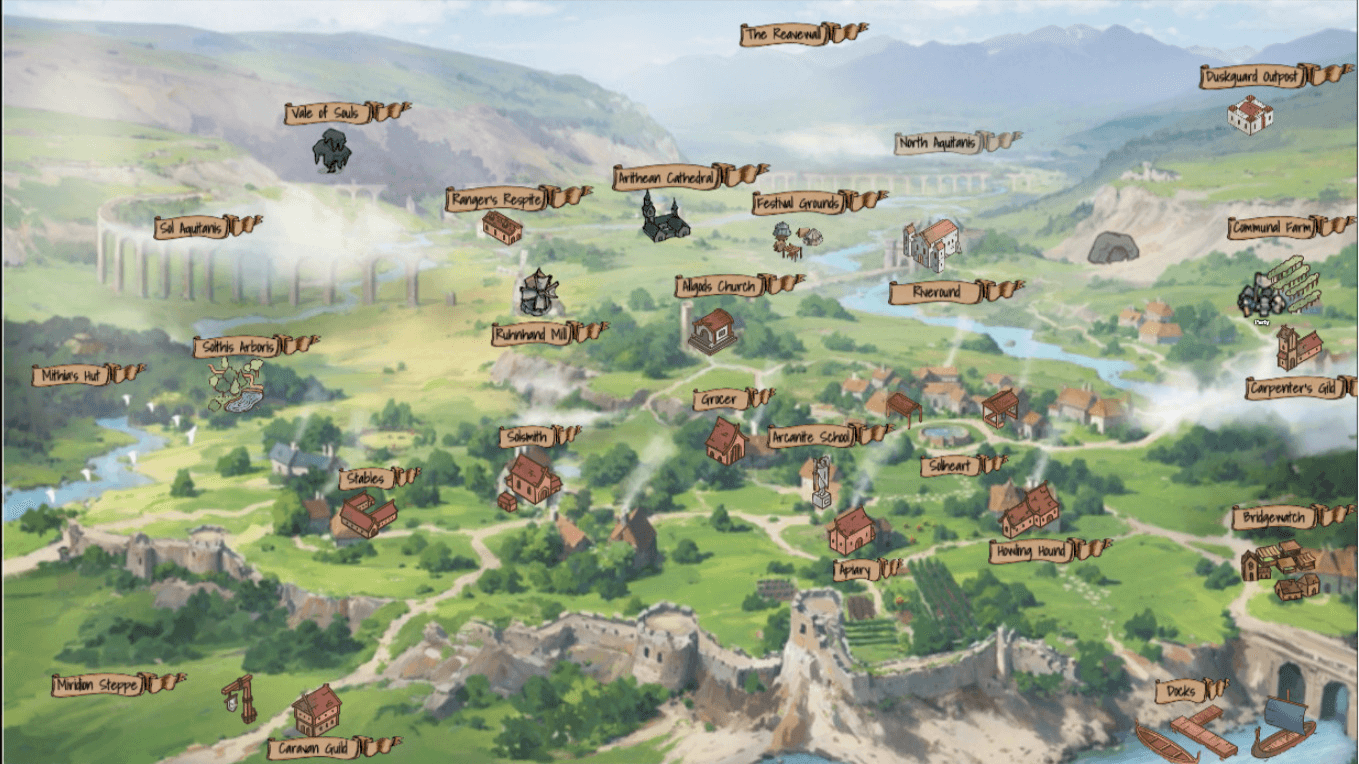
Method: Locations are built with a zoomed-out approach that allows players to get a sense of the area and where they would like to explore in addition to the surrounding geography and its relation to play. Each area also possess a variety of NPCs and challenges, including potential combat, environmental encounters, and various social opportunities.
Techniques
- Points of Interest. Each location is treated as a unique POI with some kind of value: either a quest, shopping, combat, or some kind of exploration that adds either to the plot or gameplay.
- Area Triggers. Several triggers are built into each location and may not occur all at once, creating a reason to revisit areas or explore them further.
- Inquisitive Personalities. A plethora of named NPCs are just as interested in the players as they are of them, willing to engage and share information, while others may initially push them away to create a sense of a larger world that exists beyond the players.
Unique Worlds
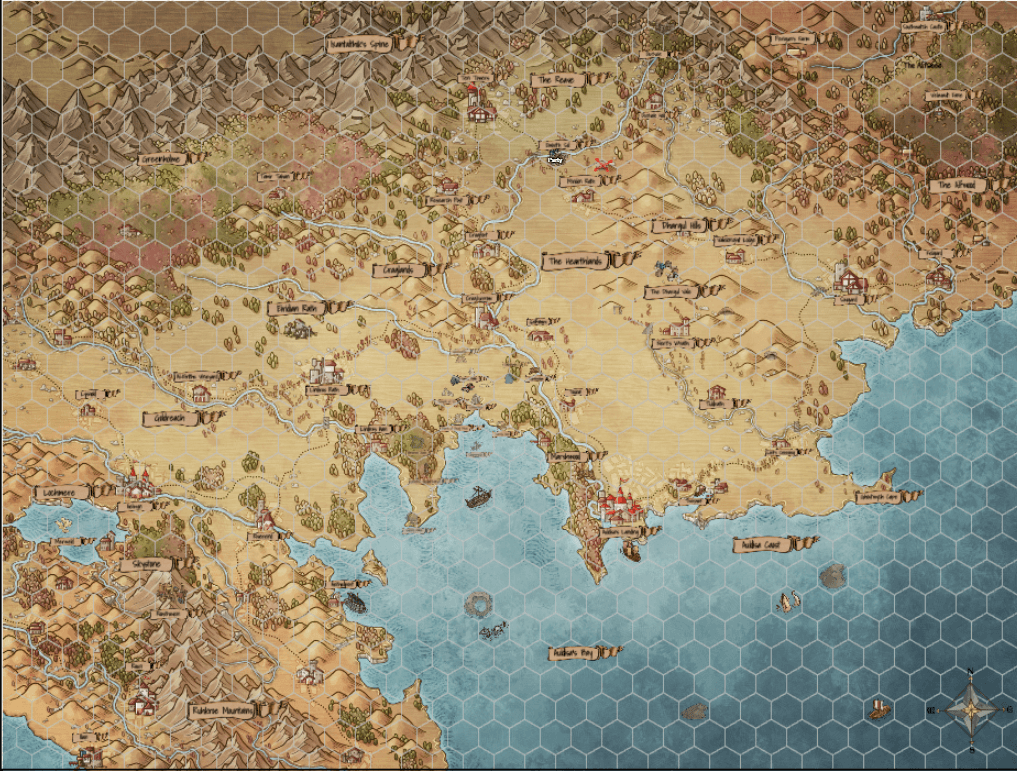
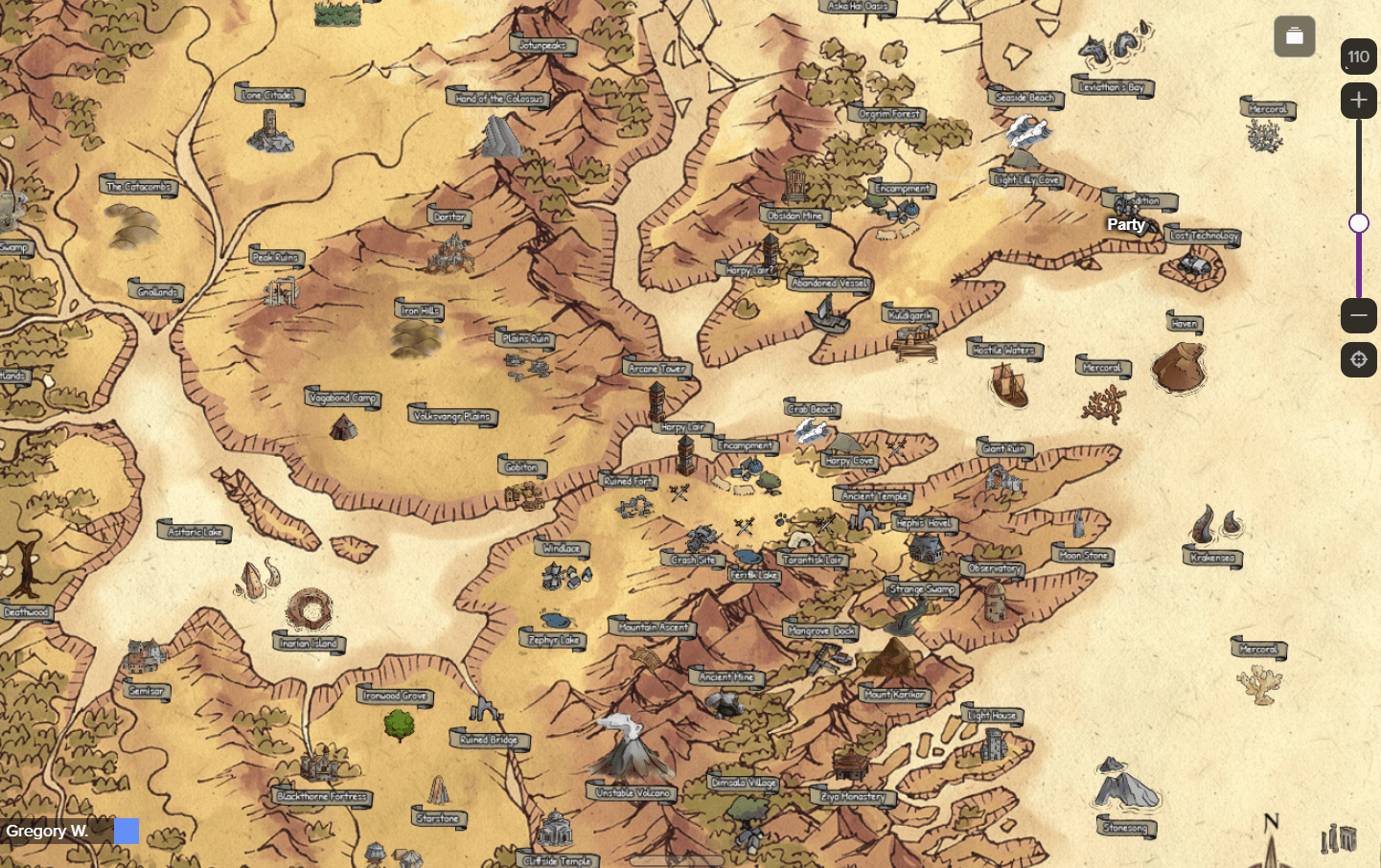
Method: To create settings with a distinct feel I build them from the ground up, creating a cosmology and physics that then influence the world of play. This can create new technologies, geography, or societies that detail a new world, one that doesn’t match every version of medieval realms players have explored before.
Techniques
- Altered History. Understanding real world cultures and their history allows me to blend those elements or introduce a single altering factor that leads to a fantasy culture, such as magic-powered engines, or technology discovered far beyond its time.
- Macro to Micro. If you want to bake an apple pie from scratch, you must first invent the universe! That may be Carl Sagan talking, but I find its true of world building. Knowing your details from the base up facilitates creativity.
- Honed Lore. Players don’t need to know everything starting. I focus on specific areas then expand via additional modules as information may become relevant.
Pantheons
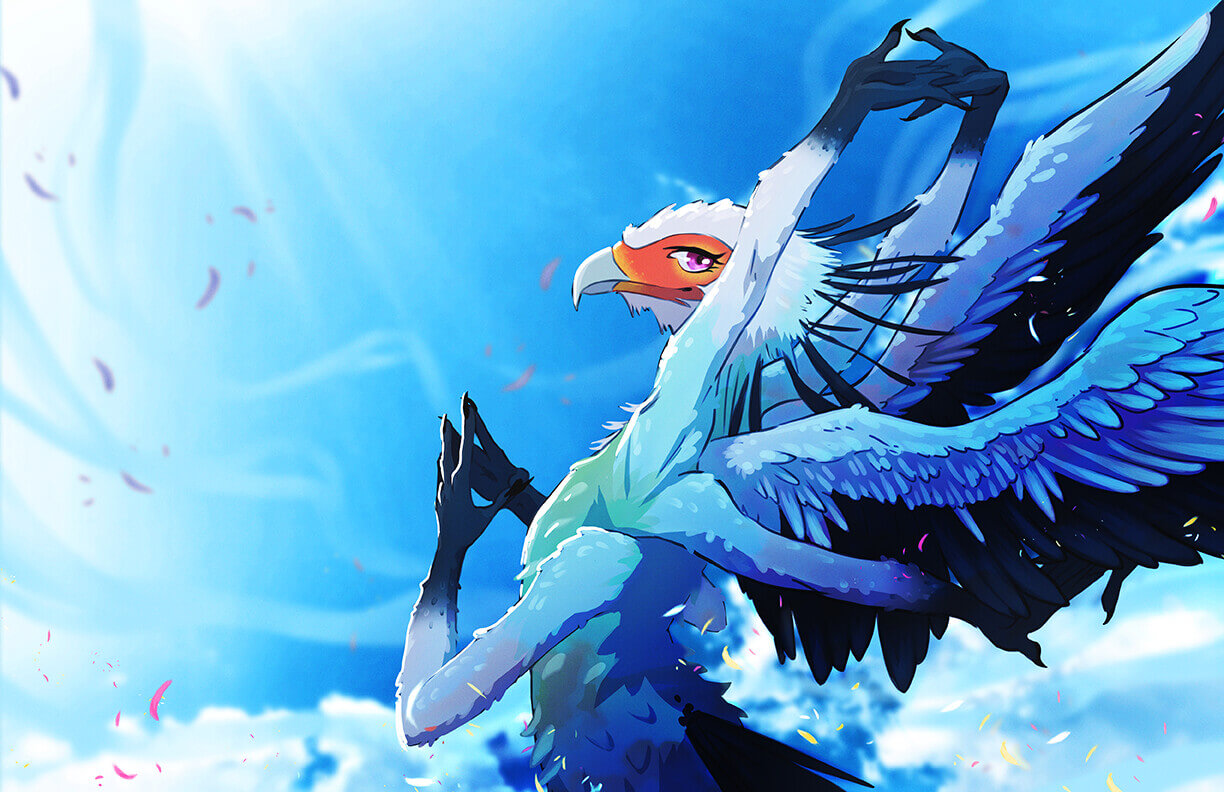
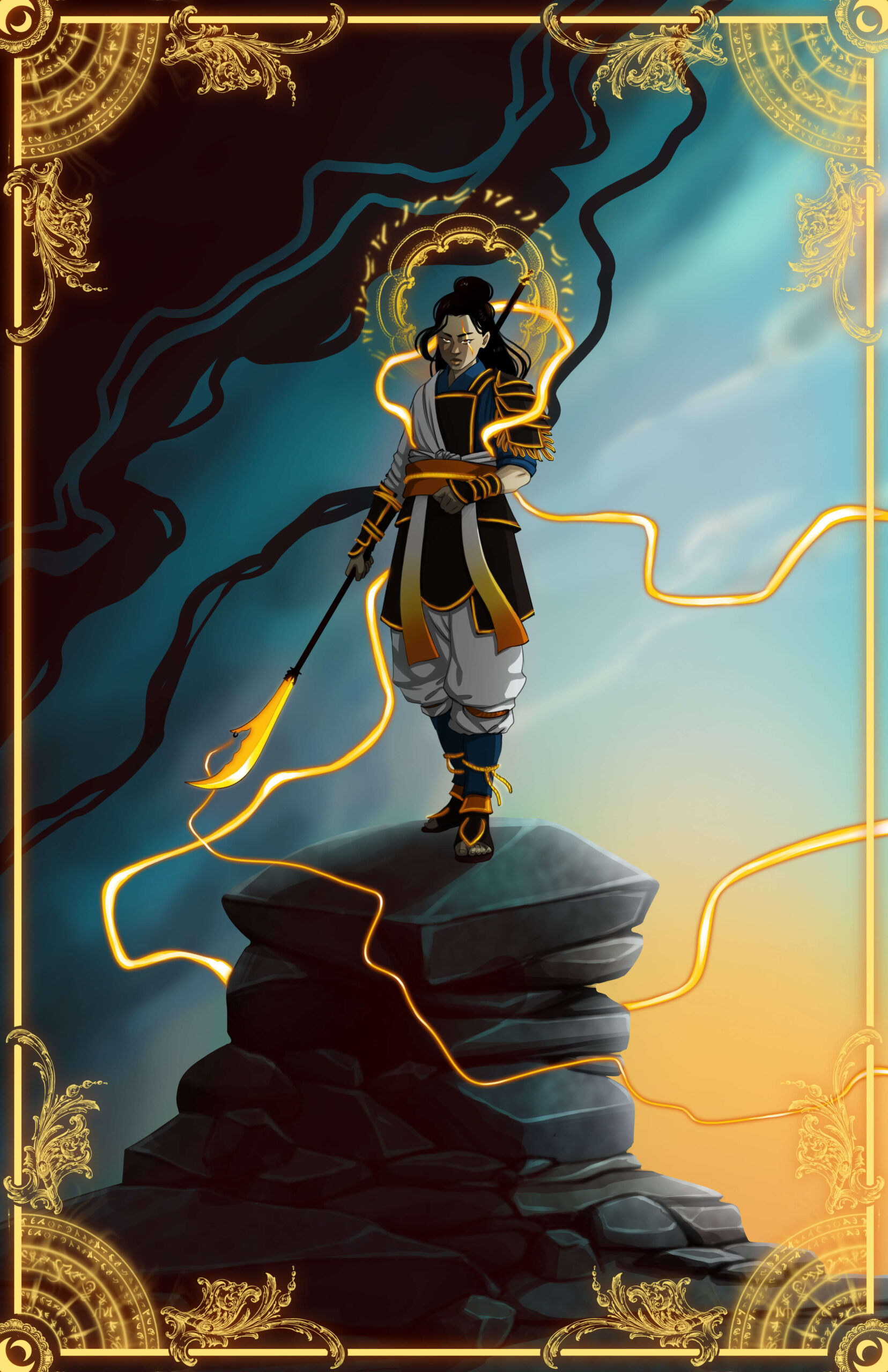
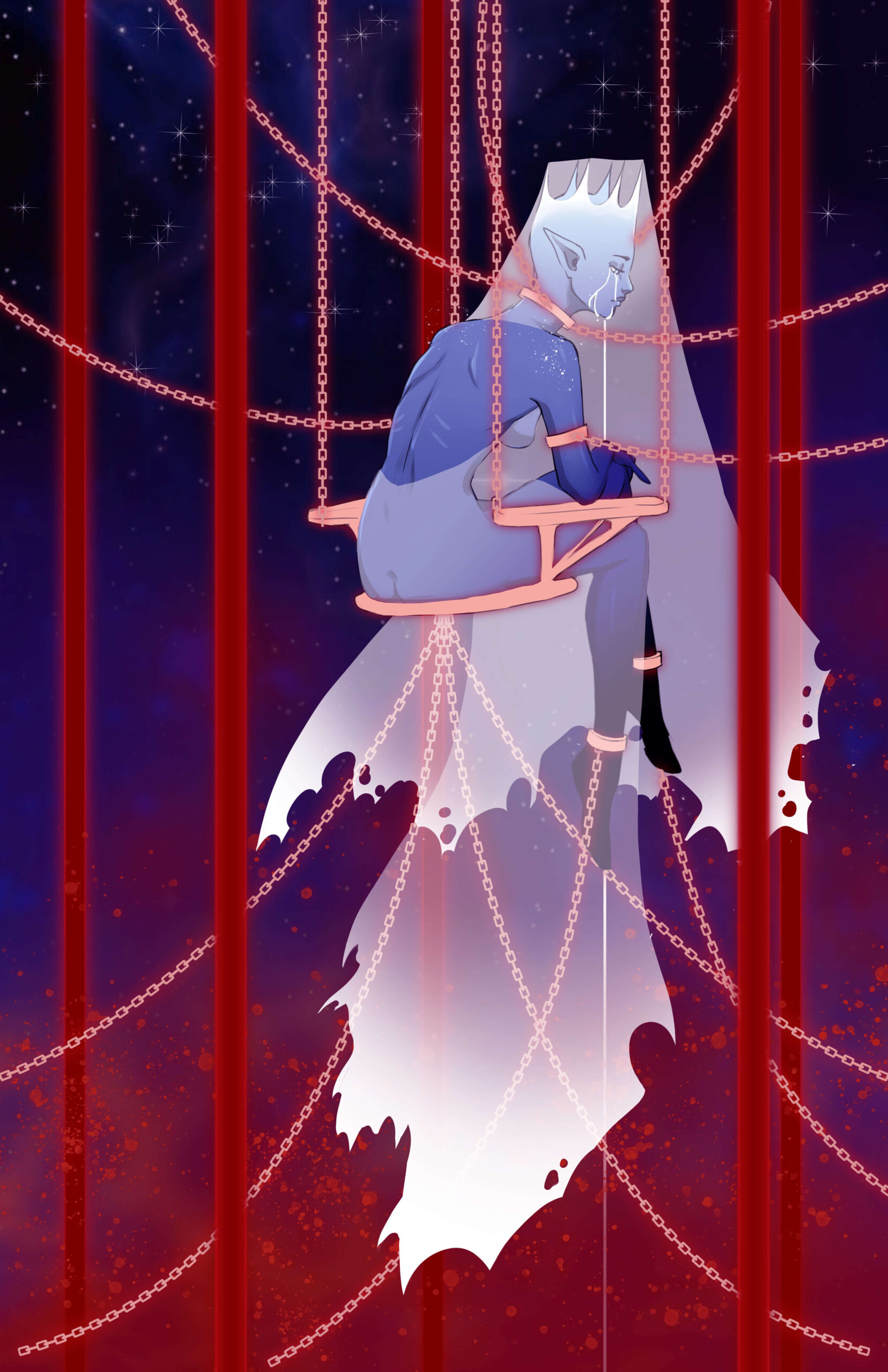
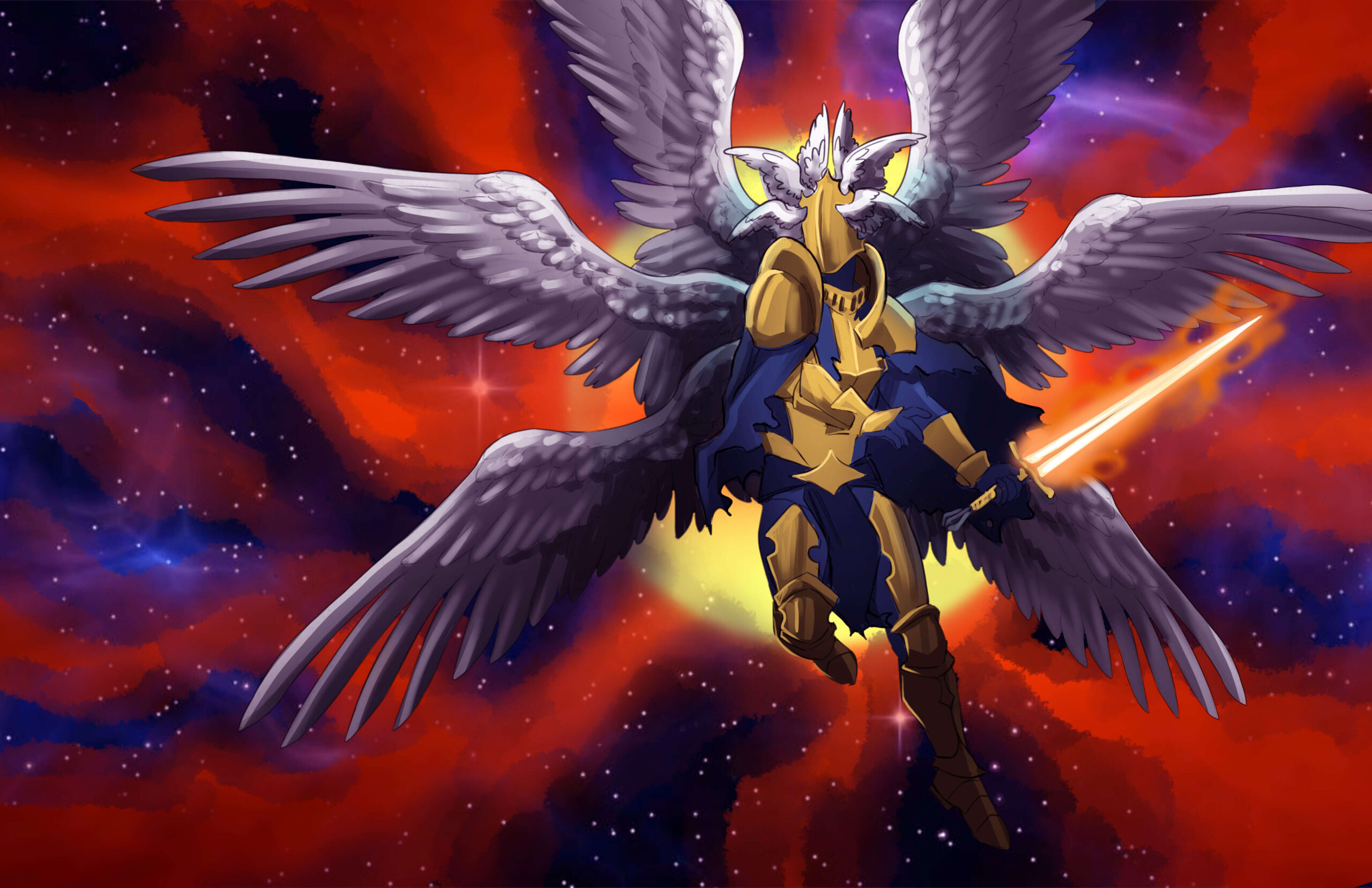
Method: My pantheons incorporate elements from ancient world mythologies and blend them to fantastical worlds where magic and alien creatures are the norm. I try to match deities to the spirit of not only the setting but to mechanics as well: D&D pantheons incorporate alignment, for example.
Techniques
- Research. Existing mythology is the best resource, from Hindu dualities to Zoroastrianism’s struggle of good vs evil and studying them is essential for creating resonate pantheons that don’t just repeat what we know.
- Dynamic Beings. Shifting identities and physicality allow game masters to alter a pantheon to fit their needs, adapt to whatever setting they’re using, and even incorporate their own ideas.
- Character Motivation. Providing robust portfolios with a number of interests allows players to incorporate various religions into their play, create their own, or seek motivations they may not be aware of otherwise.
Narrative and Writing
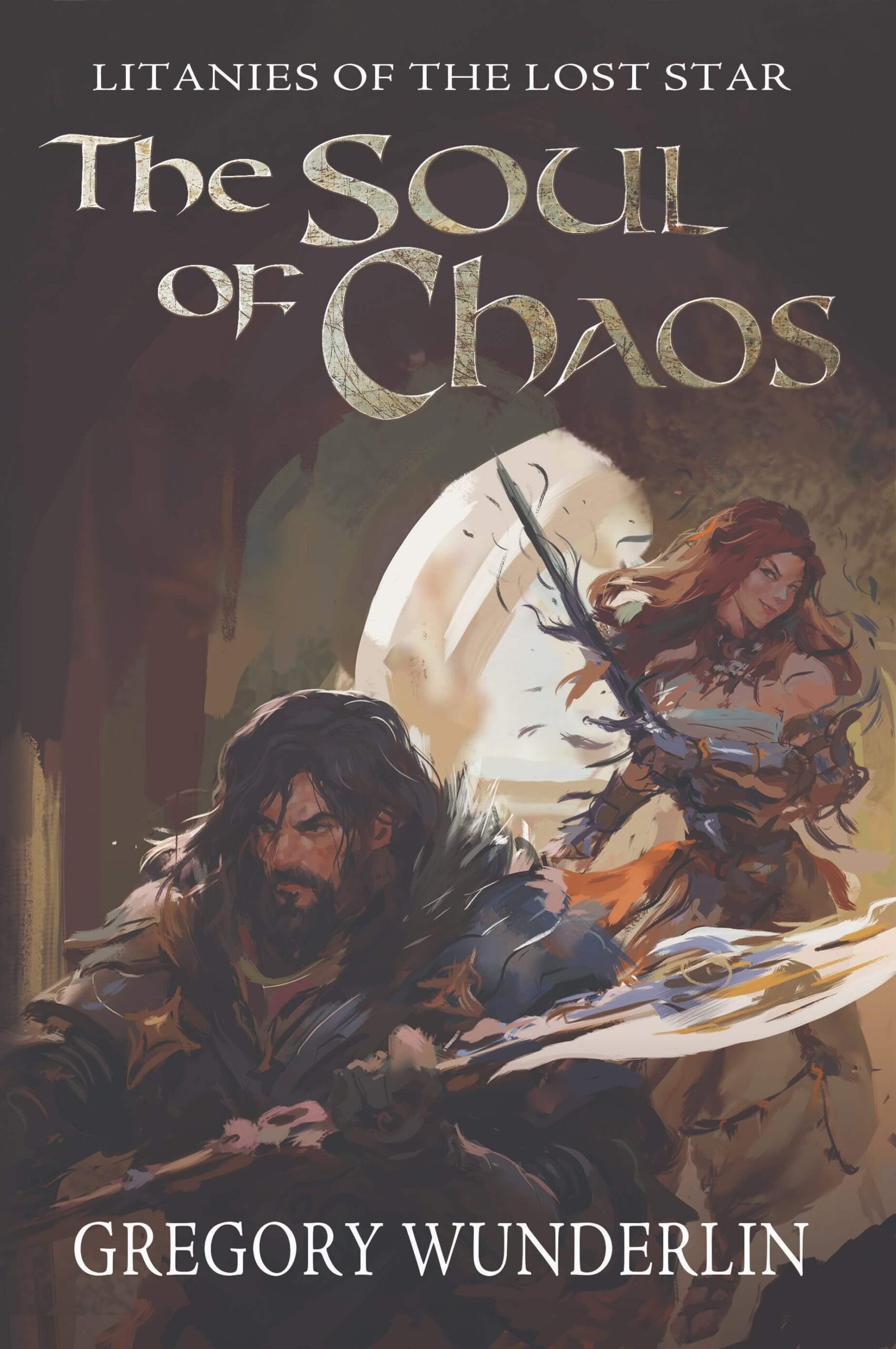
While not a full breakdown, I wanted to add my traditional published novel, The Soul of Chaos, as a narrative higlight: set in the sci-fantasy setting of the Litanies of the Lost Star. It is an updated take on the epic fantasy genre, updating classic tropes of the 80s and 90s for a modern audience. It follows twins, Arkalis and Rurik, and their own respective casts, across a complex plot with multiple branching elements.
SoC highlights my focus as a world builder, incorporating an intricate setting with a magic-as-physics motif, its plot based around the mistakes of a civilization ended by its own apocalyptic makings. Its themes tackle environmental ruin, extremist, populist leaders, loss of faith in institutions, found family, and coping with mental illness.
As a writer, the prose focuses on context exposition, allowing readers to learn about the world and situations without massive lore dumps or forced dialog. What seems like a slow burn explodes into a whirlwind of activity after the first act. The story balances dozens of named characters as it sets up a world for a series of novels, starting as a politically focused plot that culminates into an epic conflict to avoid yet another apocalypse.
You can click on the image to the left for a sample of the novel!
Embers - Process Breakdown
Research, Ideation & Planning
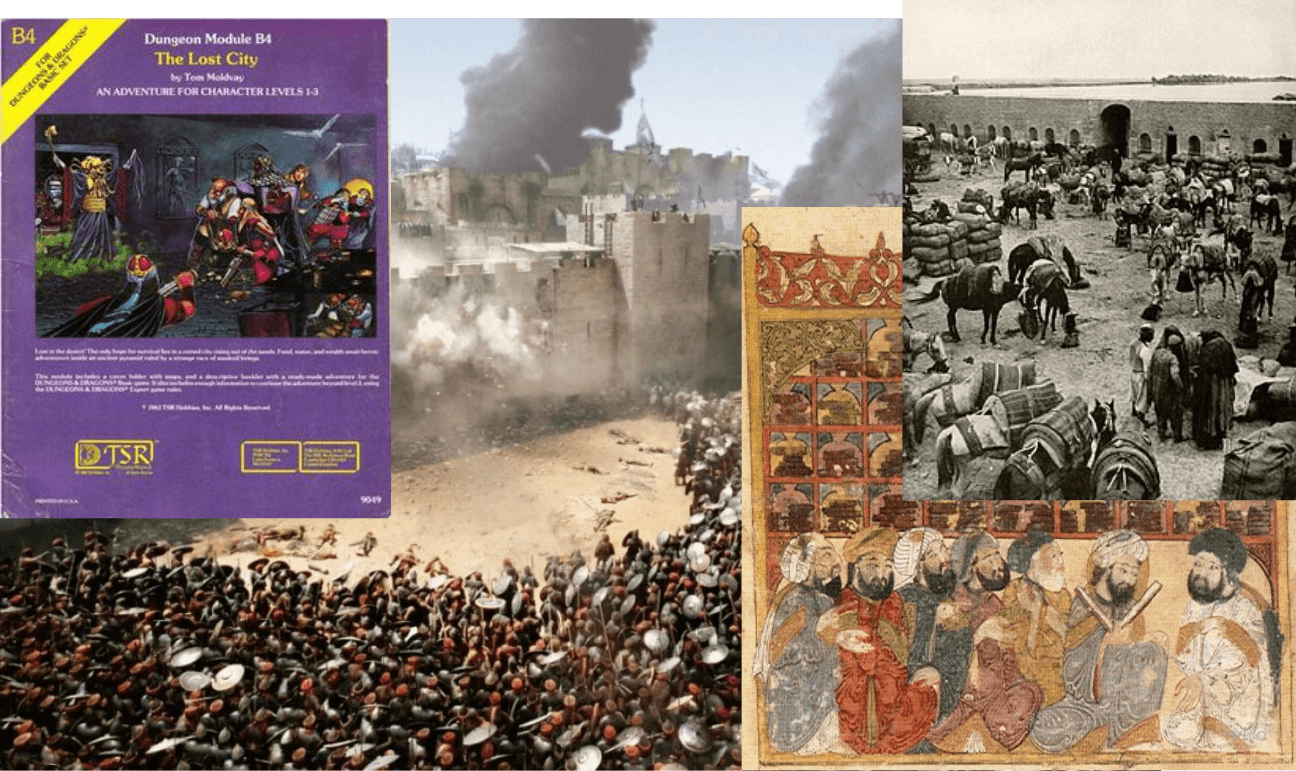
I wanted to a create a campaign outside of the standard western medieval trope, so I chose a middle eastern theme emphasizing the unique challenges of a desert and for its resonate themes.
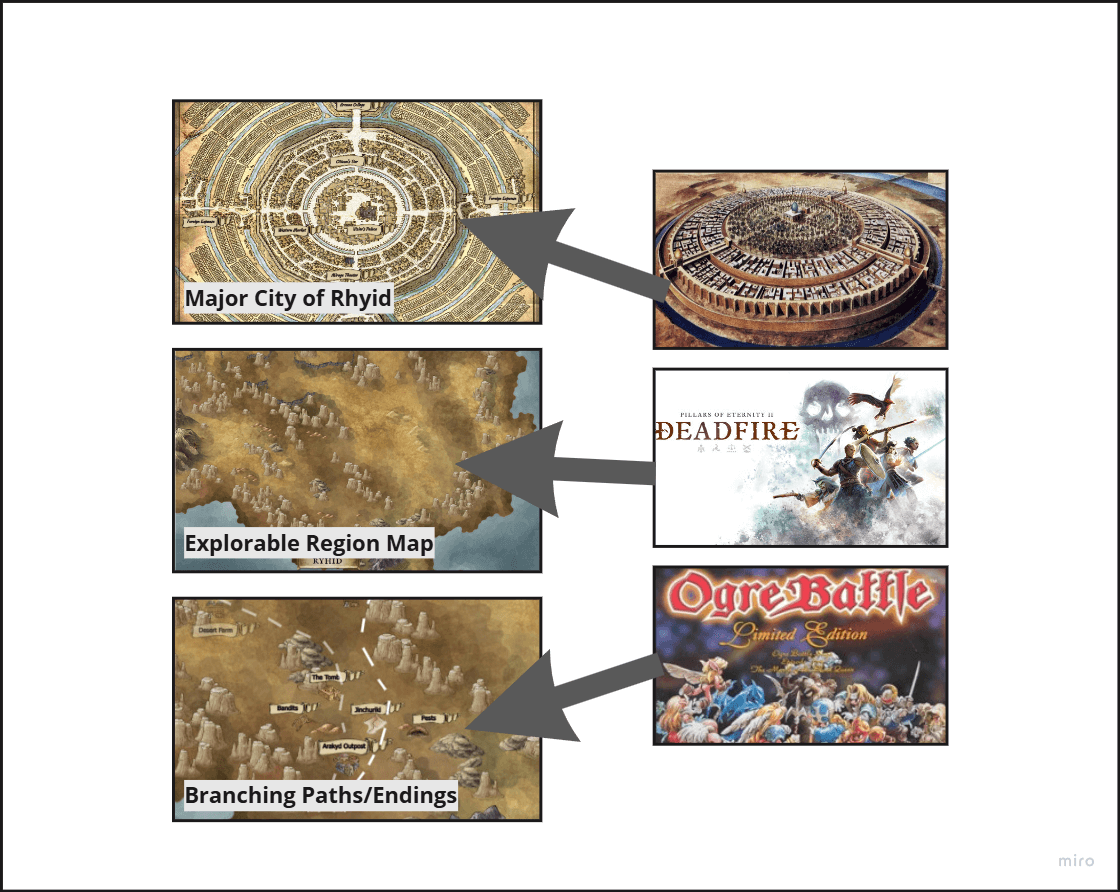
- Studying History: Researching golden age Baghdad led to the creation of the university city of Rhyid, Caravansaries evolved into a side-quest and caravan system, then studying medieval sieges created several campaign high points.
- Themes. Exploration of civilization is a core theme in Embers, and we associate desert cultures with ancient peoples, leading to a rich world to explore.
- Analyzing Modules. Previous D&D edition modules, such as the “Lost City” provide a strong basis for desert campaigns.