
L.O.R.E.
- Genre: RPG
- Type: Table Top
- System: Base d20
- Duration: 12 Months
- Tools: Excel, InDesign, Docus
- Iterations # 3
- Playtests # 10
Role: Designer, Game Master
(Documentation, Prototyping, Systems, Content, Writing)
Goal
L.O.R.E.’s design is a direct refutation of more rules-lite systems, attempting to capture deep, complex gameplay that emphasizes depth and customization. Basically, there’s an option for almost any character eventuality, while still trying to facilitate an easy play experience.
- Complex Gameplay. I wanted to make a tactical game with a low floor and a high ceiling that rewards strategy.
- Wide Customization. TTRPGs are all about the player character, so L.O.R.E. facilitates near every adventure archetype, ensuring players always have a way to realize their imagination.
- Gameplay Ease. Complexity is wasted when it is bogged down by too much math or too many interactions, so LORE has a wealth of pre-generated actions, powers, and easy to approach math.
- Modular Systems. I wanted the engine itself to be customizable, so several systems can be removed without hindering gameplay.
Mechanics Overview
L.O.R.E. is a fantasy tabletop roleplaying game that blends the narrative of tabletop games with mechanical customization: linking stories with builds, numbers with meaning, and includes a feature for almost any flavor.
It uses a “d20” system, which involves rolling a 1d20 then modifying the result based on a characters’ relevant bonuses or penalties. These systems have a high “swing” ratio, so L.O.R.E.’s modifiers are designed to lessen the impact of this swing by value stacking both integers and percentages, such as with “multiple levels of advantage”, allowing players to roll multiple d20s (from +1 to infinite addons) instead of one to maximize chances of success.
Mechanic Highlight: Controlled, Infinite Scaling
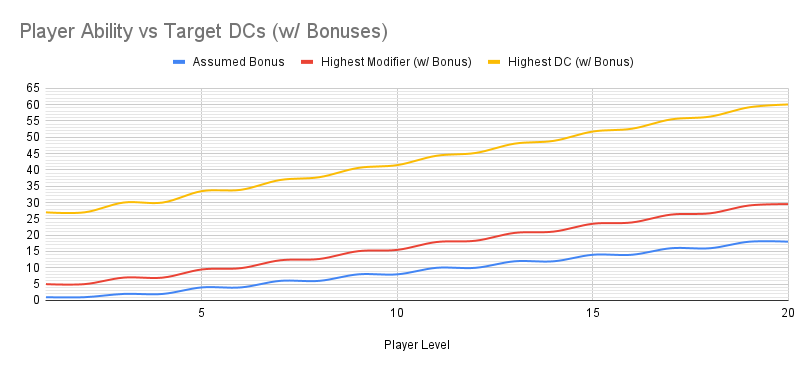
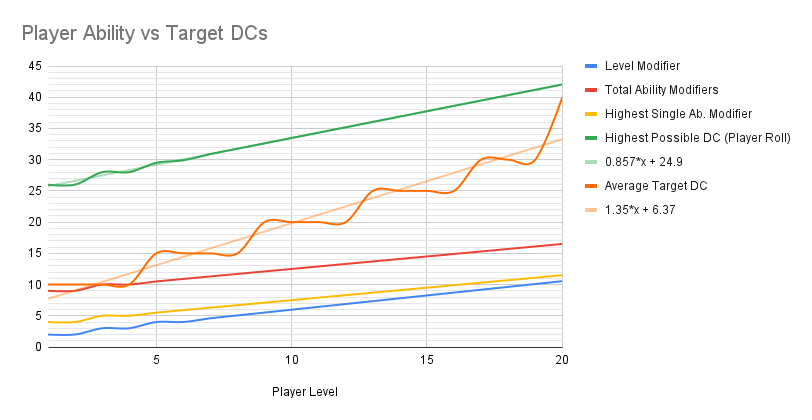
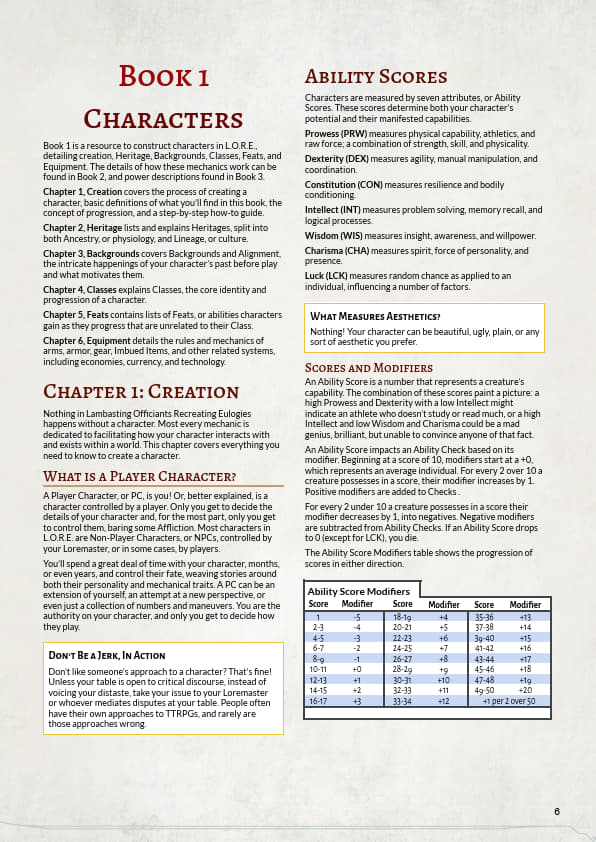
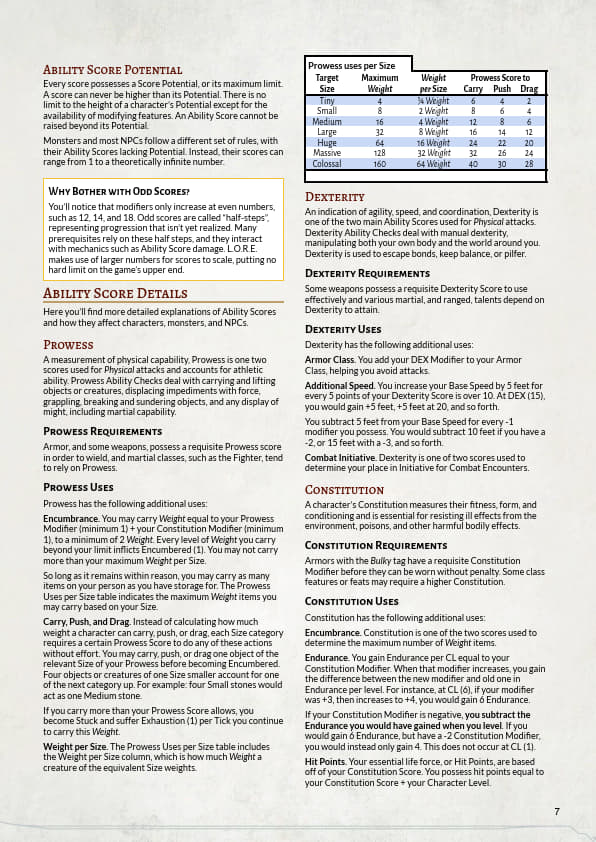
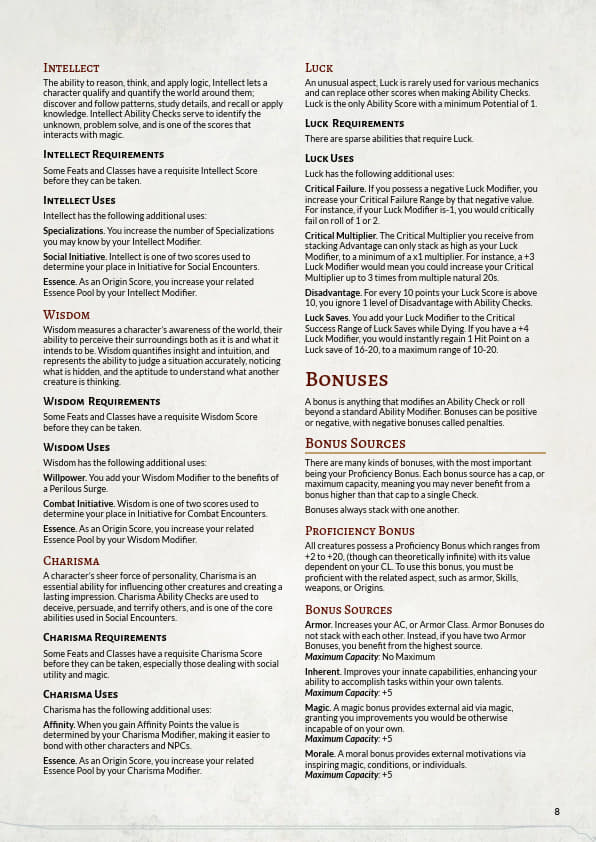
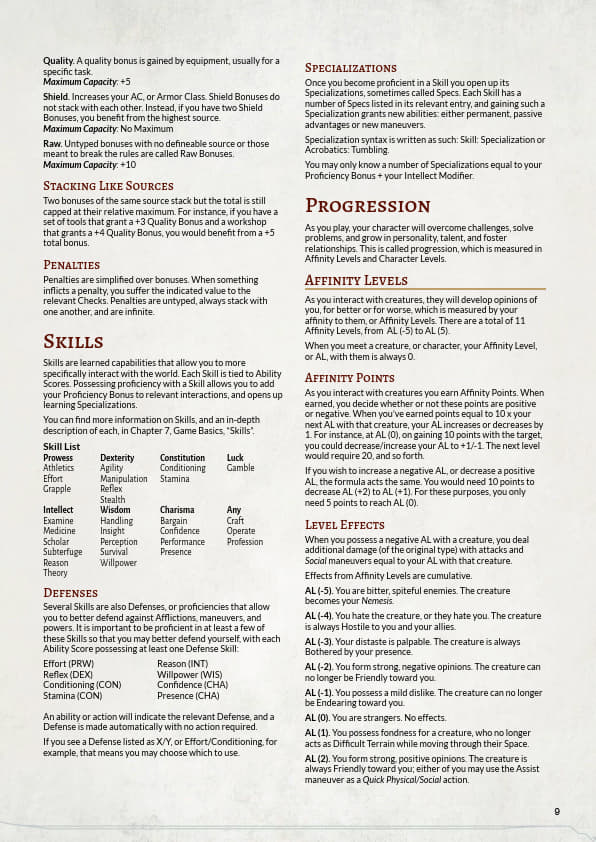
Goal: L.O.R.E. should be able to sustain characters for as long as players wish to run them: enter infinite scaling with a balanced framework.
Result: Players’ core statistics have no limit, but are controlled by a “Potential” factor, and bonuses have hard caps that are broken by late game progression.
Techniques
- Scores & Potential. Character attributes can be increased by multiple factors, primarily progression, but have an attached “potential” value, which determines their maximum cap, forcing specialization and controlling scale.
- Math! I use two major anchor numbers. For attributes: 10, which converts to +/- variables (2 value converts to +/- 1) as it changes, then equipment uses multiplicative variables as an anchor (x1, x2, etcetera). There is no cap to either aspect, but each is controlled at math bottlenecks and by soft ceilings.
- Capped Bonuses. Bonuses are additive to variable modifiers instead of their values, assuming a progression of +5 attribute value per +1 bonus. They are hard capped, unlike attributes, to create a soft ceiling that focuses progression over economy. This allows for free stacking via individual bonus types without trashing late game balance.
Mechanic Highlight: Classes & Progression
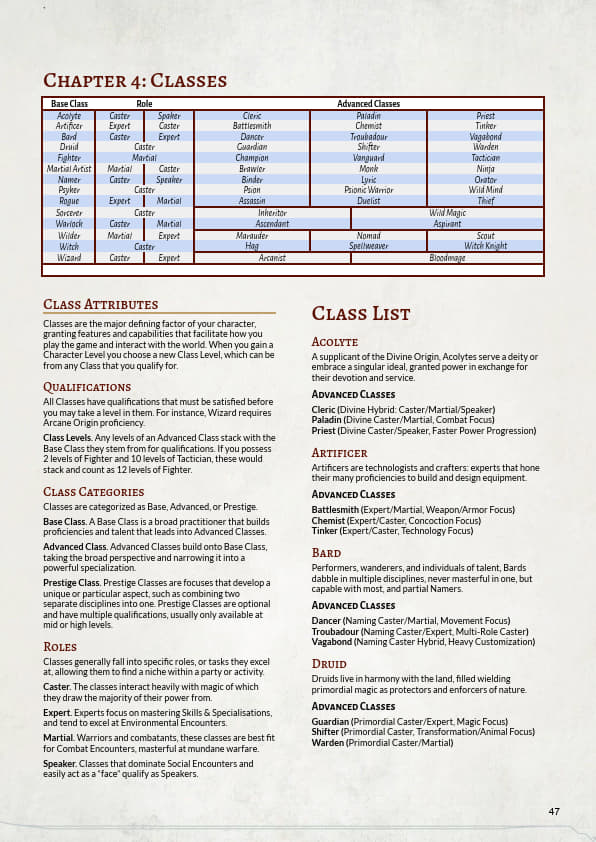
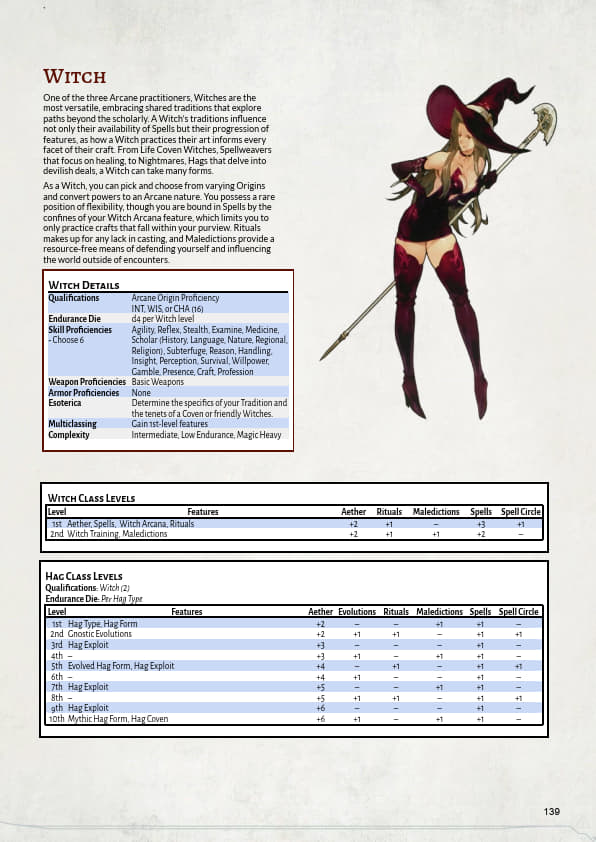
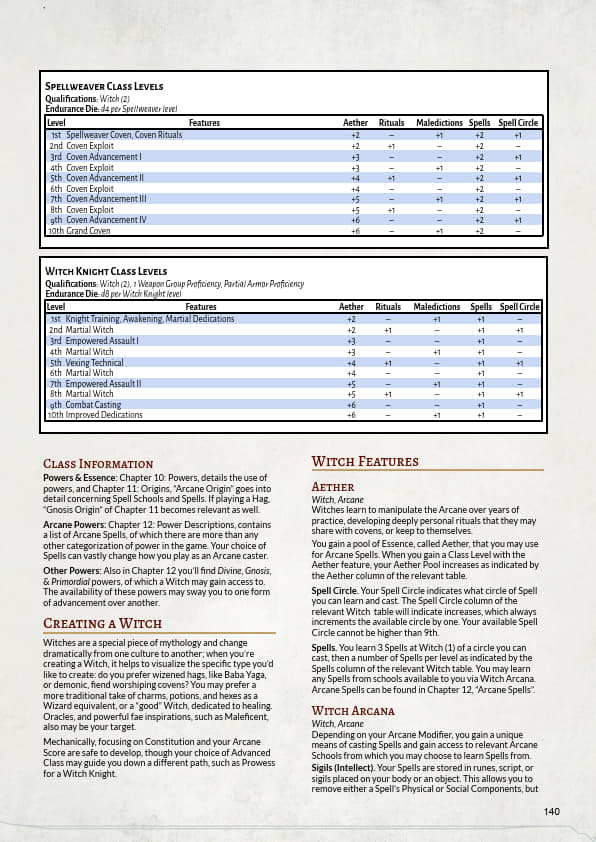
Goal: I wanted a class system reminiscent of older editions of D&D that not only had its own identity but fit neatly into campaign modules. I also wanted to show narrative progression through mechanics.
Result: When characters gain a level, they acquire features from both a generic chart and their chosen class. Classes are split into progressive stages, with each eschewing the classic 20-level scale for a more manageable 10-level scale.
Techniques
- Generic Progression. When players gain a level, they are rewarded with extrinsic value: generic & class features: attribute increases, economy bonuses, talents, and unique capability.
- Math! Progression is measured by “major/minor accomplishments”. To gain a level, a character needs n +1 major accomplishment, making early game a quick and satisfying tutorial, while mid and late game increases slow for a smoother learning curve and intrinsic sense of accomplishment.
- Dynamic Experience. Measured as “accomplishments”, these are gained via role playing, succeeding encounters, finishing quests or events, and by game master discretion. Minor accomplishments can be rewarded for small victories or personal achievement, converting to majors at 10 to 1.
- Staged Classes. Player classes “evolve” from one stage to another, from Base Classes (stage 1), to Advanced (stage 2), and finally Progression Classes (stage 3).
Mechanic Highlight: Crafting
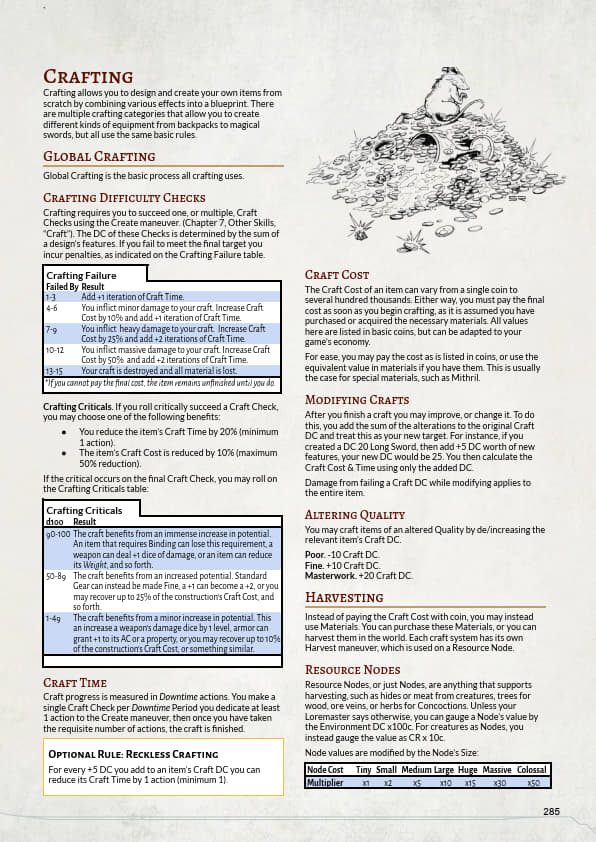
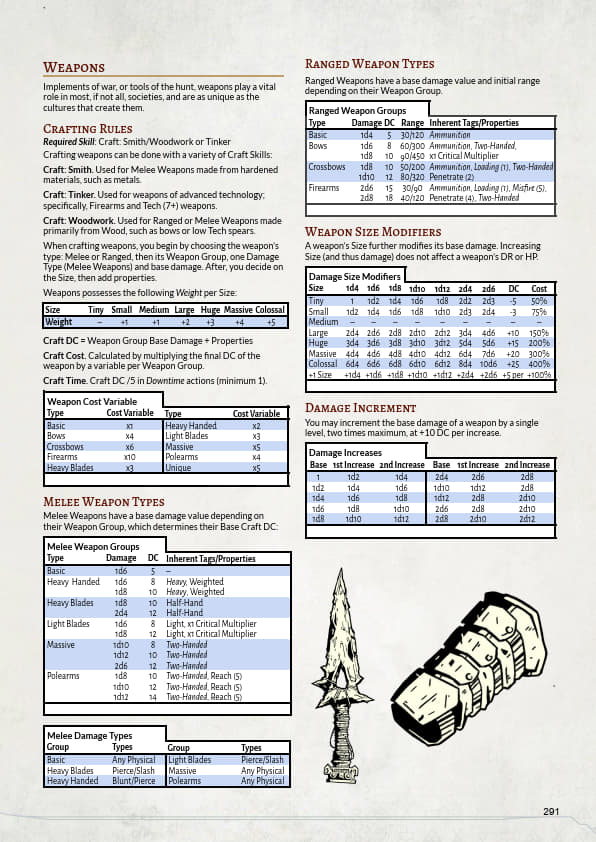
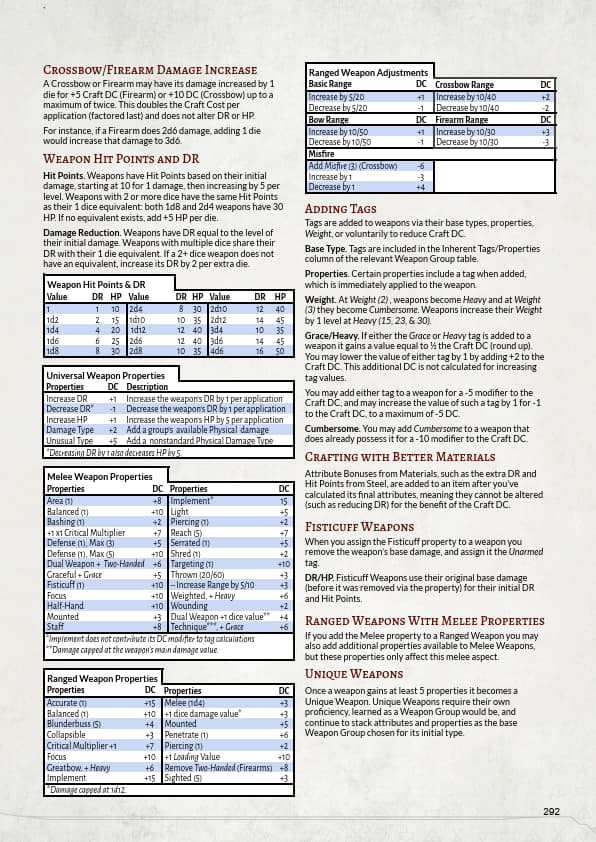
Goal: As a game that targets as many options as possible, it should include a crafting system that facilitates customization of resources as well as progression.
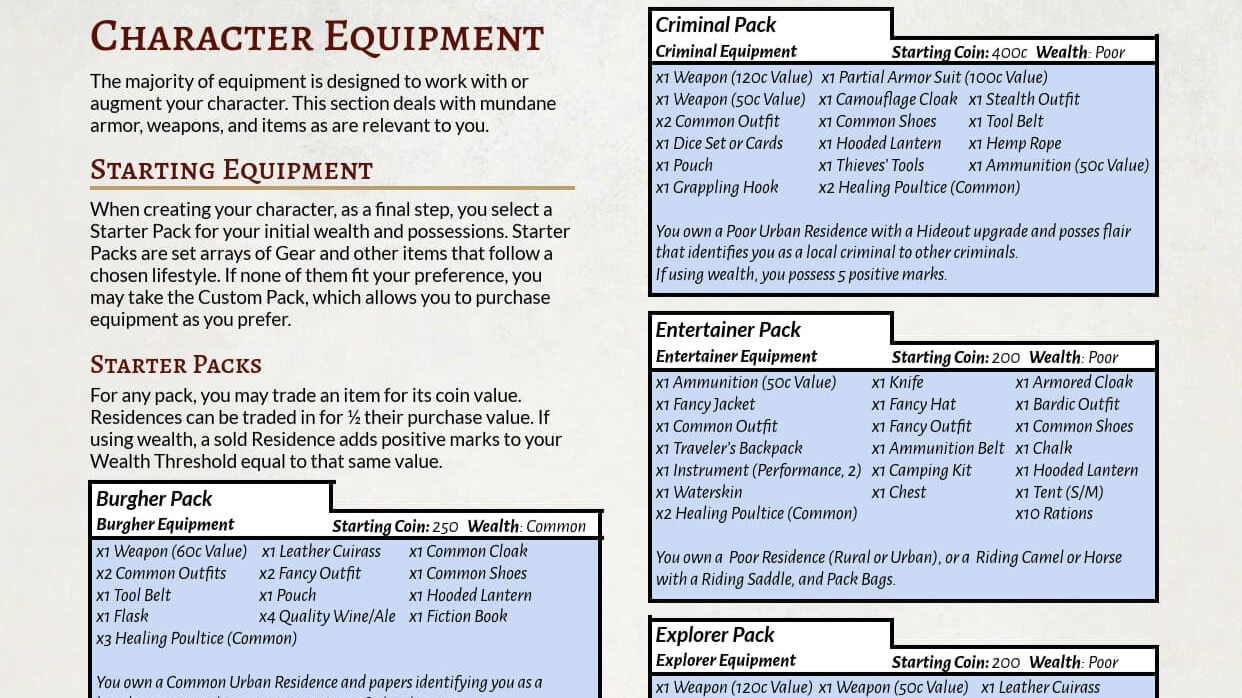
Result: I designed a crafting system that can handle all equipment types in the game, then generated all of the available generic equipment with these systems for consistency and to test implementation.
Click here for the crafting sheet used in the video.
Techniques
- Limited Math. As a TTRPG, LORE eschew complex equations, instead relying on arithmetic to keep it accessible. Primarily, costs are calculated via multiplicative variables to soft resource caps then difficulty is determined by small integer variables per capability, ranging between final values of 10 to 50 (based on current progression).
- Sub Systems. Each equipment type has its own lists of recipes and processes that plug into the basic crafting system. This helps distinguish specialization while giving crafted equipment a unique feel.
- Resource Acquisition. Resources for crafting interface directly with the game’s economy to keep equivalent ratios. Players may harvest materials, which are calculated by currency cost at a 1 to 1 ratio, with higher dice values demanding a higher investment of resource.
Customization Mechanics
Overview
Brief: L.O.R.E. facilitates characters that encompass any archetype players may favor. It does this through a involved creation process, customizing physiology, culture, and individual backgrounds, through myriad classes with adjustable features, and by offering magical categories, or origins, that are distinctive from one another.
These mechanics not only customize options in engine, but they’re modular, so they can be added or removed to fit the chosen setting of play, creating a go-to system for any kind of game for replayability.
Character Creation
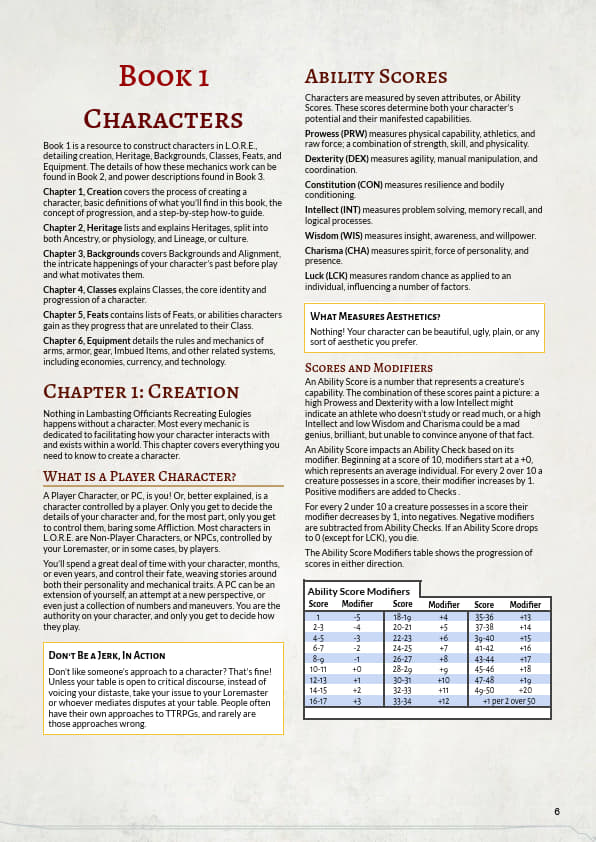
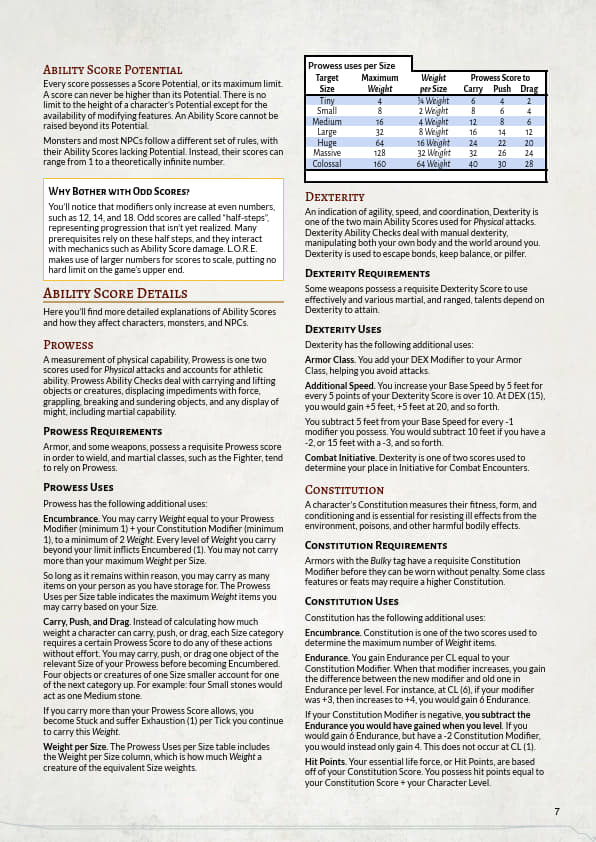
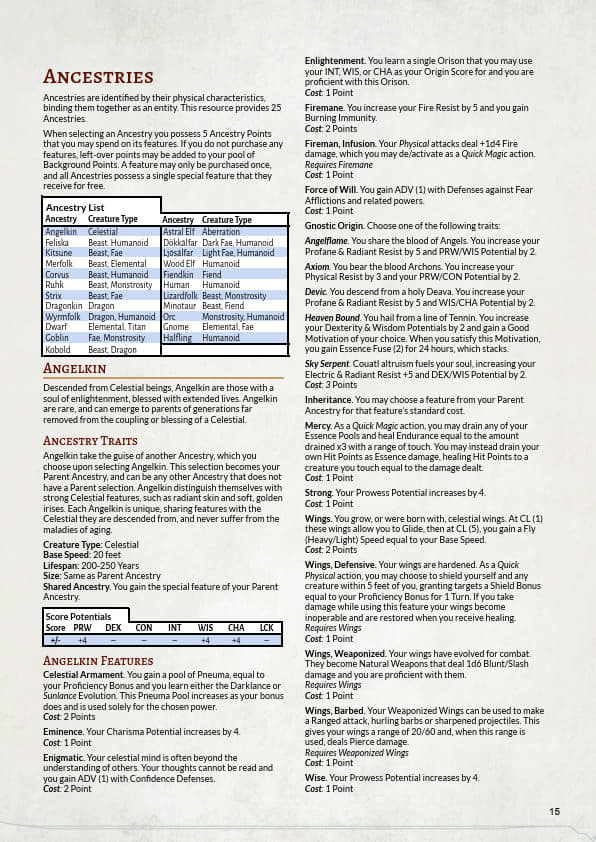
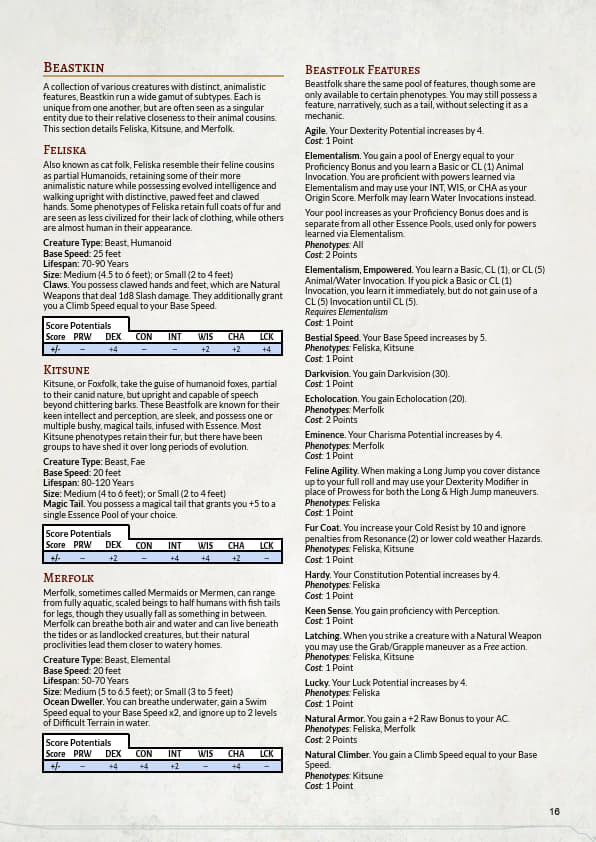
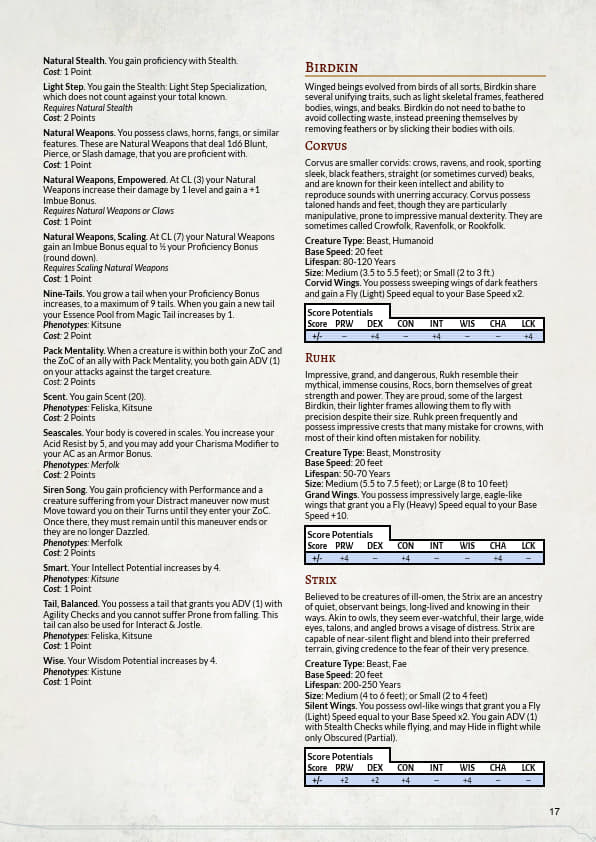
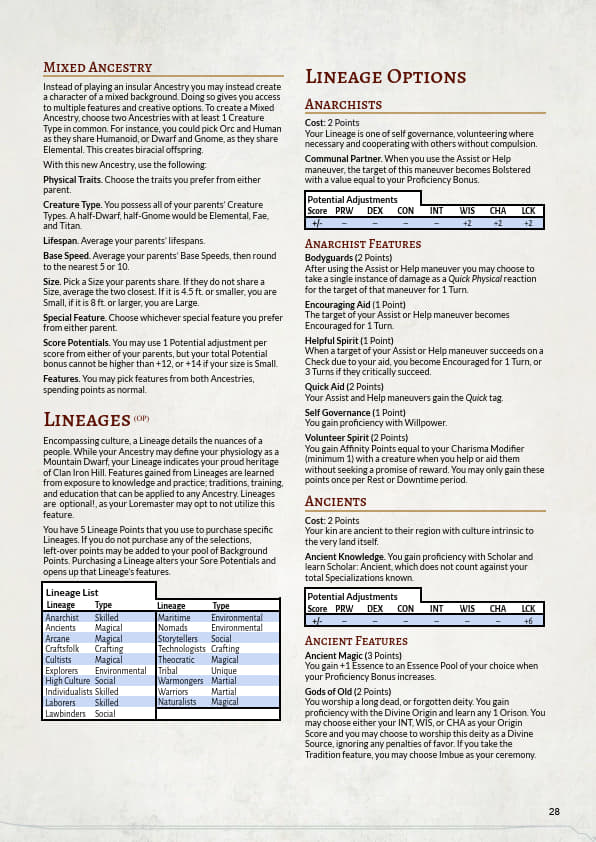
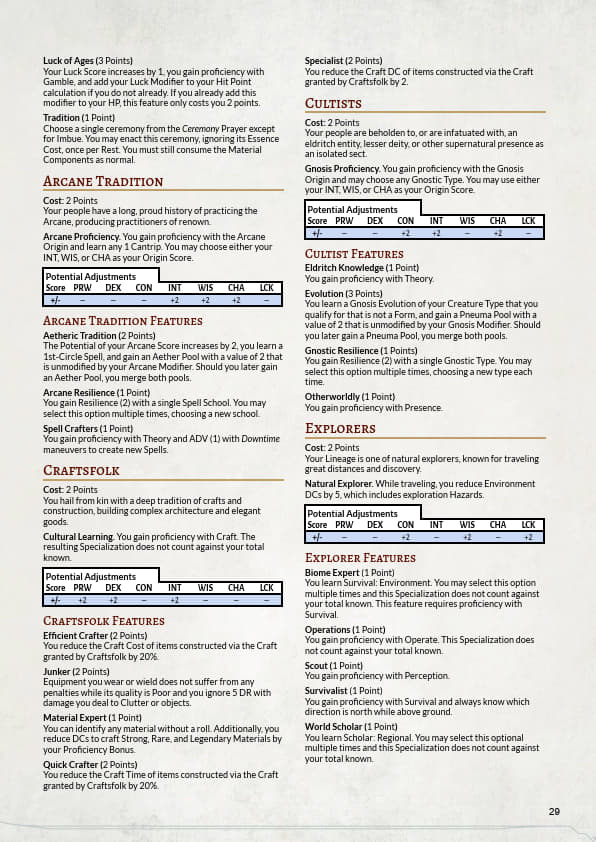
Goal. Allow players to create characters with mechanics to support their ideas and backstories and to help guide their progression to limit the impact of complexity.
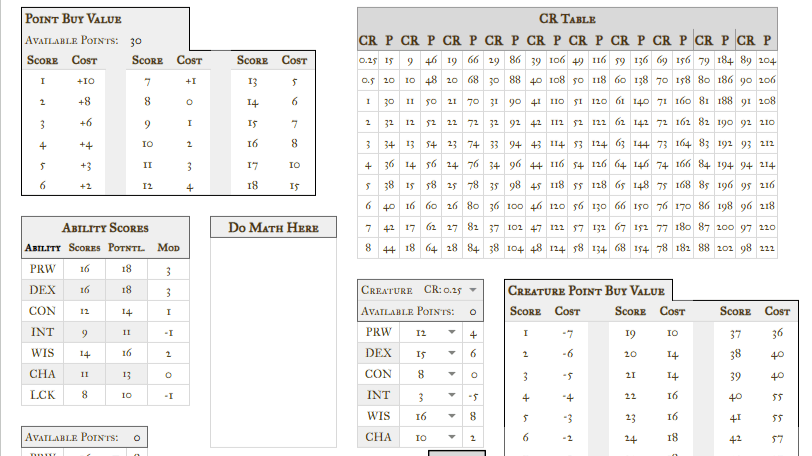
Result. Creation is broken into four stages: attributes, physiology (species), culture, and background. Each stage builds on the last and has dozens of features that are mixed and matched to bring concepts to life.
Math! Creation uses a point buy system for each aspect. Attribute values and features are given a mechanical weight, then each system uses a pool of available points that players may spend freely. For attributes, costs initially follower a linear progression at a +1 cost per +1 value then dramatically scale at high-end values, to +5 cost +1 value, to prevent early min-maxing and emphasize progression systems over min/max manipulation.
Classes
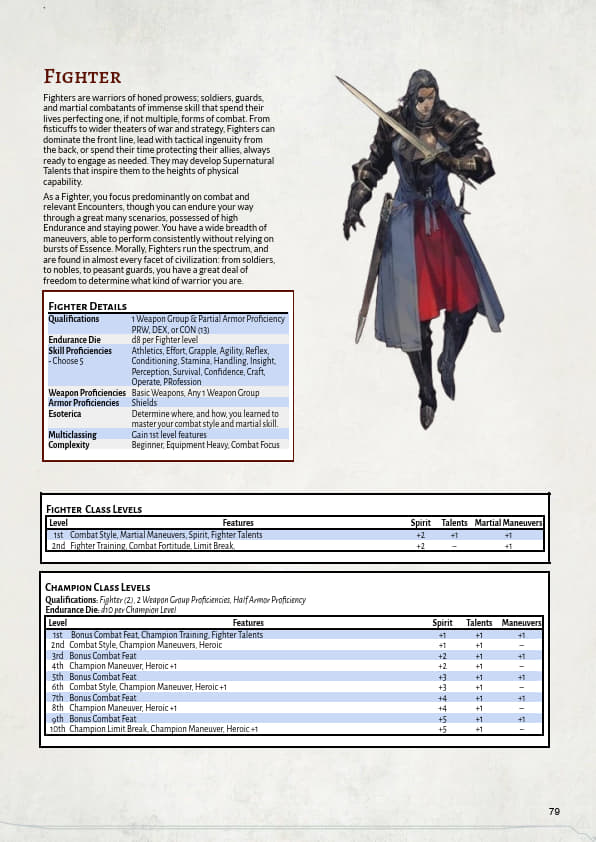
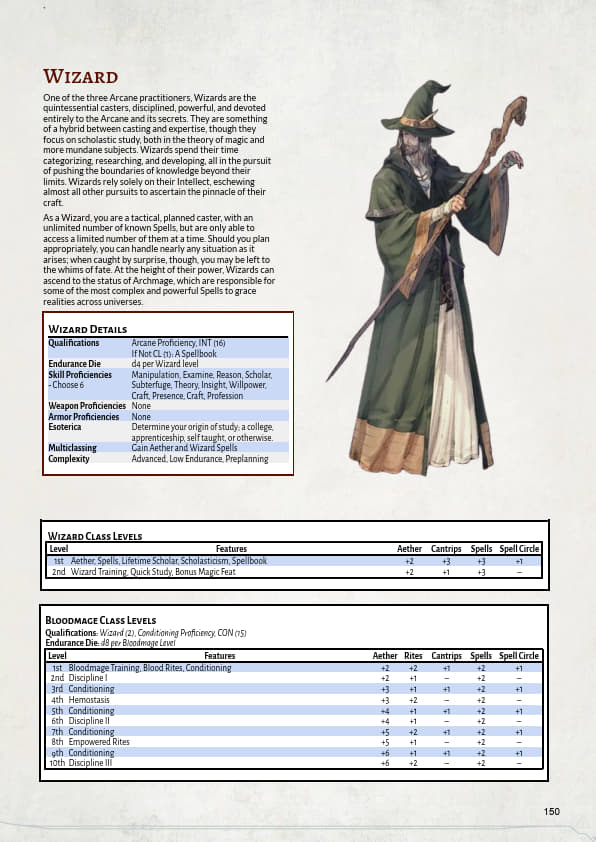
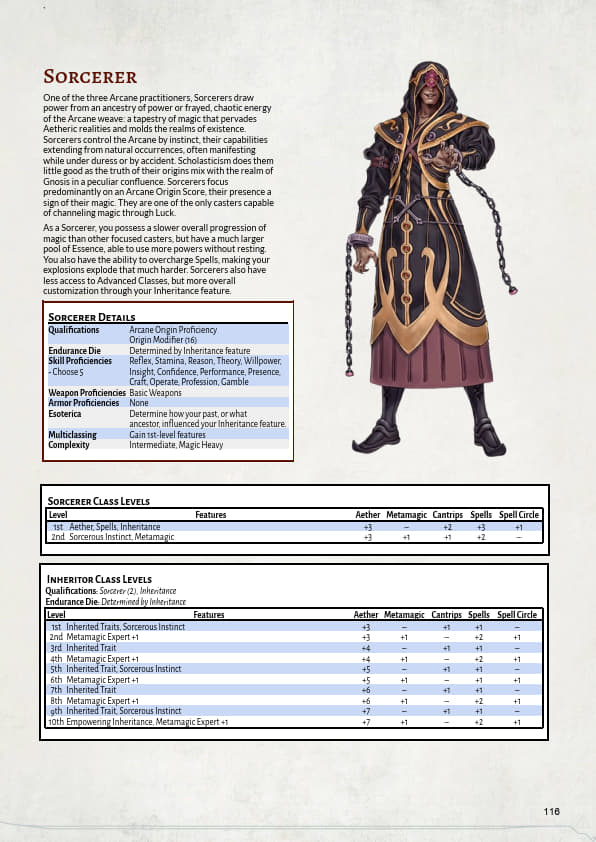
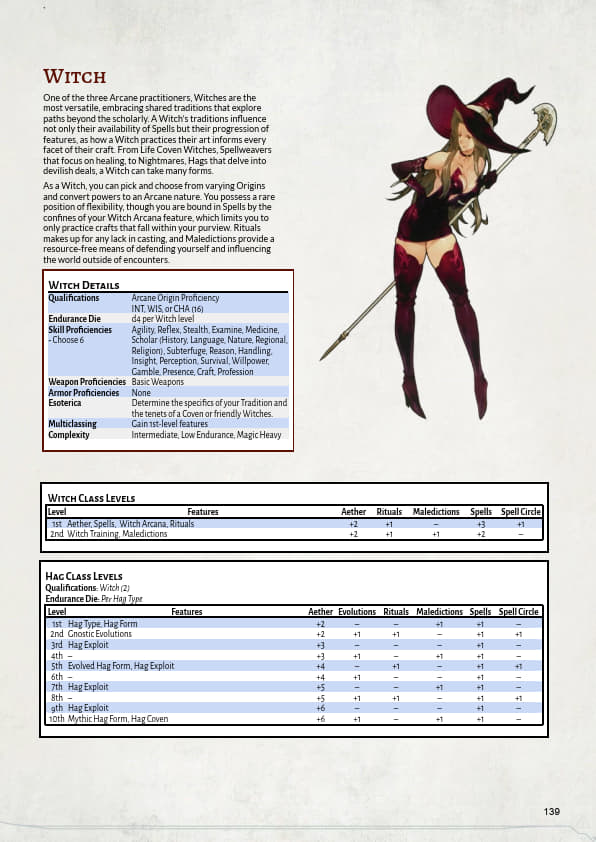
Goal. Make roles that not only covered archetypes but were customizable within themselves and allow a space for decisions that can either evolve or change during play.
Result. Class features provide options within the role and classes themselves have a base form, multiple advanced forms, and a confluence option, all separated into level blocks that players my hop into and out of so long as they meet requirements.
Dynamic Classes. Shorter level blocks with wider agency lets players craft their role dynamically and fits easier into the TTRPG adventure/campaign format.
Origins
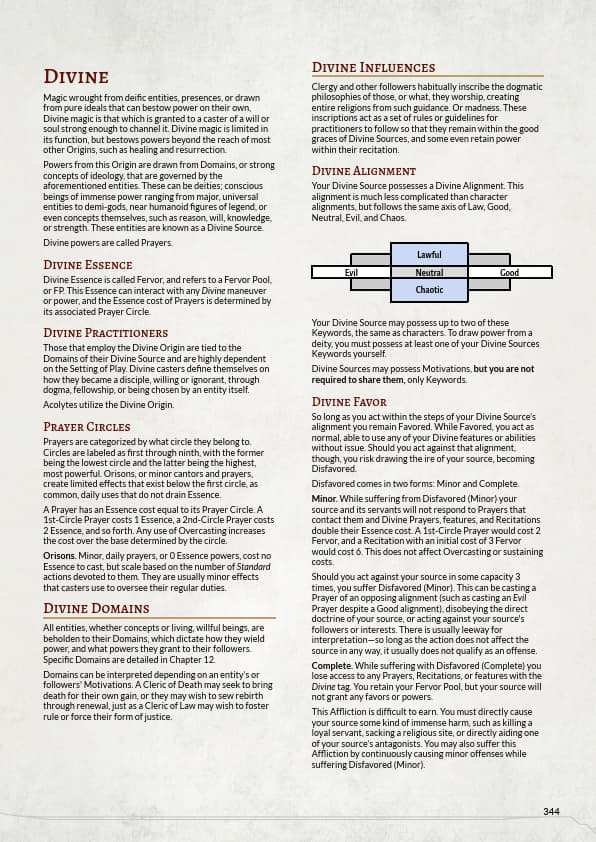
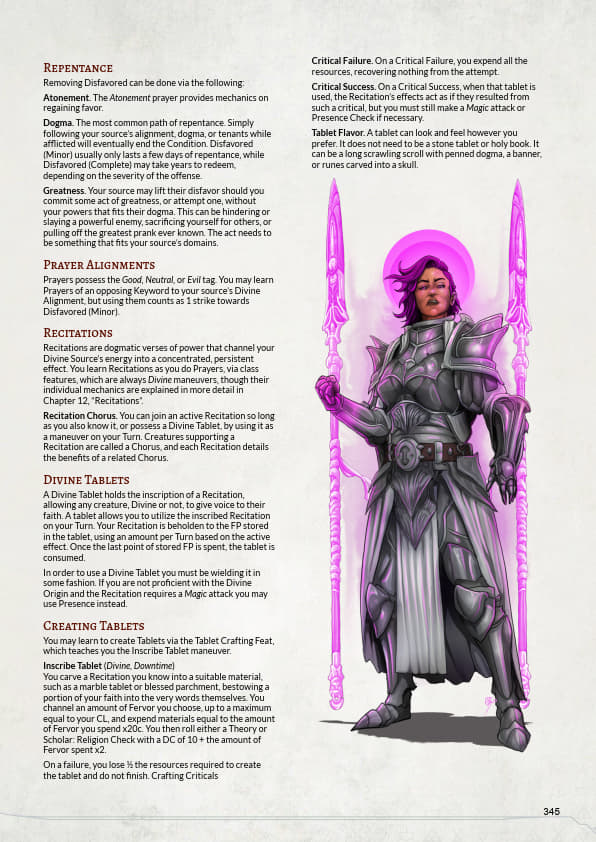
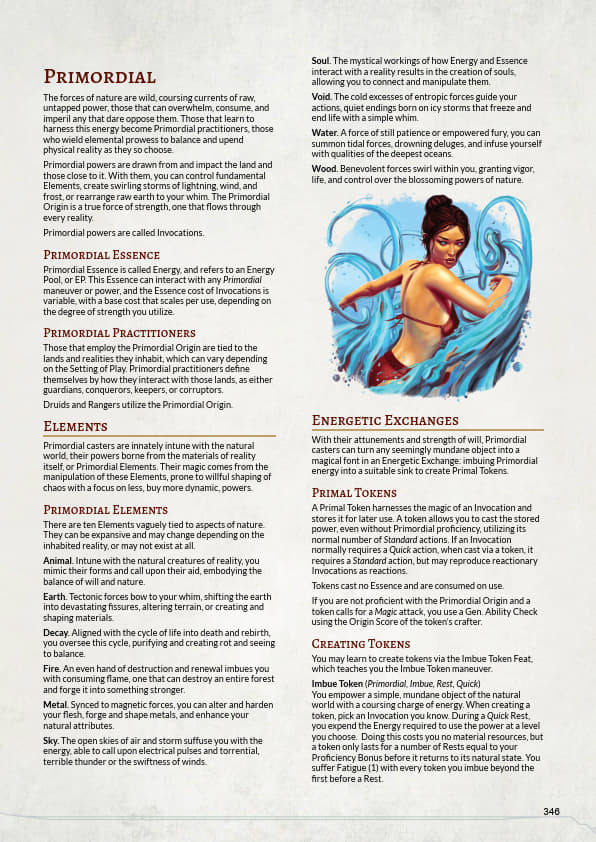
Goal. Craft an encompassing mechanic for powers with multiple subsystems unique from one another to further distinguish characters and fit narratives within settings of play.
Result. Created 6 magical origins: Arcane, Divine, Gnosis, Primordial, Naming and Supernatural. All utilize the same use mechanics: resource tracking, scaling, and implementation, but each has its own rules and retains unique restrictions or function.
Similar but Unique. Each origin shares familiar aspects but hones its own identity. Players can easy move between them but feel there’s a reason to choose one over another.
Encounter Design
Overview
Brief: Encounters in L.O.R.E. are broken down into three aspects: Combat, Environmental, and Social, that all share the same action economy and basic functionality of turns, rounds, and measuring time. Each can occur on its own or be merged for dynamic encounters.
Player Motivation. The combination of encounters lets specific player roles shine, creating internal satisfaction for individual usefulness, then players are rewarded externally for their character’s system impacts via variable ratios. This creates a positive feedback loop, despite risk, as there’s always another opportunity to find value.
Creatures
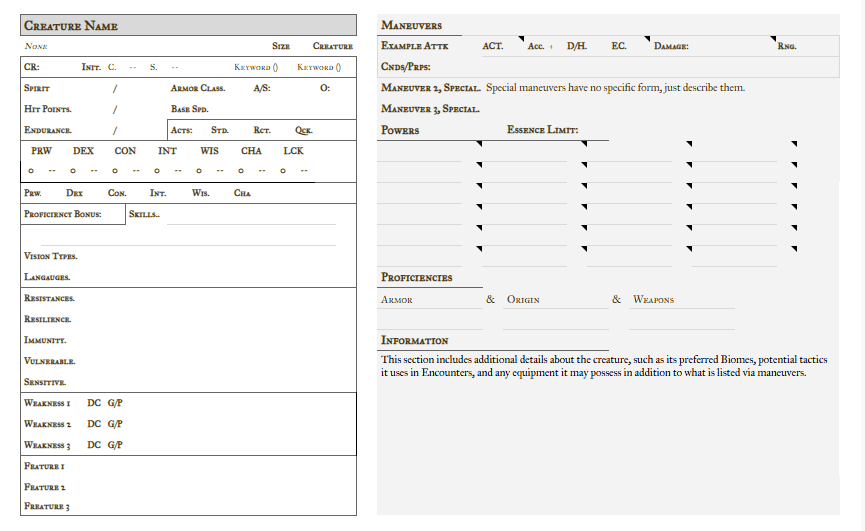
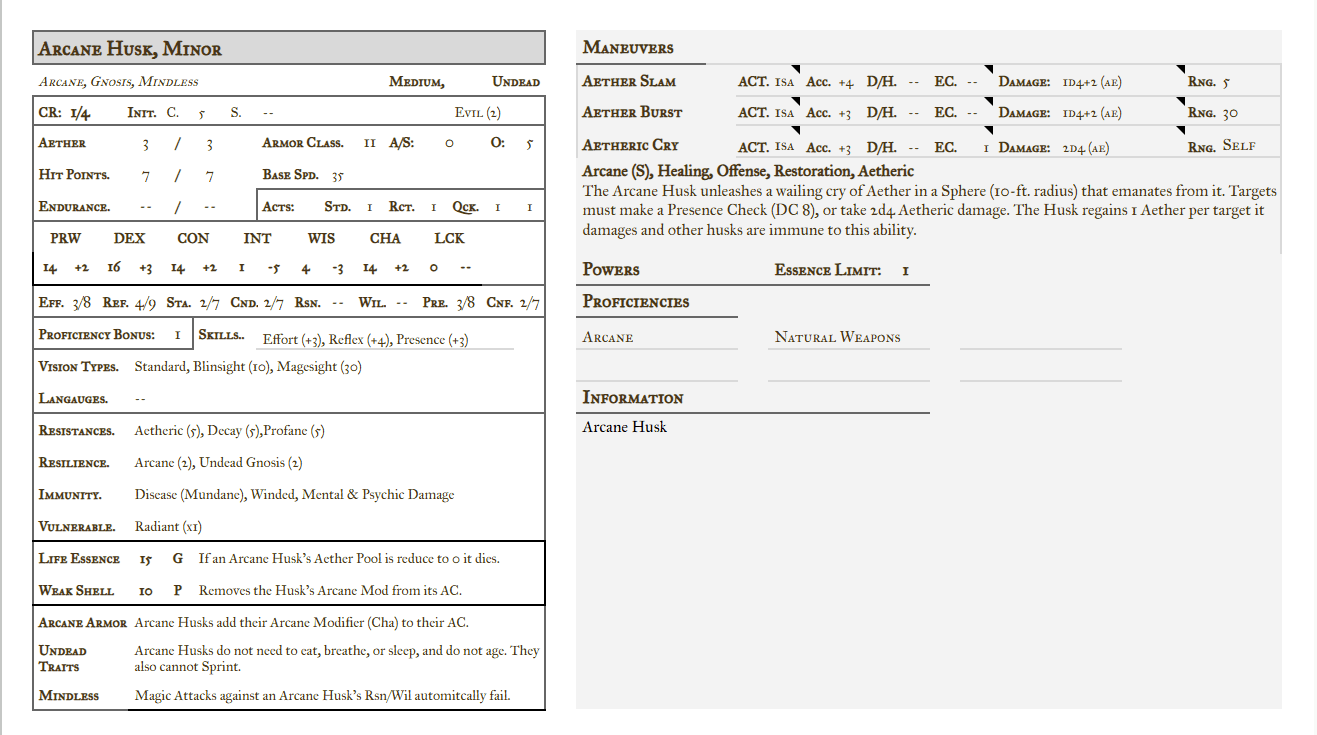
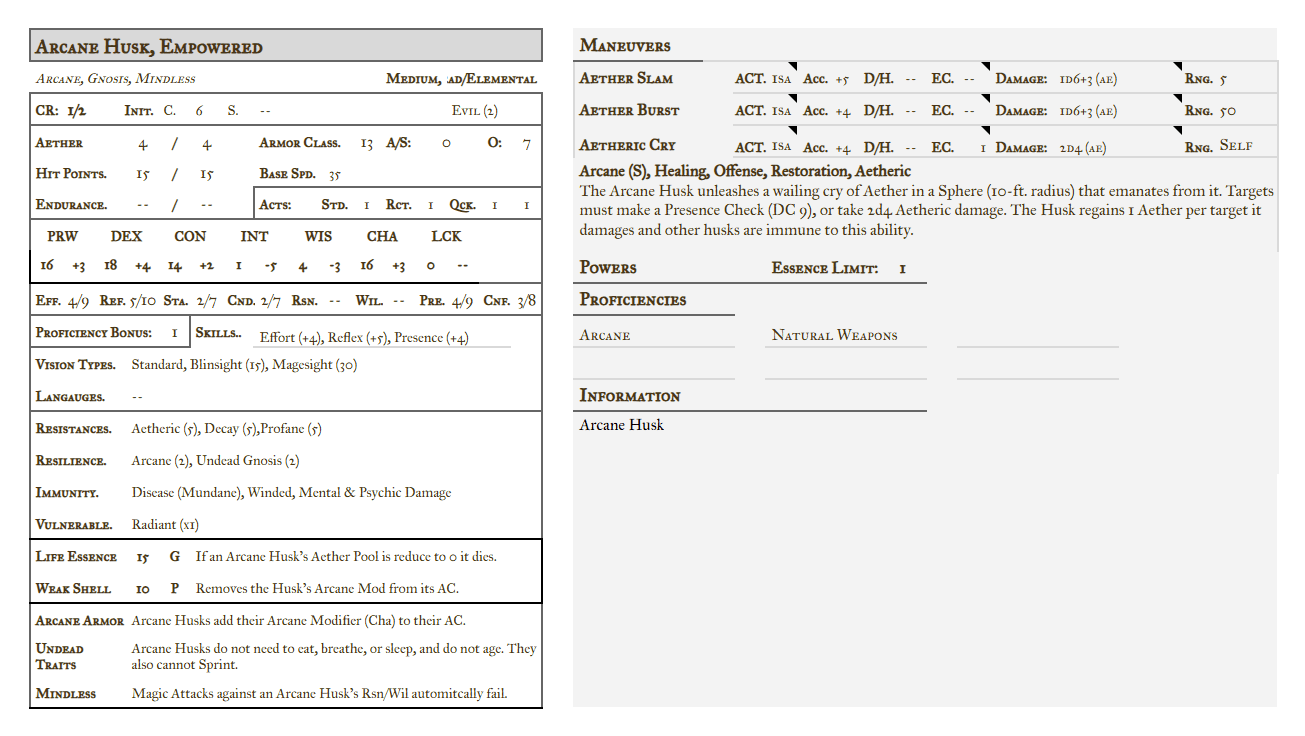
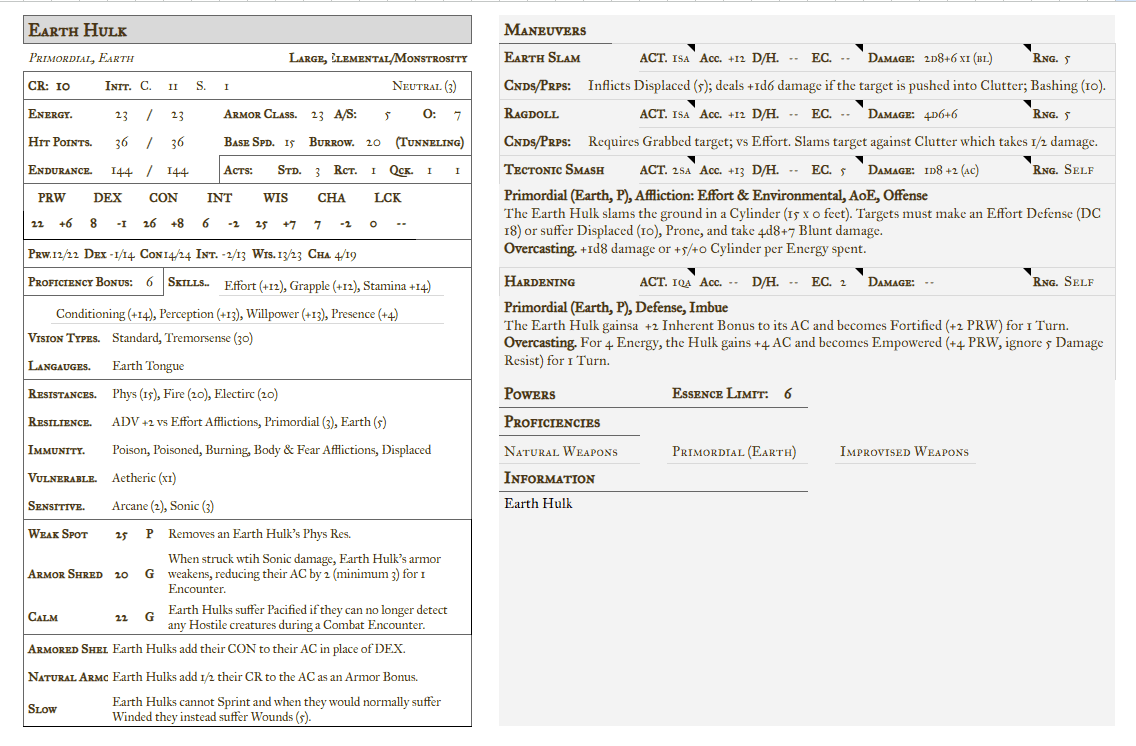
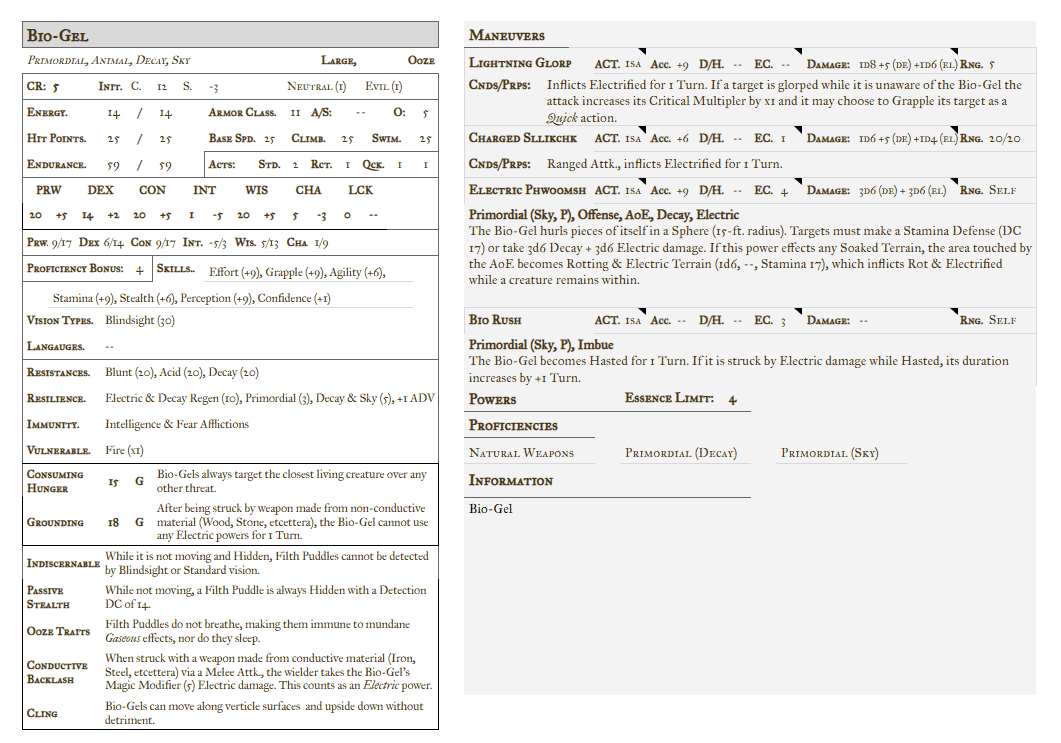
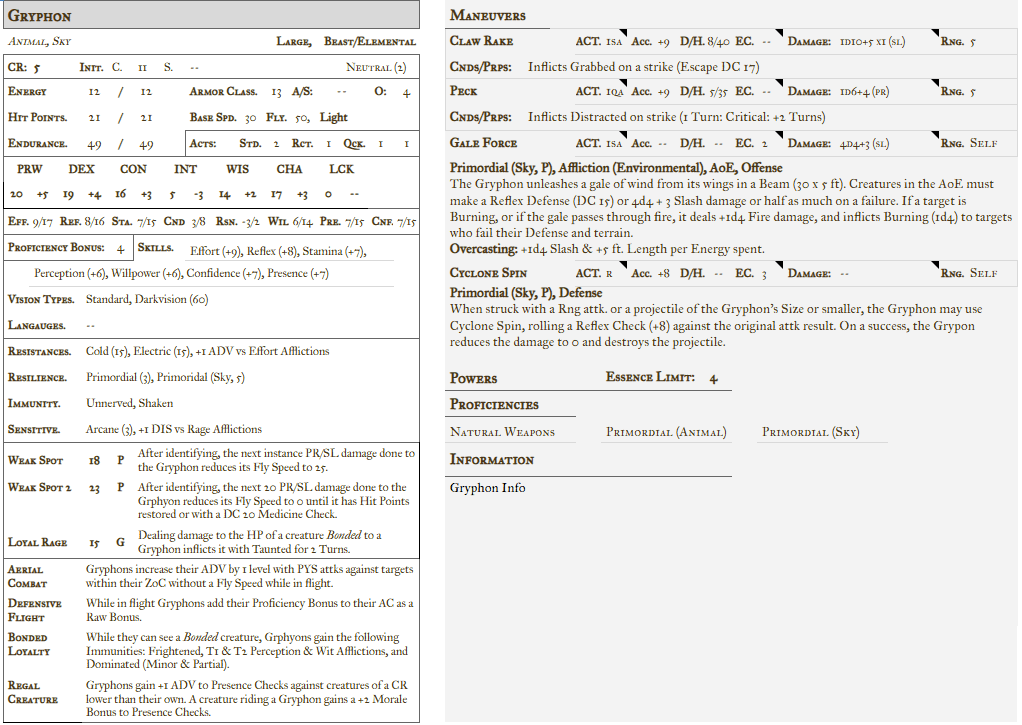
Goal. Creatures should be easy to run and to measure challenge by. They should support multiple encounter types and possess multiple means of resolution.
Result. Creatures are measured by their Challenge Rating, equivalent to class level for players at a 1 to 1 ratio. They also possess a slew of support statistics, leaning into focused defenses, immunities, and weaknesses.
Math! Creature attributes are purchased the same as players to keep them inline but are awarded more points and more generous values to keep their modifiers at pace with tools and other bonuses. These cost progressions are linear, but have large bumps every +10 value, forcing creatures to also specialize and not fall victim to “generalist” builds with no weaknesses.
Action Economy
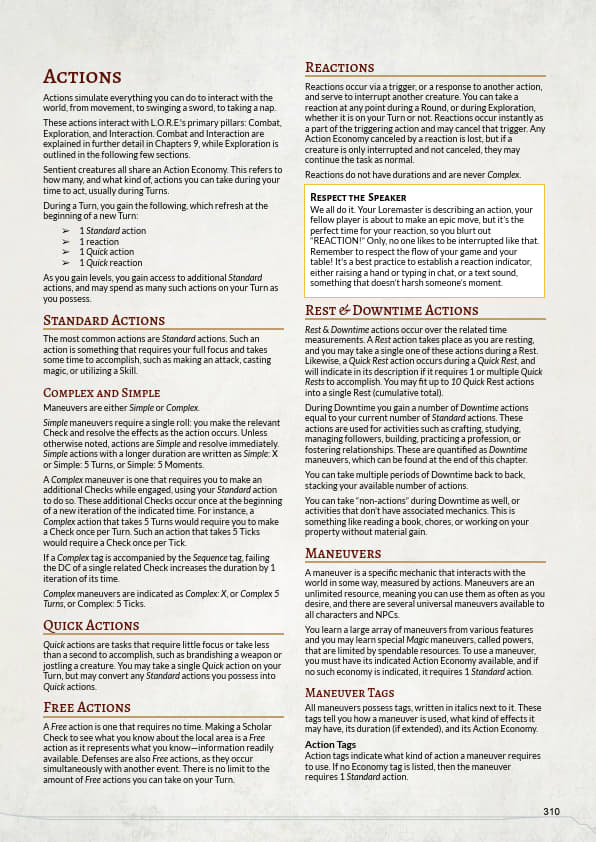
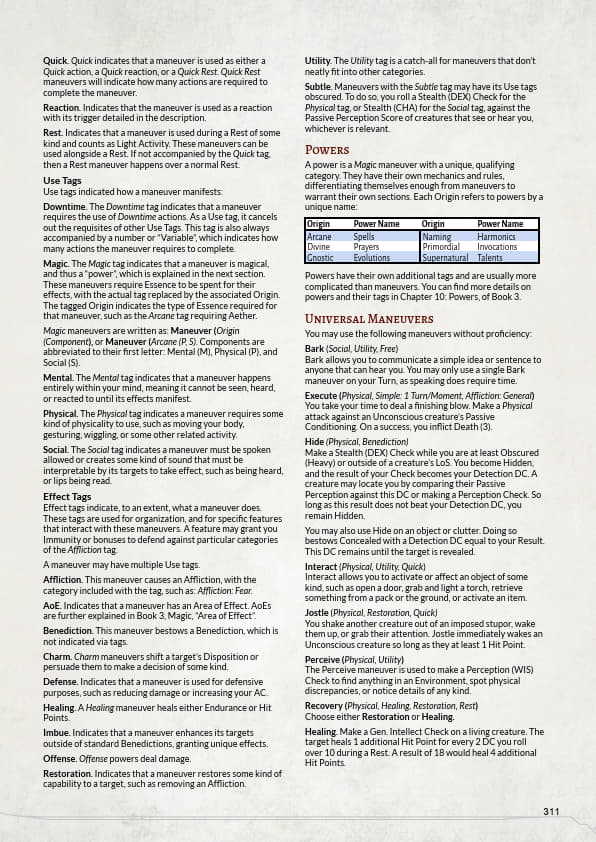
Goals. Design a system of actions that scales with players to both soft cap capability and create a smooth curve of challenge progression.
Results. Players have use of multiple kinds of actions: standard, quick, and reactive. Standard actions be converted to any other type, and players gain additional standard actions via generic progression (leveling).
Theory. Three action categories create a distributive array of 1, 1, 1. Column 1 can be distributed to the rest of the row, such as 0, 2, 1, then is incremented by 1 via progression, such as: 2, 1, 1, then 3, 1, 1, etcetera, which then creates dynamic turns that adapt to play scenarios. Players may prefer 0, 3, 1 for round then, 3, 1, 1 for round 2, or 2, 1, 2 for round 3, and so forth.
Combat & Social Encounters
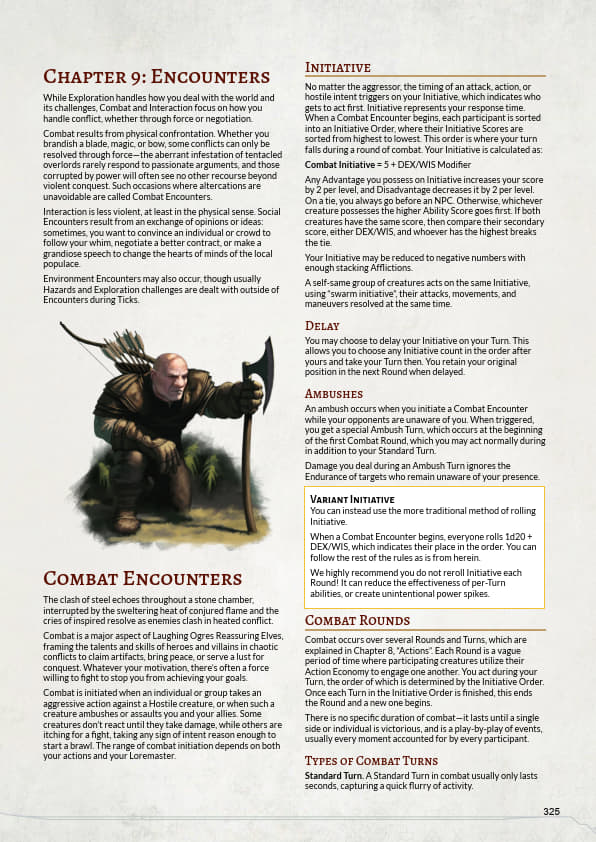
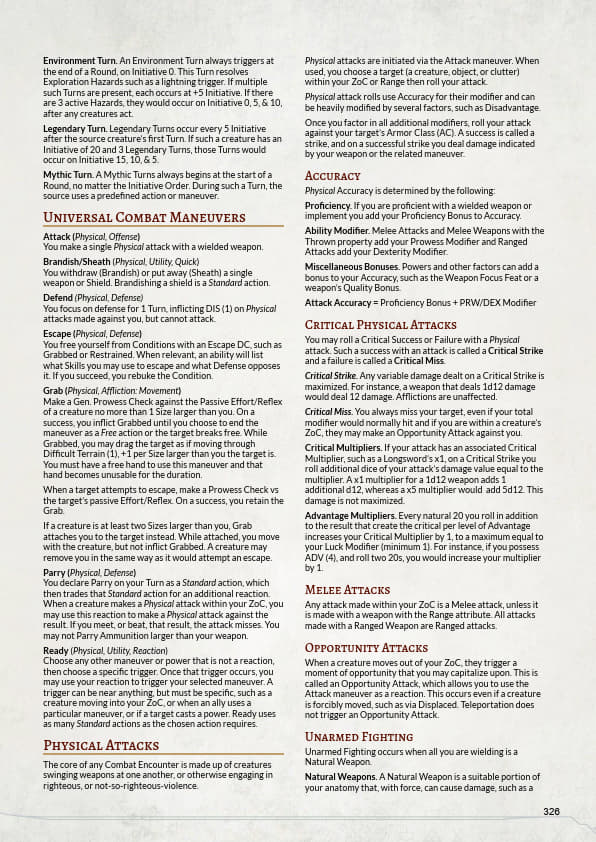
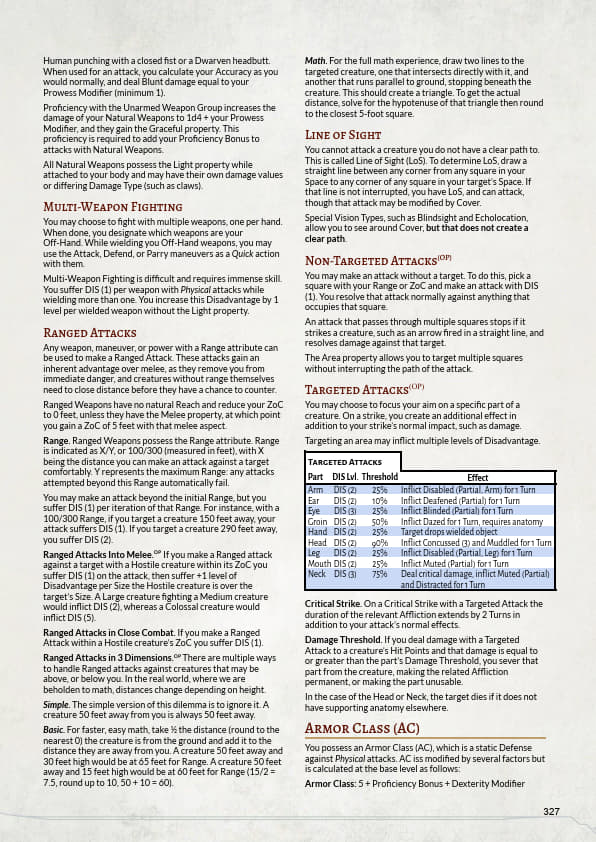
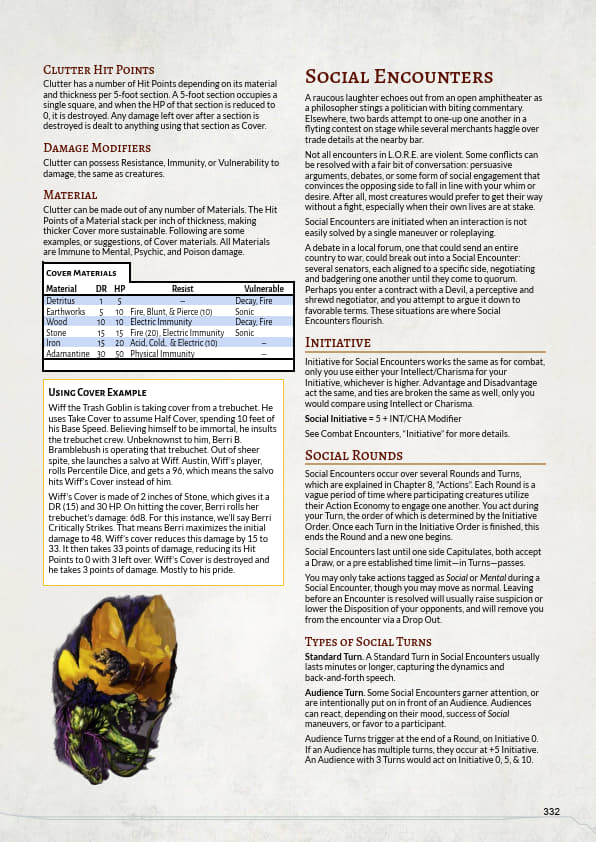
Goals. Make combat and social risk equitable experiences, both viable paths for resolution, with social encounters more involved than 1 check.
Results. Encounter types draw from the same action economy and share an involved system of resolution. This creates familiarity moving between each, and allows specialists, especially peaceful or charismatic characters, to display competence.
Theory. Damage is dealt in all encounters, first to an endurance pool, then to a health pool. Endurance is easily recoverable and does not process actual harm, whereas health exists in low values and represents real, bodily injury. Social encounters deal fixed damage progression to the former pool, while combat encounters deal variable values to both pools.
Supplemental Systems
Overview
Brief: L.O.R.E. is massive for a TTRPG. As it relies on its players to run its engine, a lot of its systems depth were created to be supplemental so that they could be discarded without diminishing the base game. As players wish, they can add or utilize these systems, either slowly building to the “complete” game, revealing new depth as it becomes relevant, or for players accustomed to advanced logistics they may approach it all at once.
Either way, the concept of supplemental depth keeps the themes of customization, even in the systems themselves.
Economy
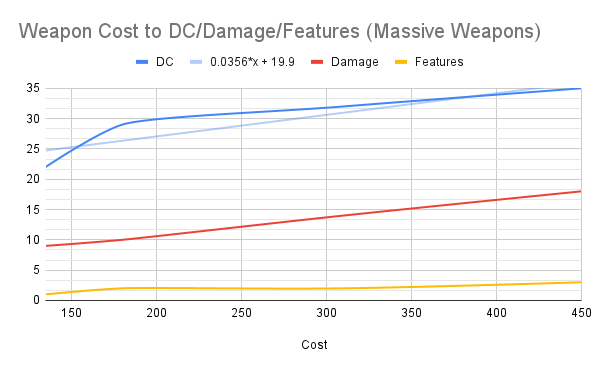
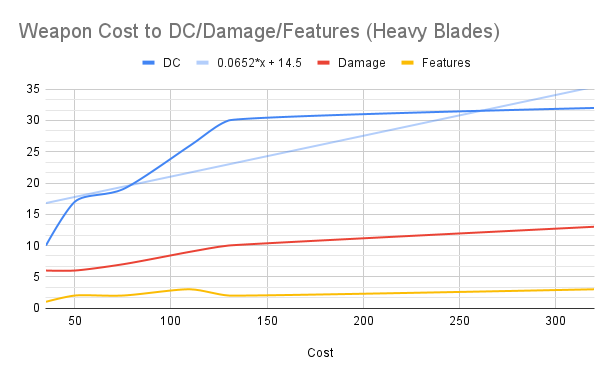
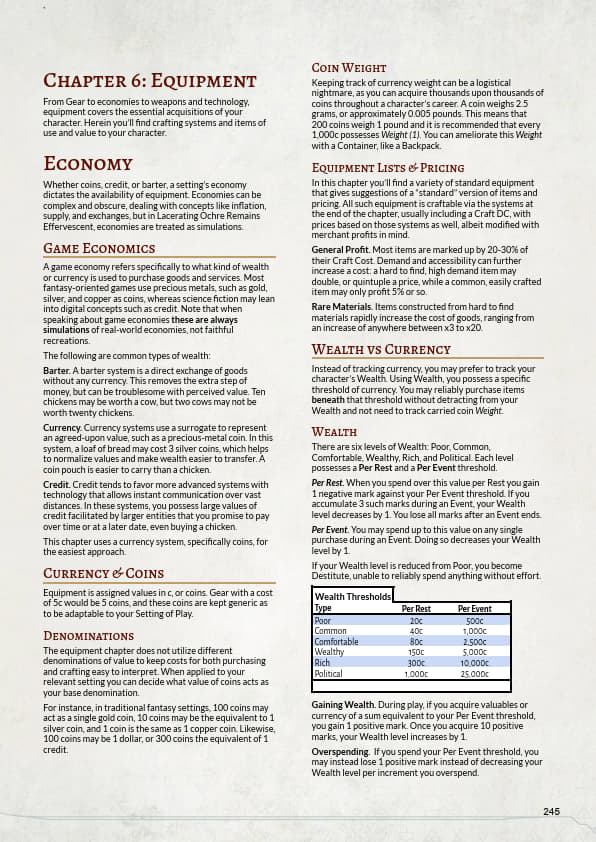
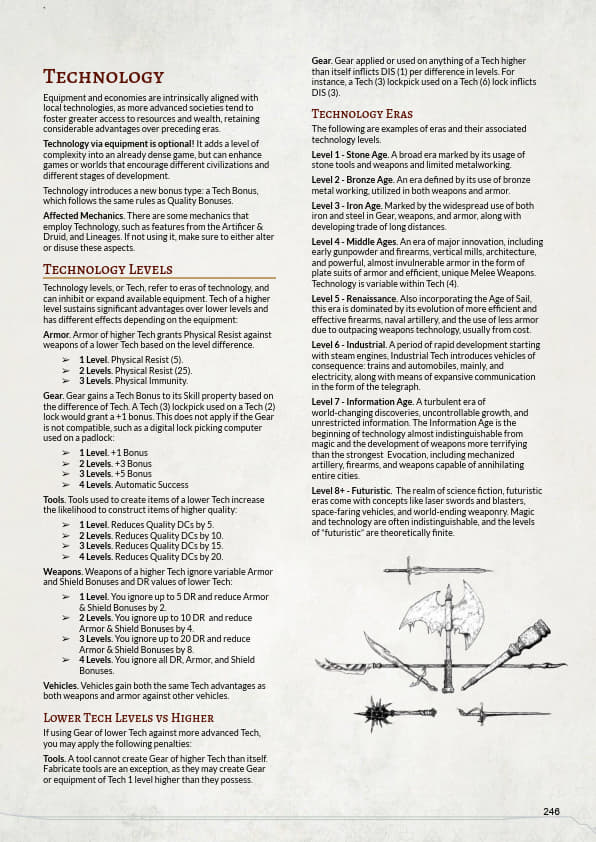
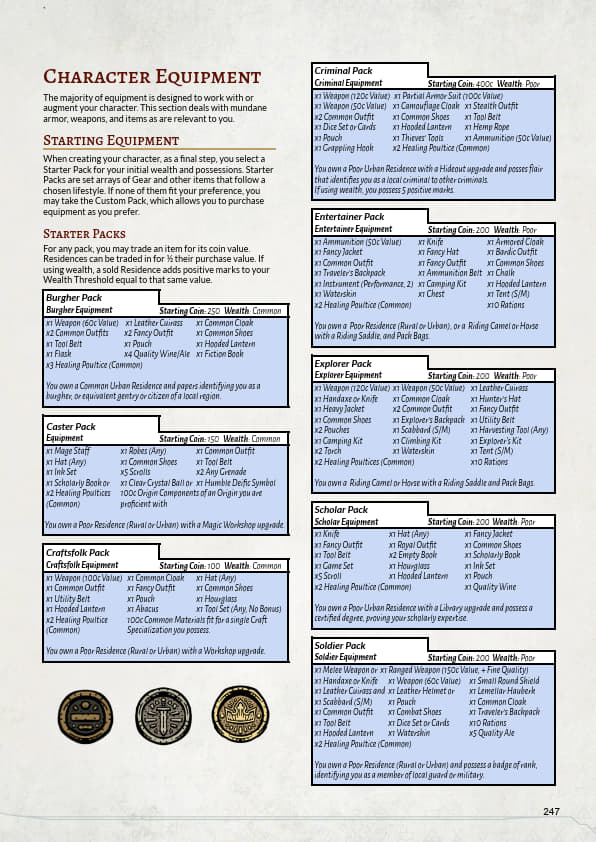
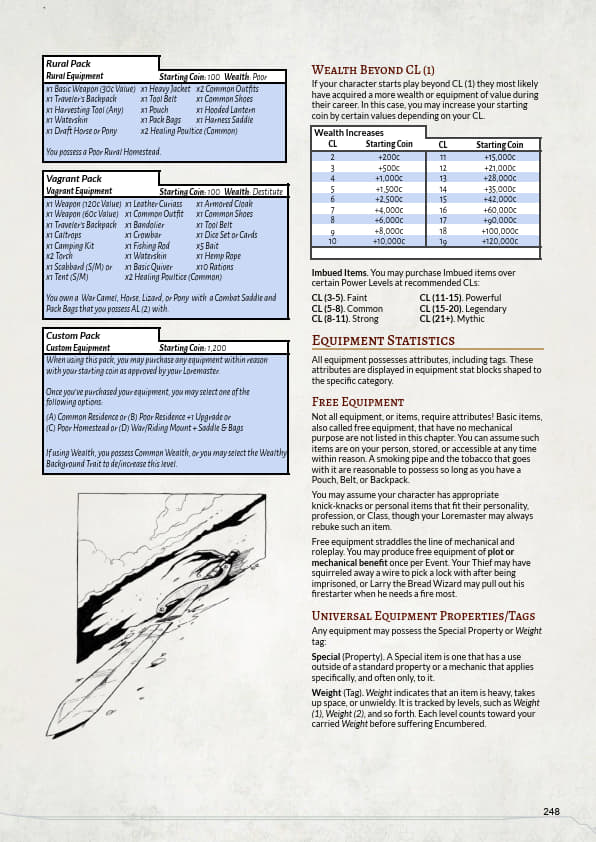
Goal. Create an economy supported by the system’s customization aspects that players may reproductive without influence of their game master.
Result. Currency values all relate back to crafting costs. Players and game masters can always find an item’s base cost to make via its creation check, informing market fluctuation of supply and demand in game. This creates a stable basis for settings and the system, manipulating balance via resource scarcity.
Math! The suggested economy uses multiplicative modifiers in crafting based on the capability of equipment: standard, day-to-day items generally follow an equation of n x1, then the more useful, or the more features an item possesses, its value increases its multiplier. Poor, common use, or tiny items may employ division instead via the same theory, starting with n /2, and so forth.
Property
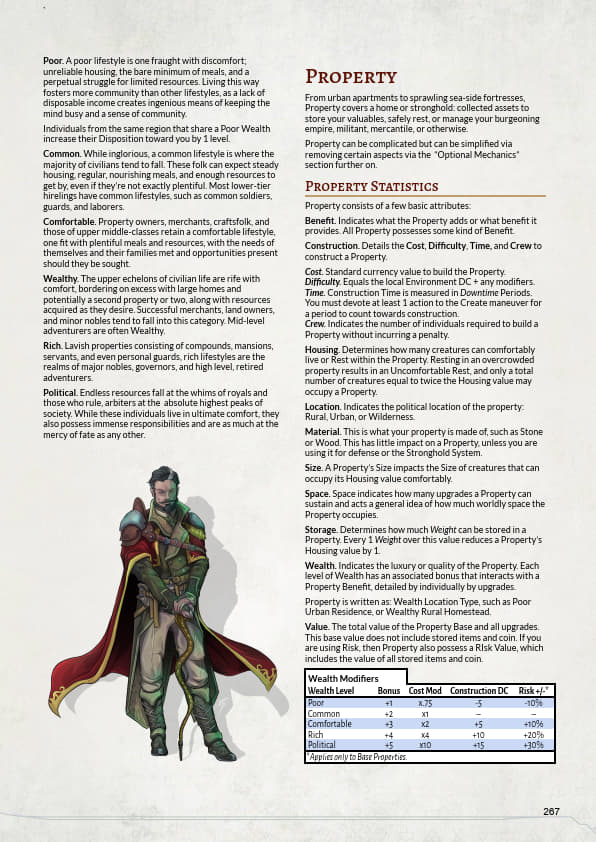
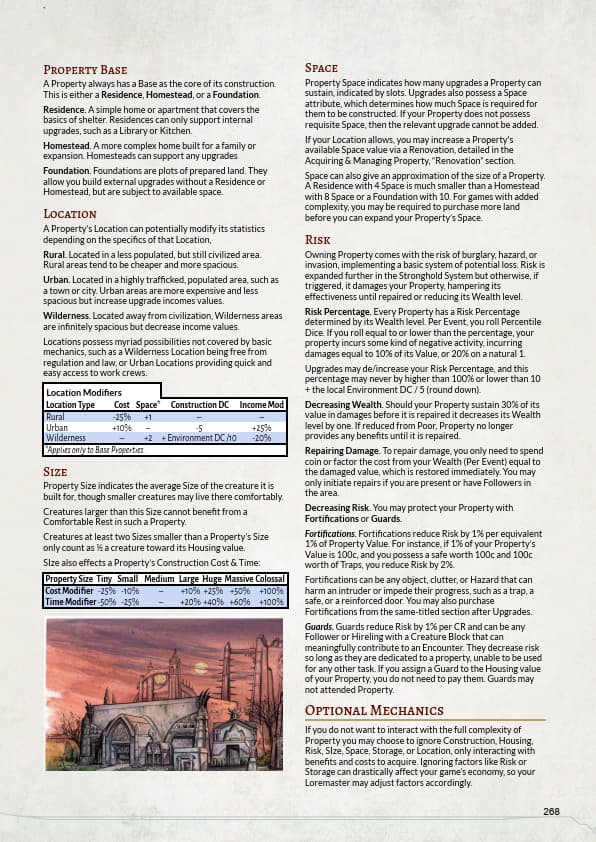
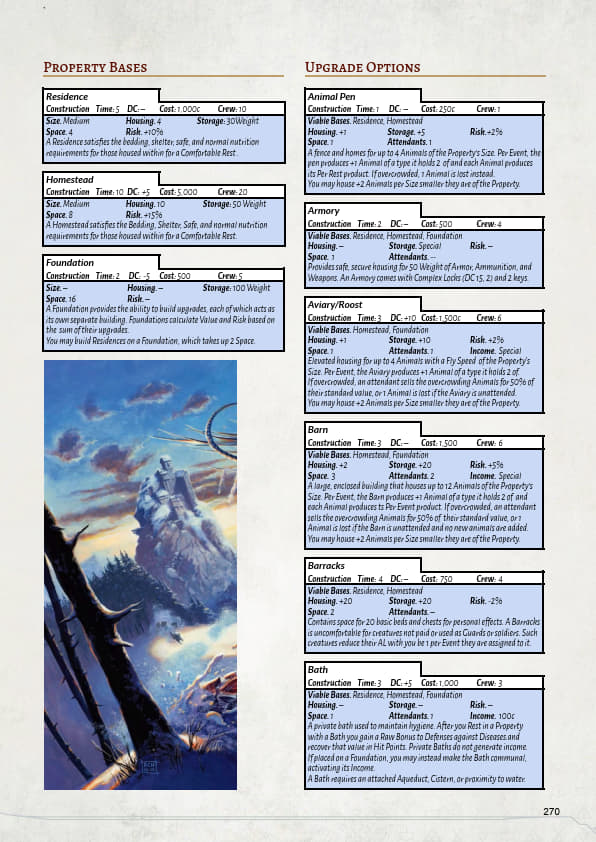
Goal. Player facilitated property is one of my personal favorite features of almost any game, so I wanted to design a system that was customizable, offered optional complexity, and that had mechanics to supplement systems rather than only provide logistics and narrative.
Results. Property is built as a “base” function with upgrades as slots, then fortifications and infrastructure as addons. Players can construct something as small as an individual apartment or entire cities block by block. As a system, property facilitates followers, augments other supplemental systems.
Downtime
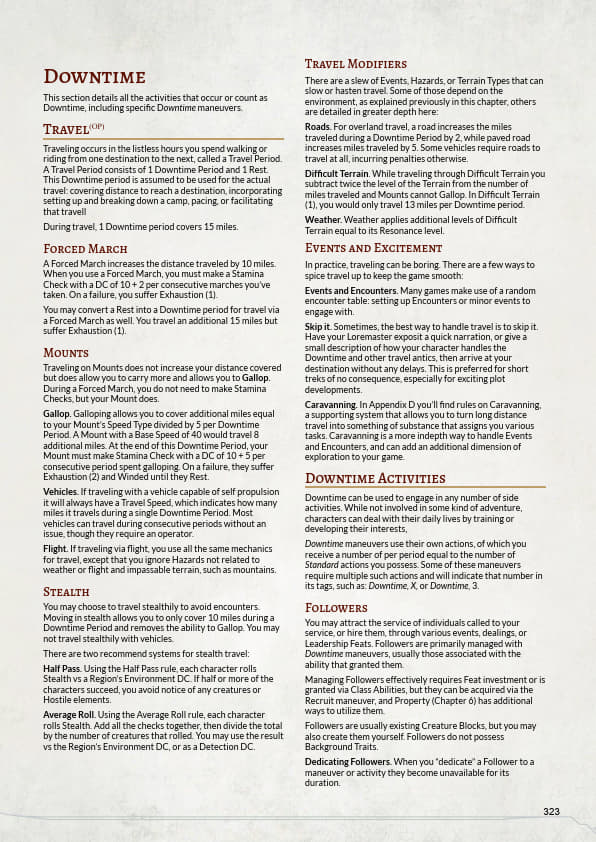
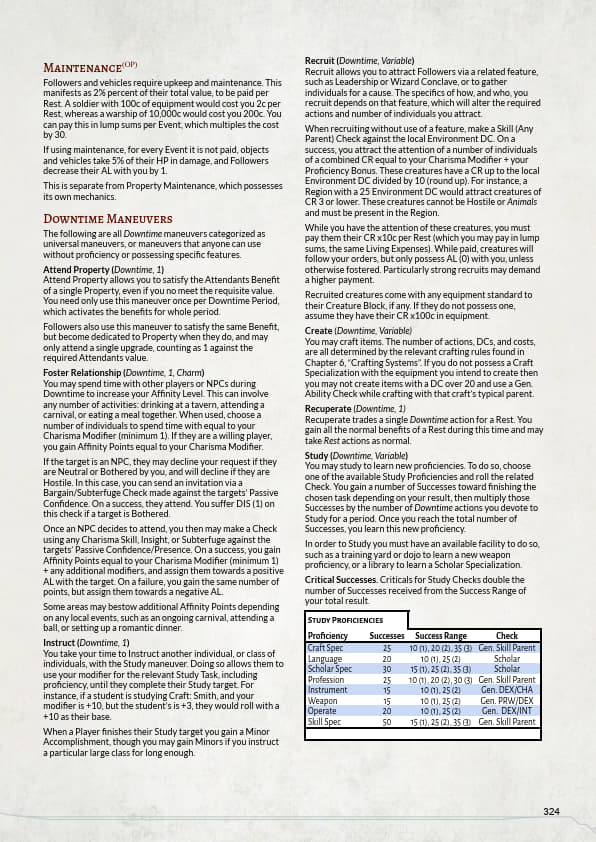
Goal. Build a gamified version of a character’s time spent while not adventuring, fighting, or on some kind of quest.
Results. Downtime accounts for blocks of time that simulate a character’s life: building relationships, acquiring property, working a profession, training, or roleplaying and pursuing individual interests.
Action Economy. A character’s normal action economy interfaces wth downtime, with actions used for special downtime maneuvers, keeping with the familiarity with existing systems.
Process Breakdown
Research, Ideation & Planning
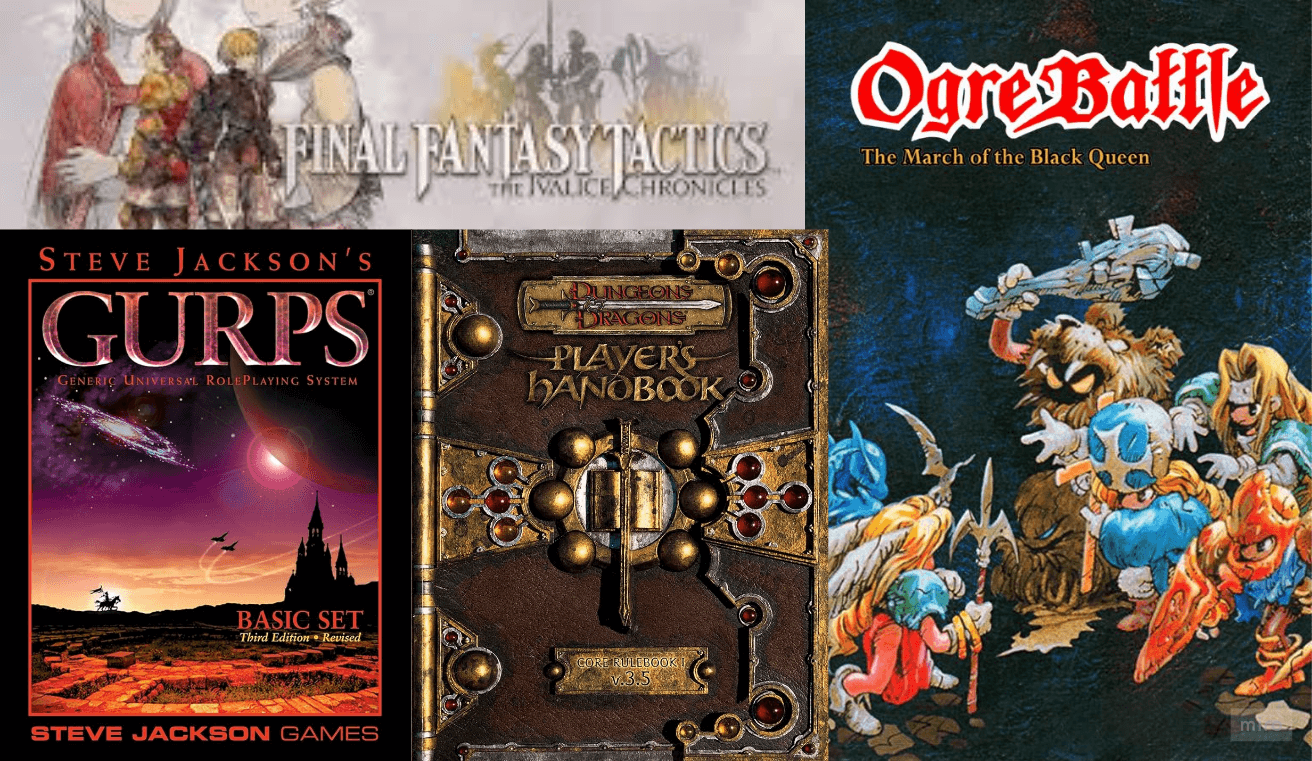
L.O.R.E. is the product of decades of running and creating TTRPGs. After shipping a dozen 3rd party supplements for 5e D&D, I wanted to recapture some of the depth and complexity of older RPGs but with more modern systems.
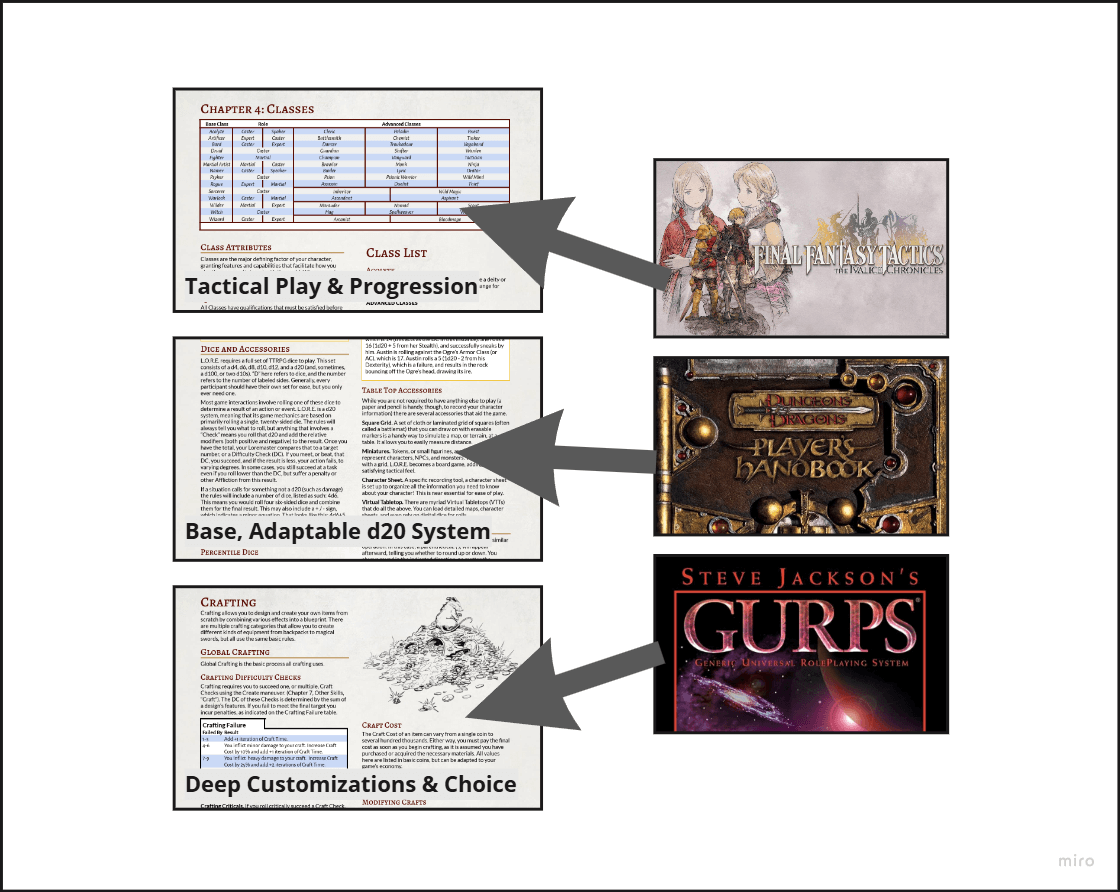
- Analyzing Games: L.O.R.E.’s inspirations come predominately from 3e D&D, Ogre Battle (MotBQ), GURPS, and FFT, games that focus player choice in progression, individual expression, and are highly expandable.
- Modern TTRPG Design. Many TTRPGs have adopted a “rules-lite” approach to reduce learning curves, but they end up lacking long term replayability. I studied many of these games to implement their and applied them to a wide variety of deep mechanics, hybridizing old-school thought and contemporary techniques.
Design Document - Core Guide
Playtesting
Characters
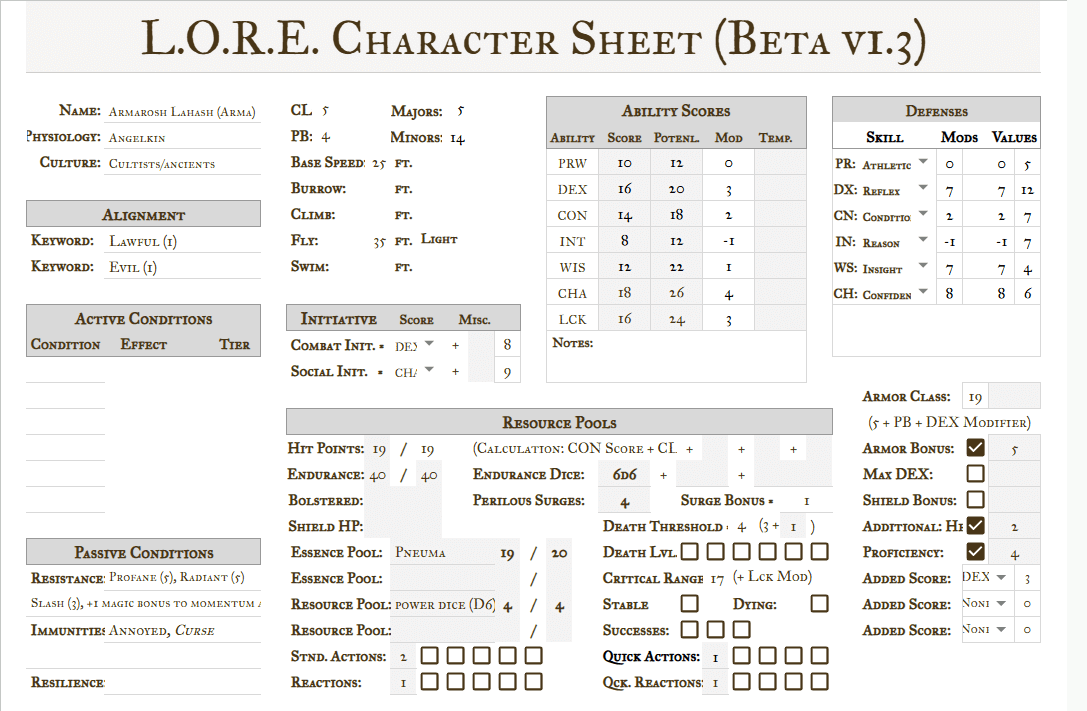
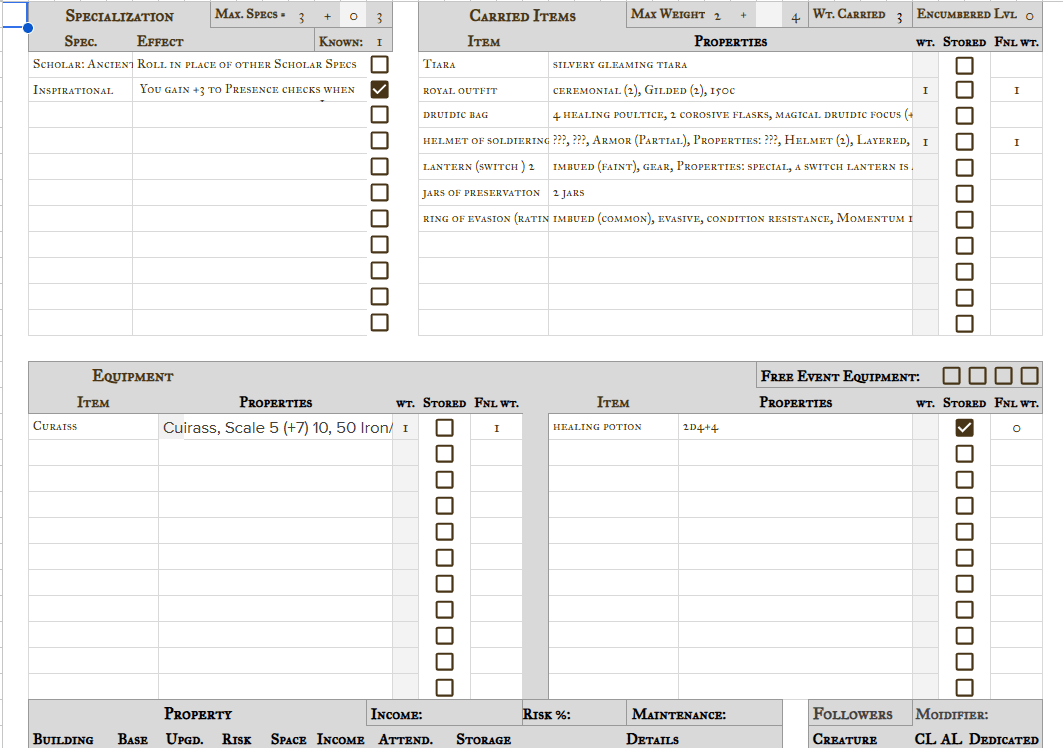
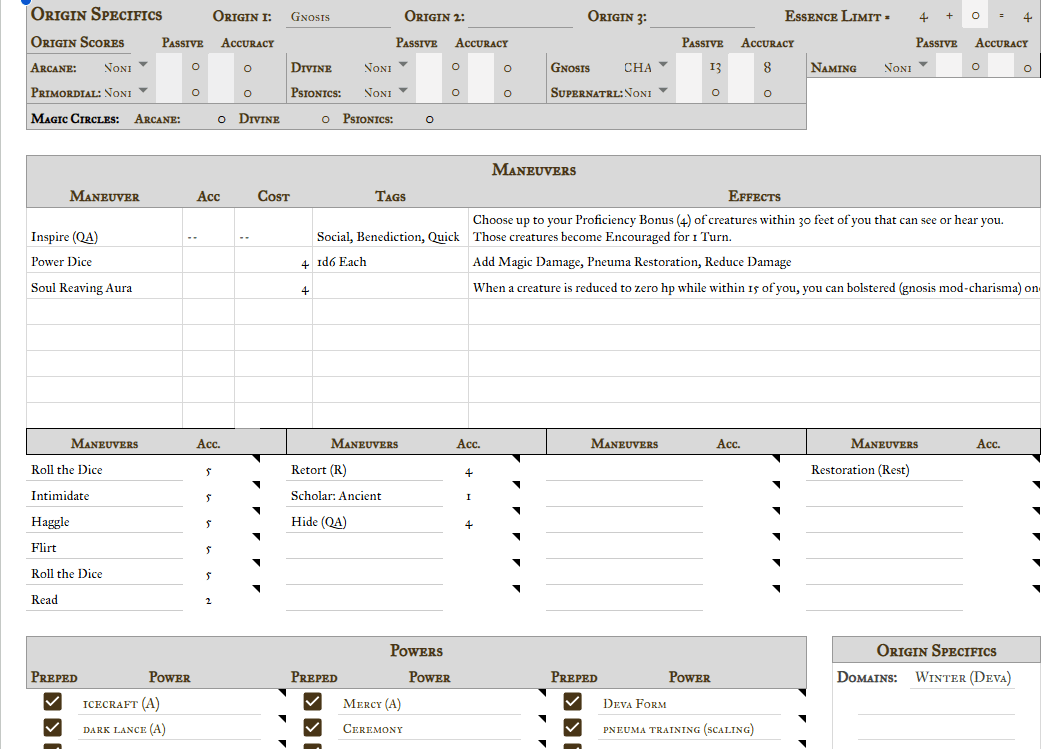
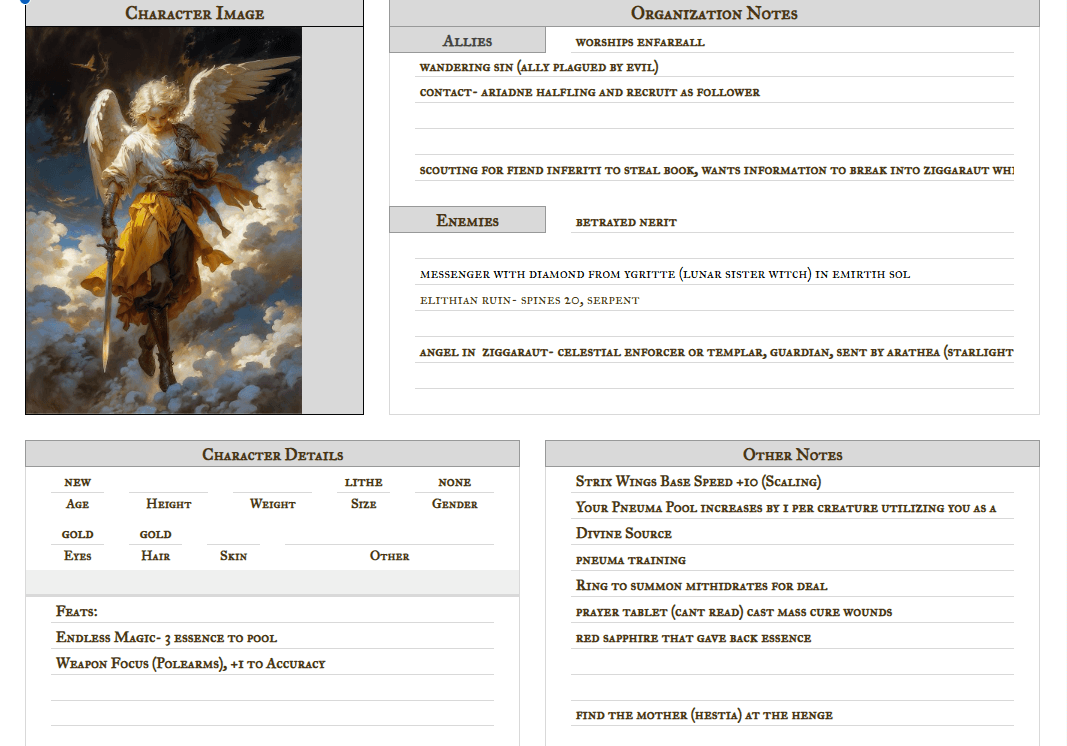
Intent: Playtesting focused on builds and feedback for how characters were created and their progressions. I ran regular sessions to test builds and their implementation.
Results
- Evolving Characters. Players drifted toward mechanic builds to fit their changing narratives via play vs initial creation: acquiring magic, or filling specialist gaps.
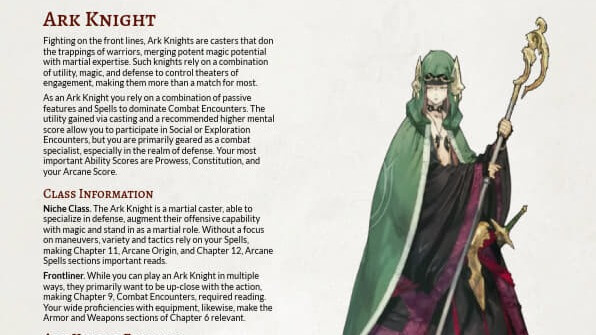
- Player Motivation. Players were able to build what they wanted. The displayed character took their physiology and class elements and created a “fallen angel” completely supported by mechanics.
Encounters
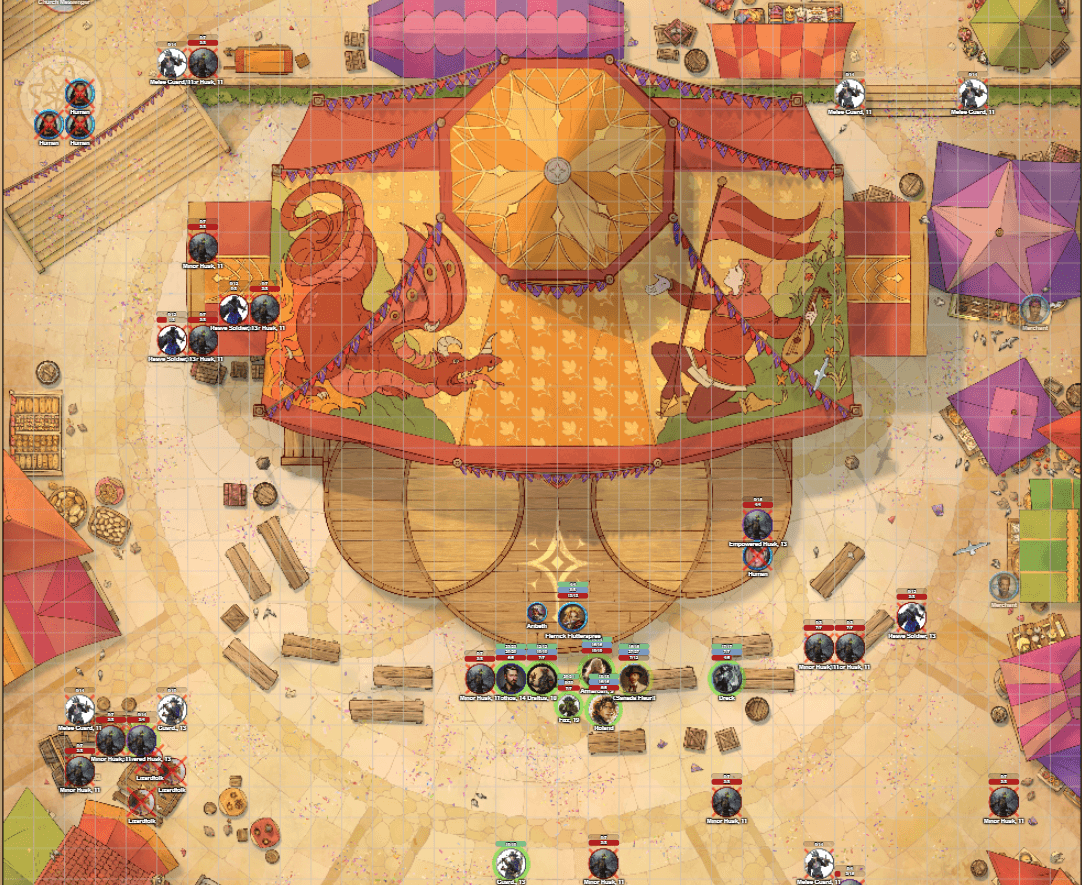
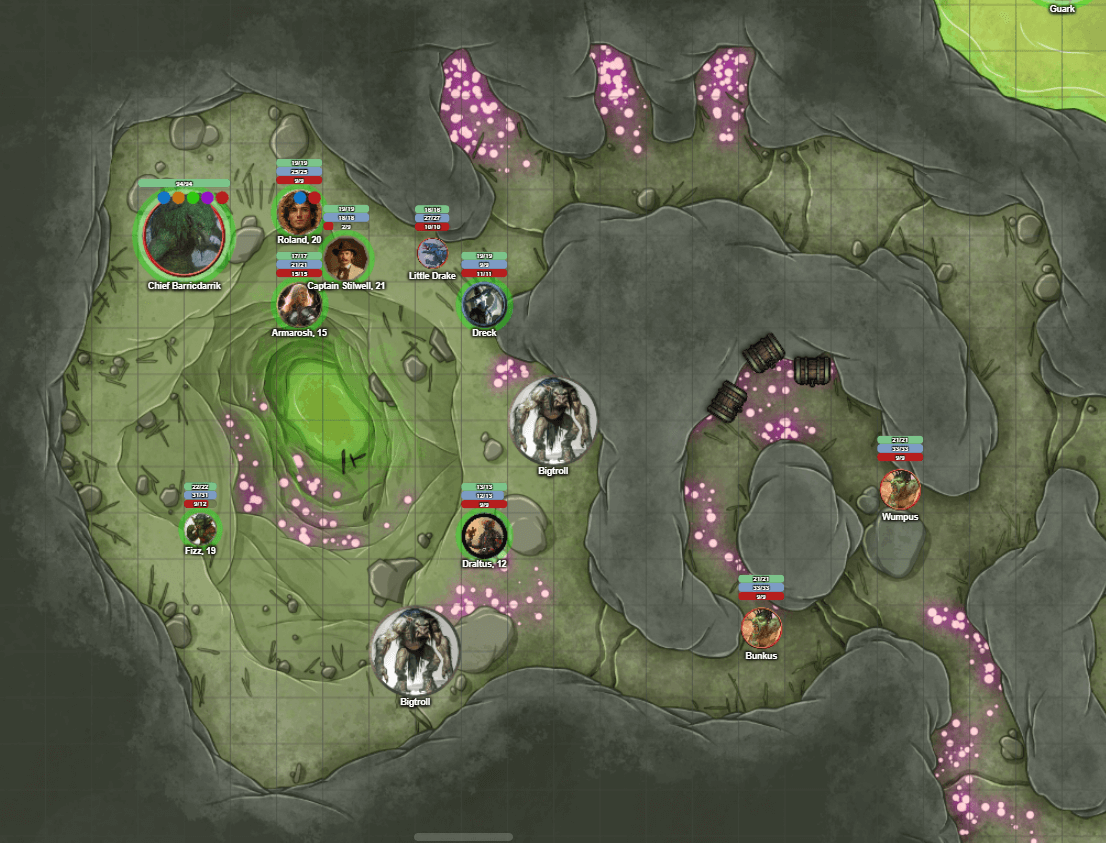
Intent: Test the viability of social encounters vs combat and how willing players are to engage in ways beyond what is usually seen as the point of tactical games.
Results
- Flexible Resolutions. The availability of resolving tense situations via negotiation that did not rely on a single pass/fail scenario encouraged players to talk to sapient entities before resulting to immediate violence.
- Approachable Math & Scaling. Players were able to engage with systems as they wanted: less logistical players stuck to the basic additive modifiers, focusing on progression, while more logistical players gravitated toward crafting and its equations.
Shipped Supplemental Material
Heritage Companion
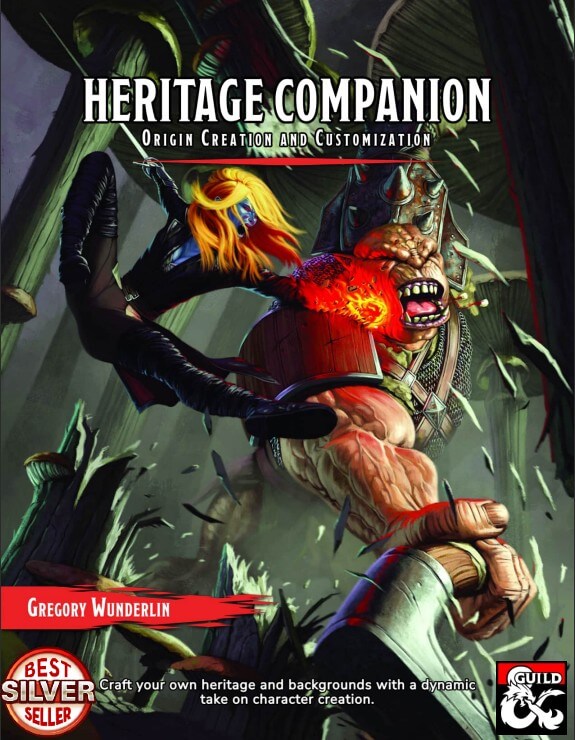
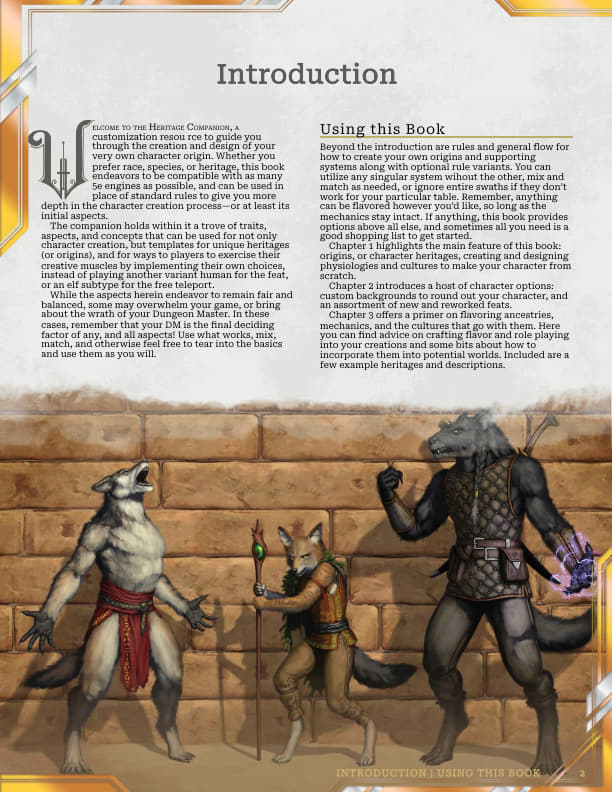
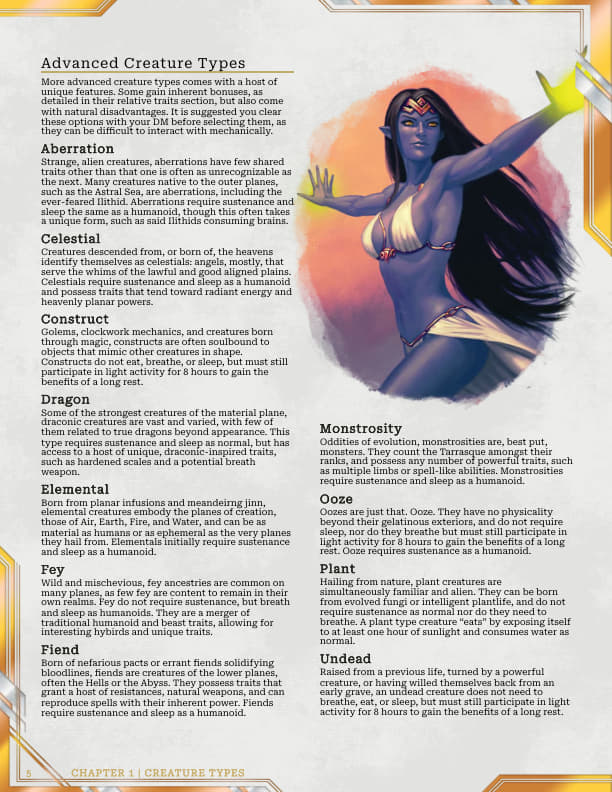
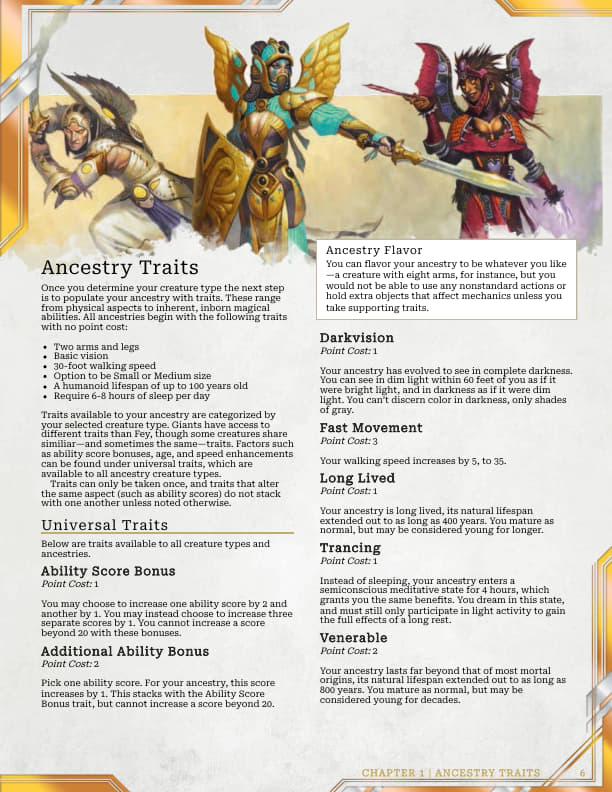
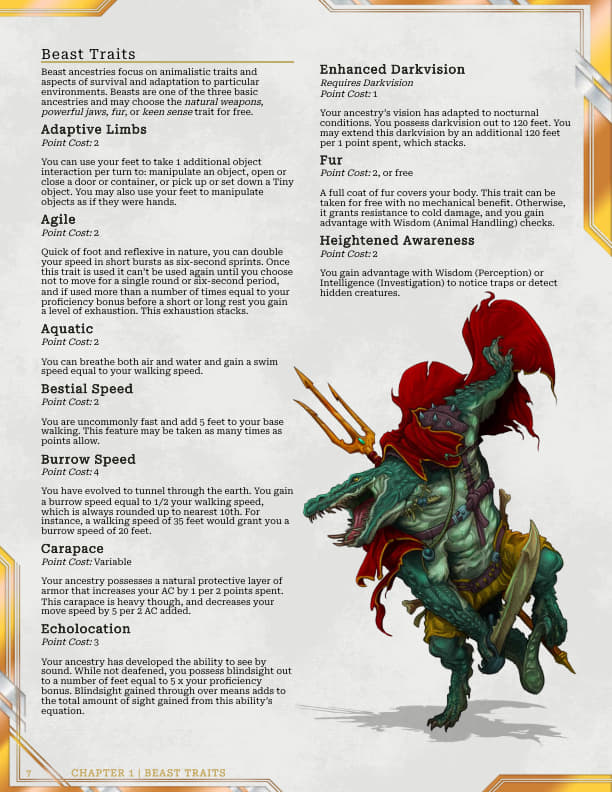
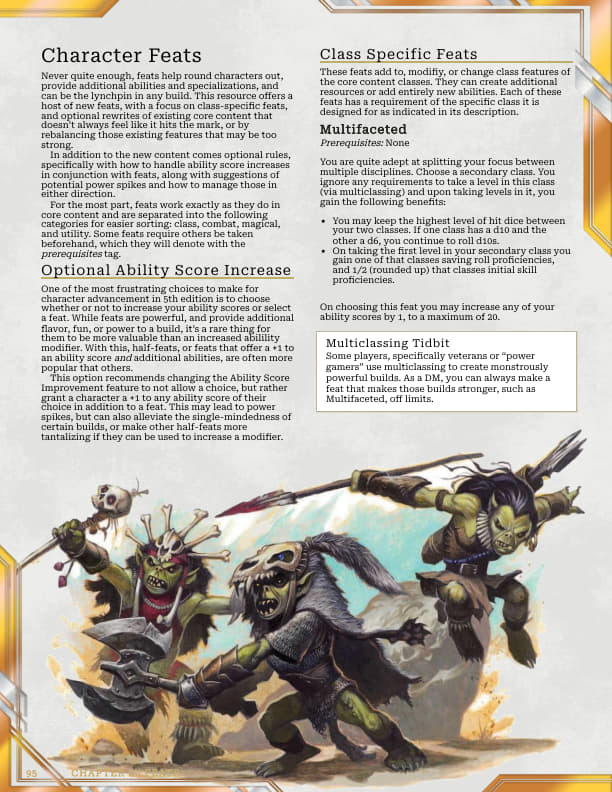
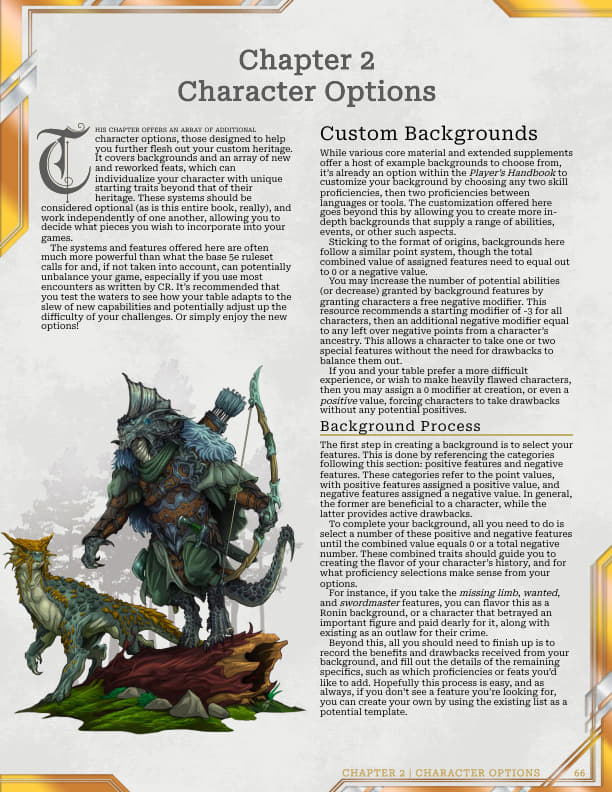
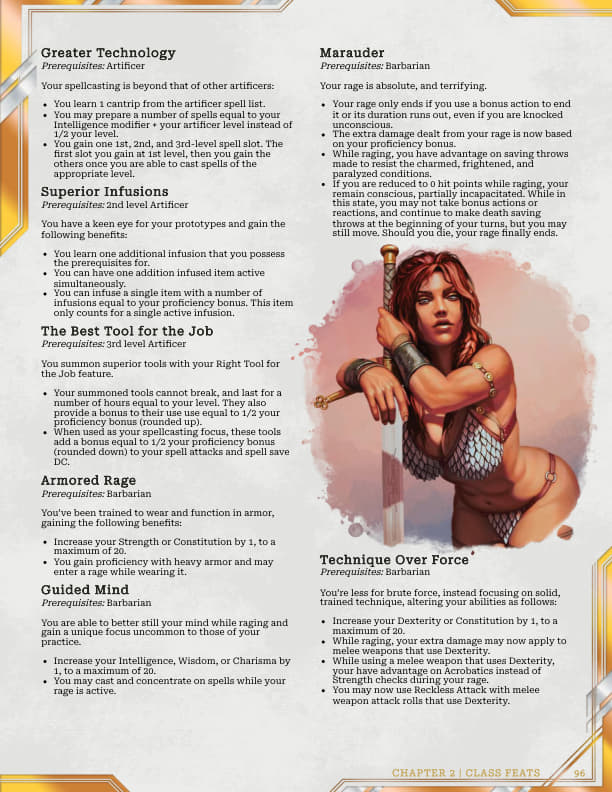
Brief: The Heritage Companion completely reworks character creation for 5e D&D. It allows you customize your ancestry, consisting of both your character’s physicality and culture, then create in-depth backgrounds with prepared traits. It also includes 150 either rewritten or new feats.
Techniques
- Reworked Class Features. Many of the included feats alter or enhance existing class features, making the more useful or expanding capability untouched by the game.
- Point Buy Systems. 5e players are used to easy, fast systems. The companion follows this theme wit point buy processes: you purchase traits with a pool of limited points, facilitating balance and ease.
- Optional Additions. Each system can be implemented on its own or as a whole.
- Full Customization. Players are able to distinguish their ancestries from each other, creating entirely unique origins even within the same species.
Crafting & Companions
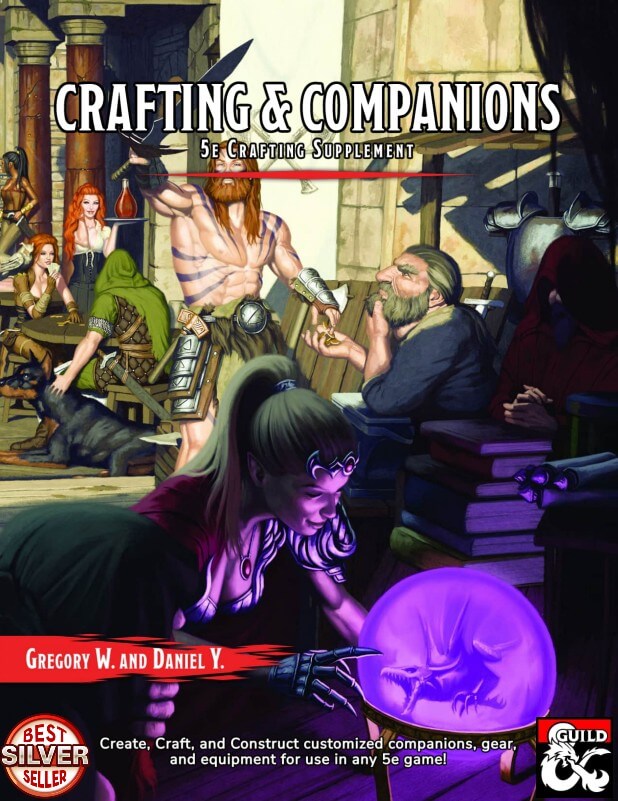
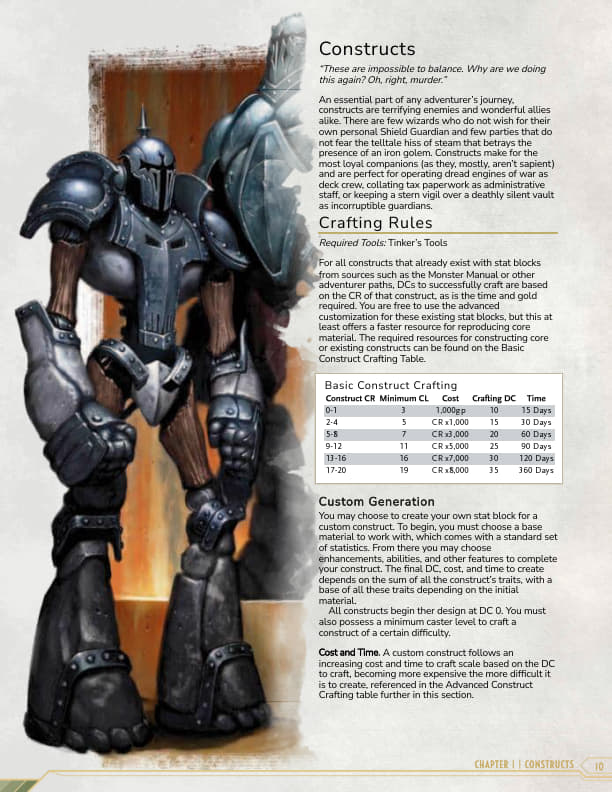
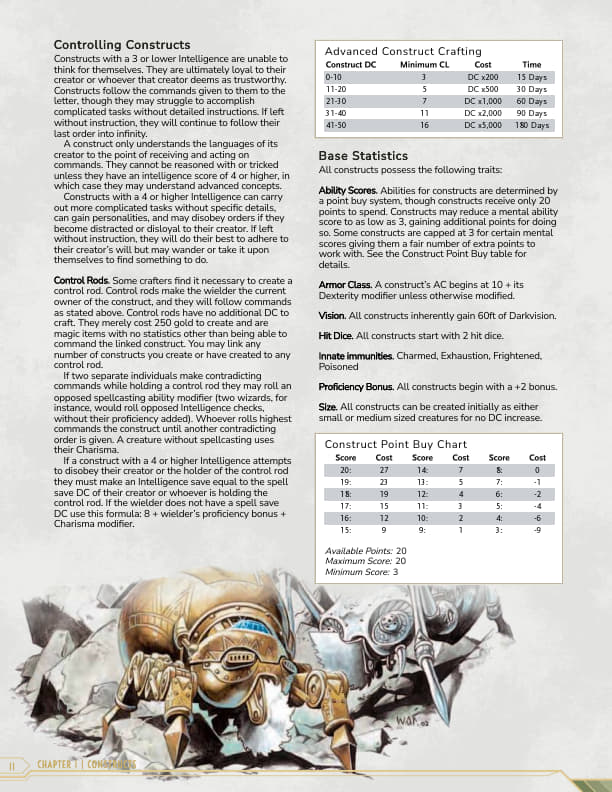
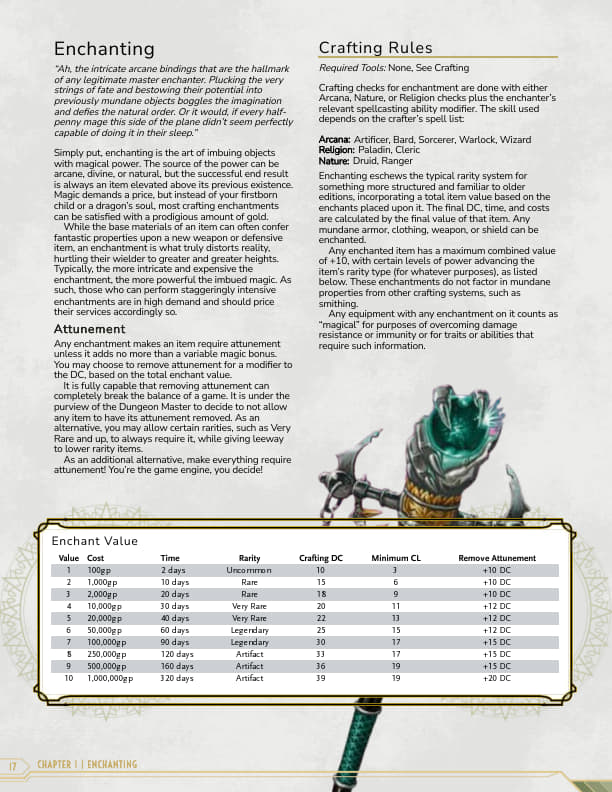
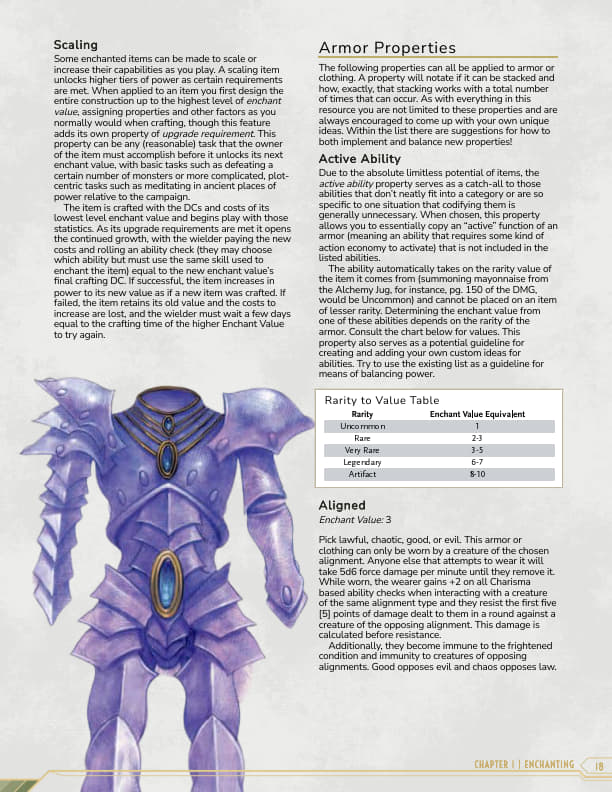
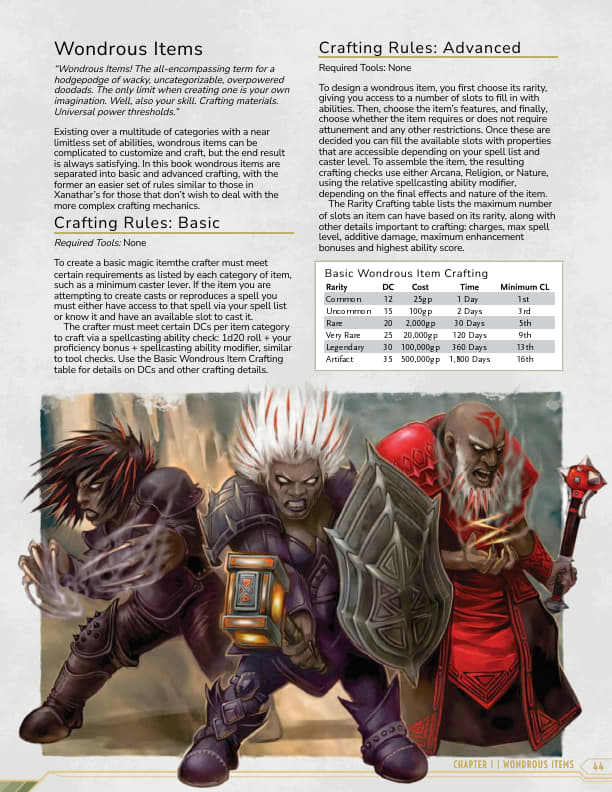
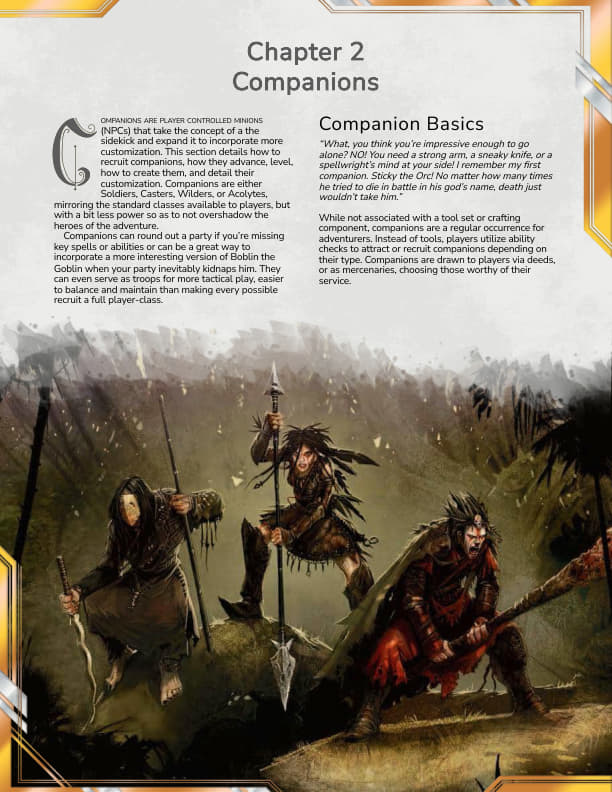
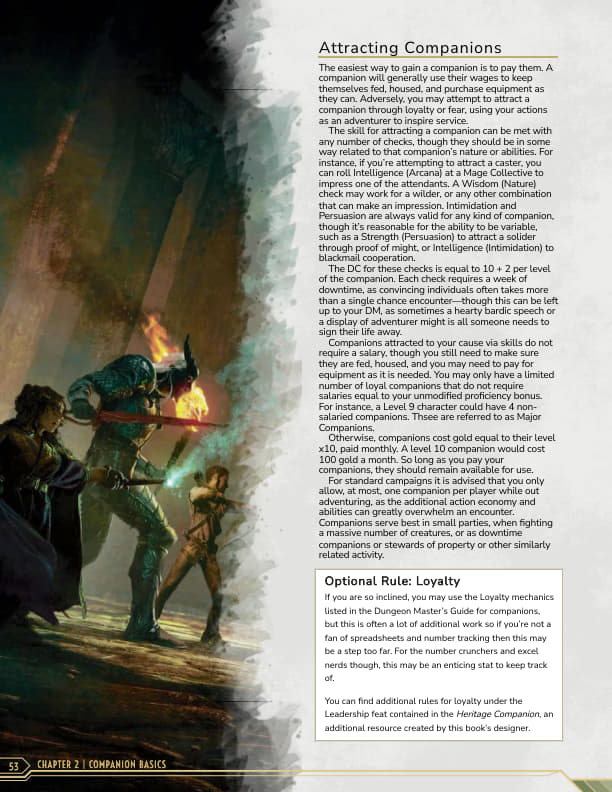
Brief: Crafting & Companions adds systems to the base 5e D&D game, mainly crafting for each kind of equipment category and the facilitation of more involved followers. It also includes a system for building vehicles, from magical battle mechs to airships, and new rules for using those vehicles in combat against each other and characters.
Techniques
- Wide Crafting with Subsystems. The crafting process is universal, designed to fit with subsystems that cover each equipment type to include individual quirks and identifies, such as special traits.
- Shopping Menus. Players select features via an available menu, then use their assigned values to determine the final resource costs. This keeps crafting fast, easy, and requires no additional work outside of the book.
- Base Interfacing. Each system follows designs of the core engine so that they can be plugged into the base game without difficult. This gives old skills with little use more to do and is easy to implement.
Select Classes
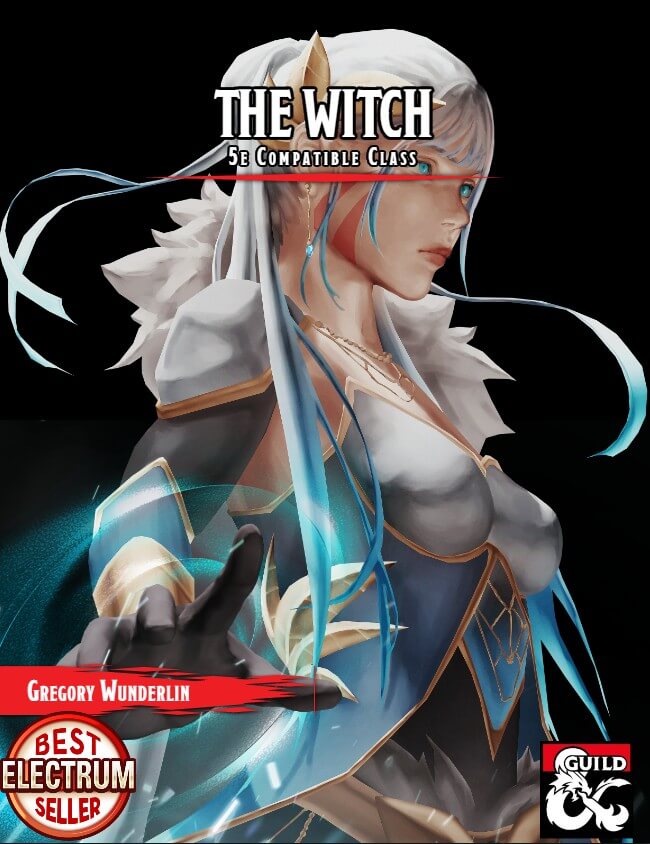
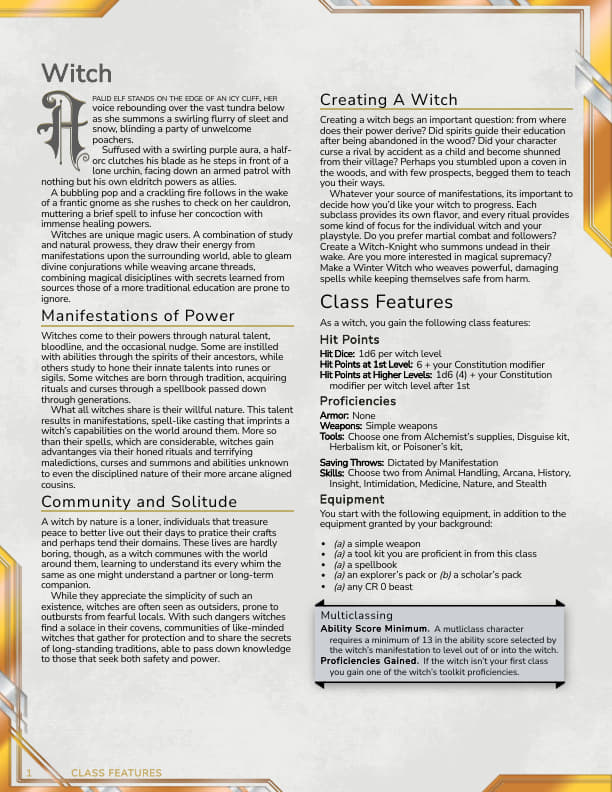
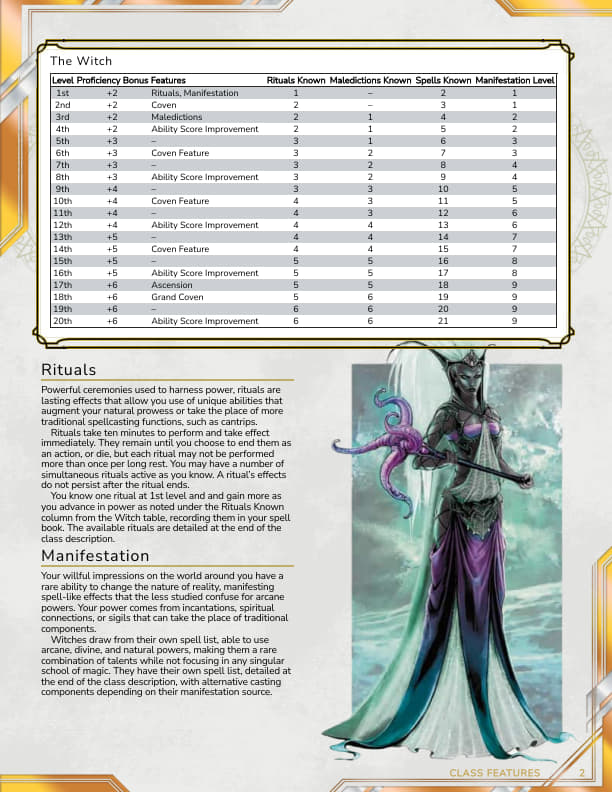

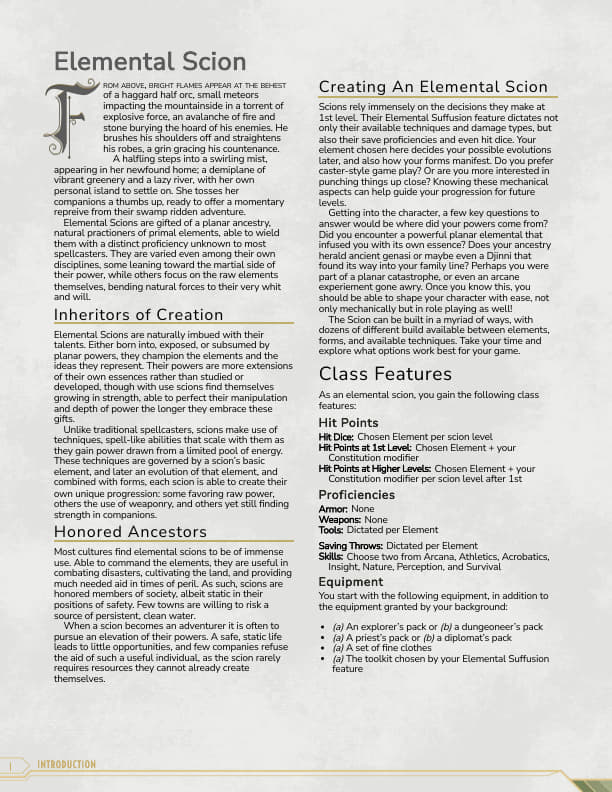
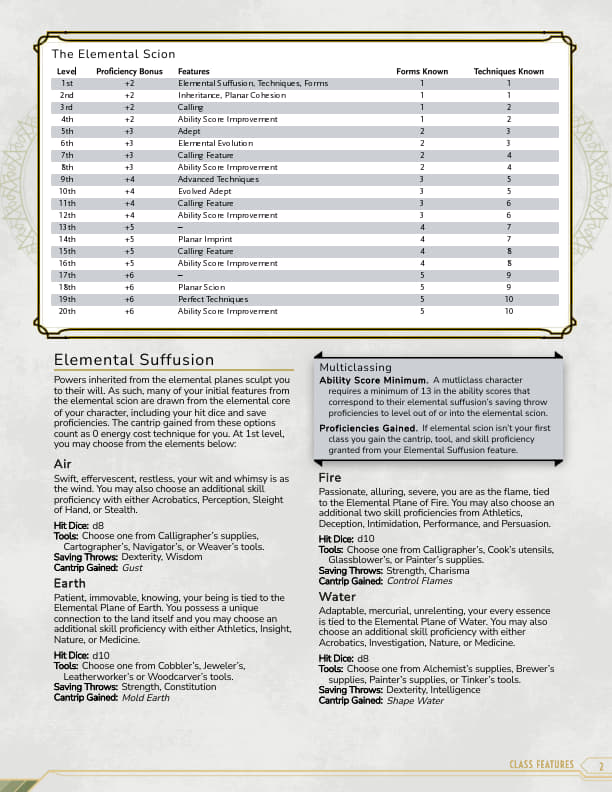

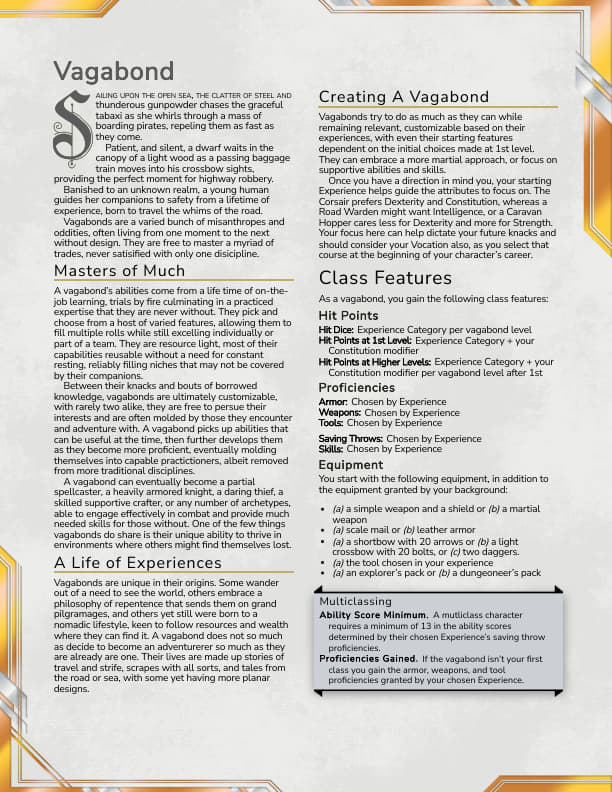
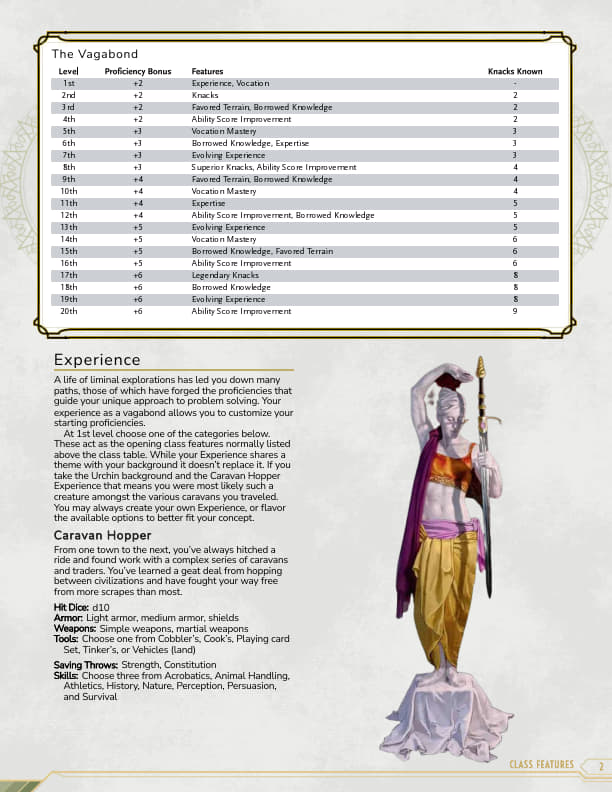
Brief: My class collection includes 10 full classes for 5e D&D, with the Witch, Vagabond, and Elemental Scion displayed here. Each covers an archetype missed by the core game, serving to fill gaps and expand player capability and general replayability of campaigns with new, exciting options.
Techniques
- Role Customization. Roles per class include multiple options to vary builds even within the class itself. An Elemental Scion’s role and abilities change depending on their chosen Element for instance.
- Filling Gaps. No one wants to play something already done, especially if it can be flavored narratively. These classes work to fill mechanical AND narrative gaps for wide appeal.
- New Systems & Abilities. Classes come with new systems, such as the Witch’s Manifestation Points instead of Spell Slots and include new spells, such as the Elemental Scion’s 50 new elemental styled powers.