
Save the Prince/ess
- Genre: Adventure RPG
- Type: Proof of Concept
- Engine: Table Top Simulator | Real Space
- Duration: 9 Weeks
- Tools: Miro, InDesign
- Iterations # 4
- Playtests # 6
- Role: Designer
Iterations Overview
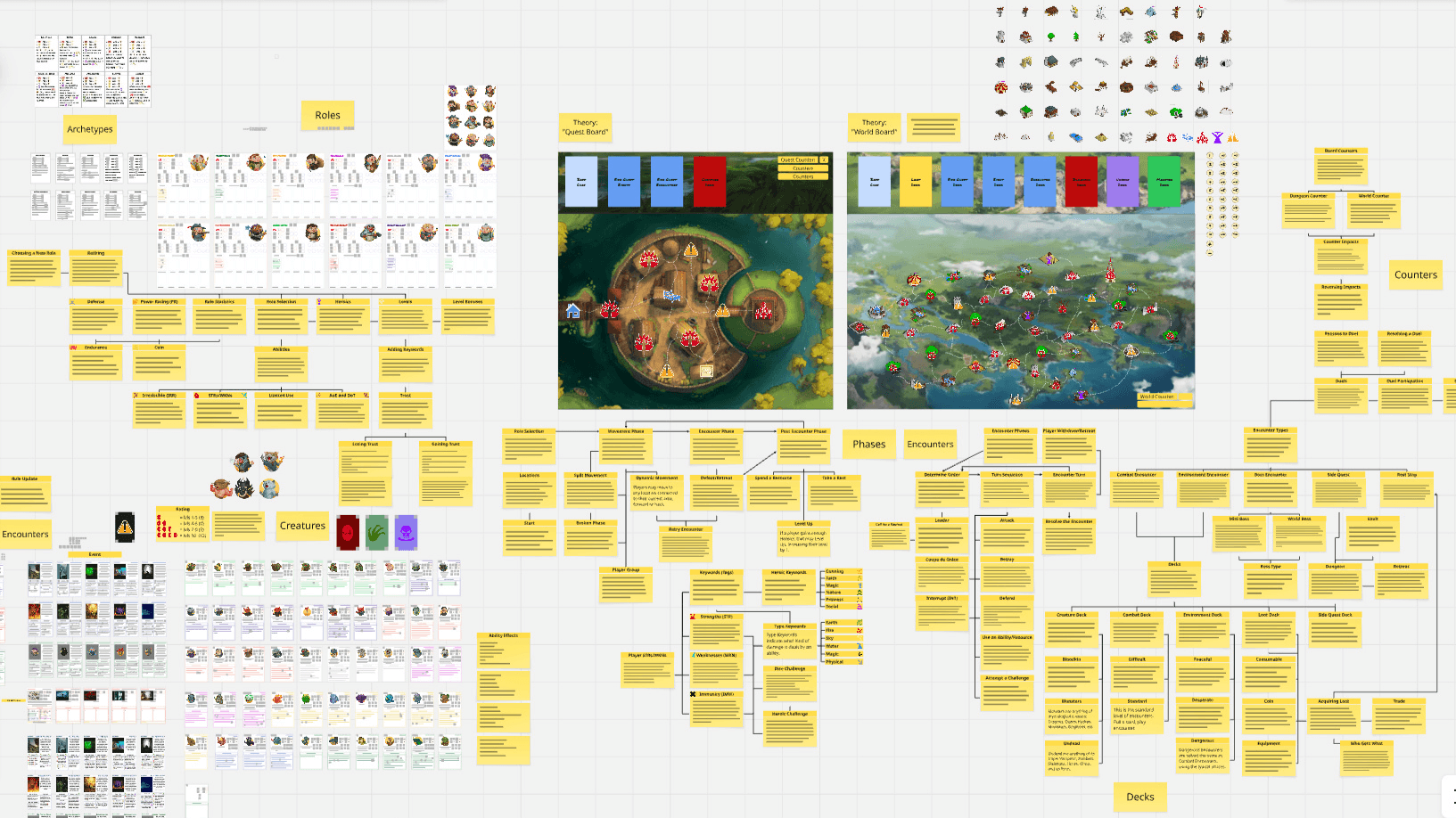
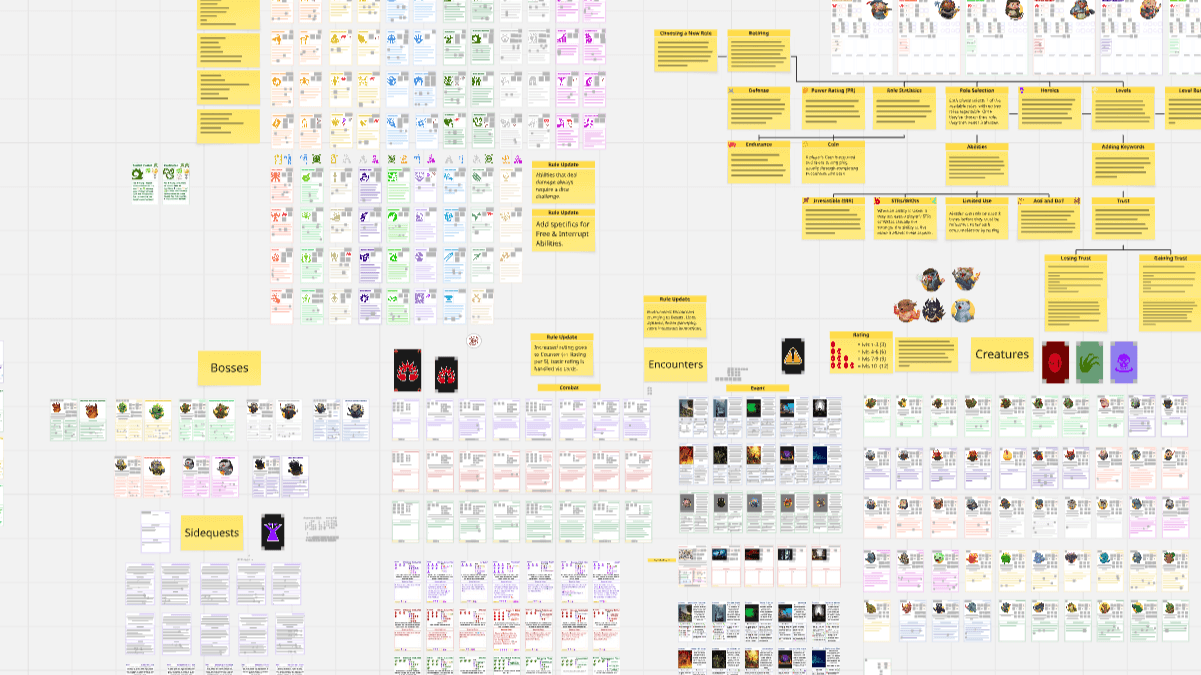
Goal
Save the Prince/ess served two goals: to create a functional, complex boardgame via a proof-of-concept exercise with a tight deadline, and to overcome my bias against rogue-lite RPGs with the following themes:
- Dynamic Replayability. Necessary to tackle a a rogue-lite style game, every run-through must be a unique adventure.
- Co-op vs Solo RPG. Scheduling play sessions for adults is a nightmare so I wanted this game to be playable with as many players as a table can hold.
- Fantasy Themes. Classic, and familiar, as a Fantasy author I’m always trying to find a way to make these settings unique and interesting. Also, swords.
- Tactical Complexity & Depth. My issue with rogue gameplay is that it is too random. The challenge here is to resolve the emphasis of random without leaving the genre.
Overview
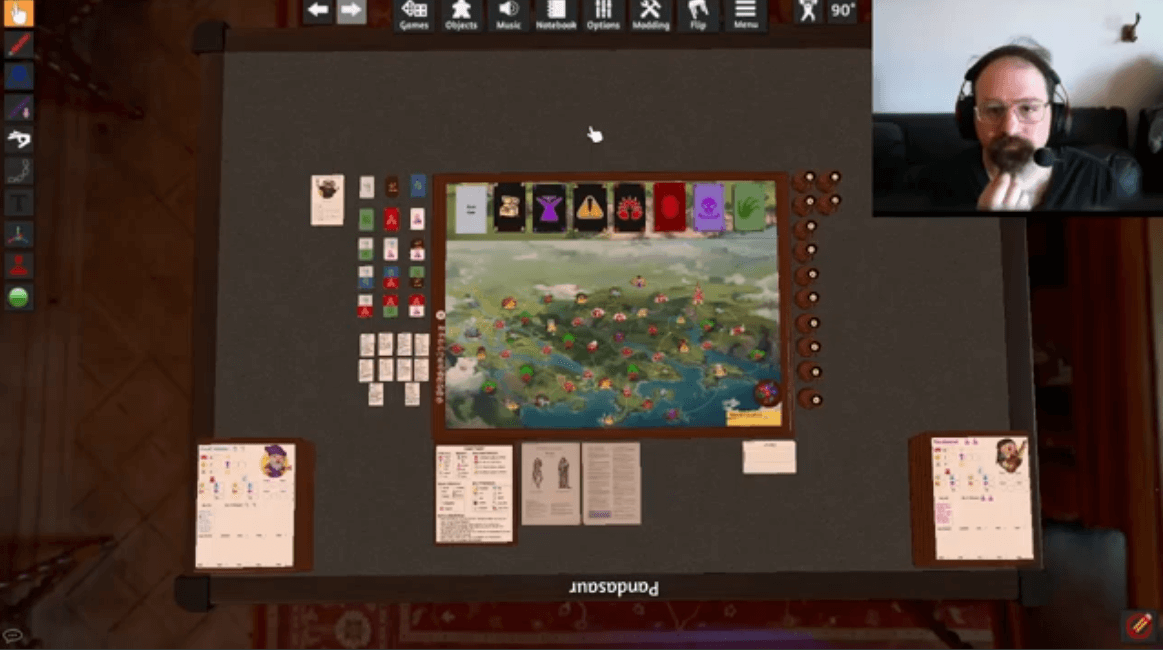
Game Premise: The Prince/ess is stolen! By order of the ailing king Roderick Thesium Ariphines III, gather your allies and set out on an adventure to save the captured royal before his majesty succumbs. Left without an heir, the Kingdom faces certain peril should such a fate come to pass.
My process for this game was focused on rapid prototyping, testing, and implementation: rules were designed by theory crafting and prototyping as they were written to build a strong, flexible framework to iterate from. I tend to favor editing and testing during the curative process to avoid cursed problems.
Mechanic Highlight: Character Creation & Progression
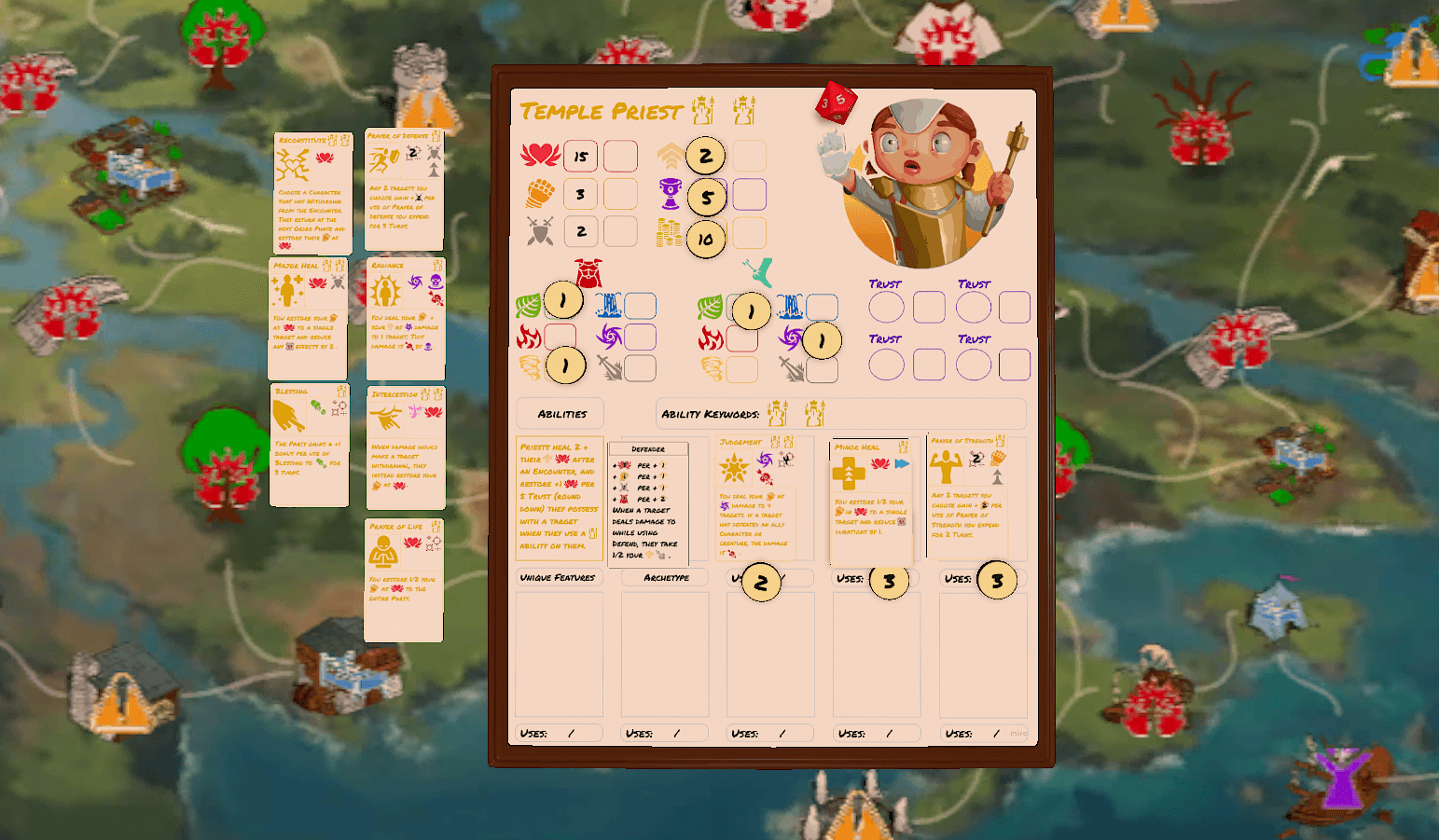
Goal: Players should have myriad options for play that provide both a unique experience per play-through and agency in their decisions.
Result: I designed a system where players choose unique roles, assign unrestricted progression paths and select powers with all information revealed at creation. Decisions are viewable from start, avoiding choice bottlenecks.
Techniques
- Roles. Each role, or Character, is unique from one another via its keywords, a special starting ability, and spread of statistics.
- Progression. Characters gain levels, increasing targeted stats and granting them Abilities or features based on an unrestricted Archetype.
- Abilities. A Character’s keywords allow them to select limited Abilities from a large pool. As they progress, they gain new keywords, expanding their pool and learning new Abilities that let them focus on their initial role or expand to cover other aspects.
- Agency. Players have complete control over their Character’s progression and allocation of resources, but not the rate at which it comes or how the adventure may change their options.
Mechanic Highlight: Dynamic Encounters
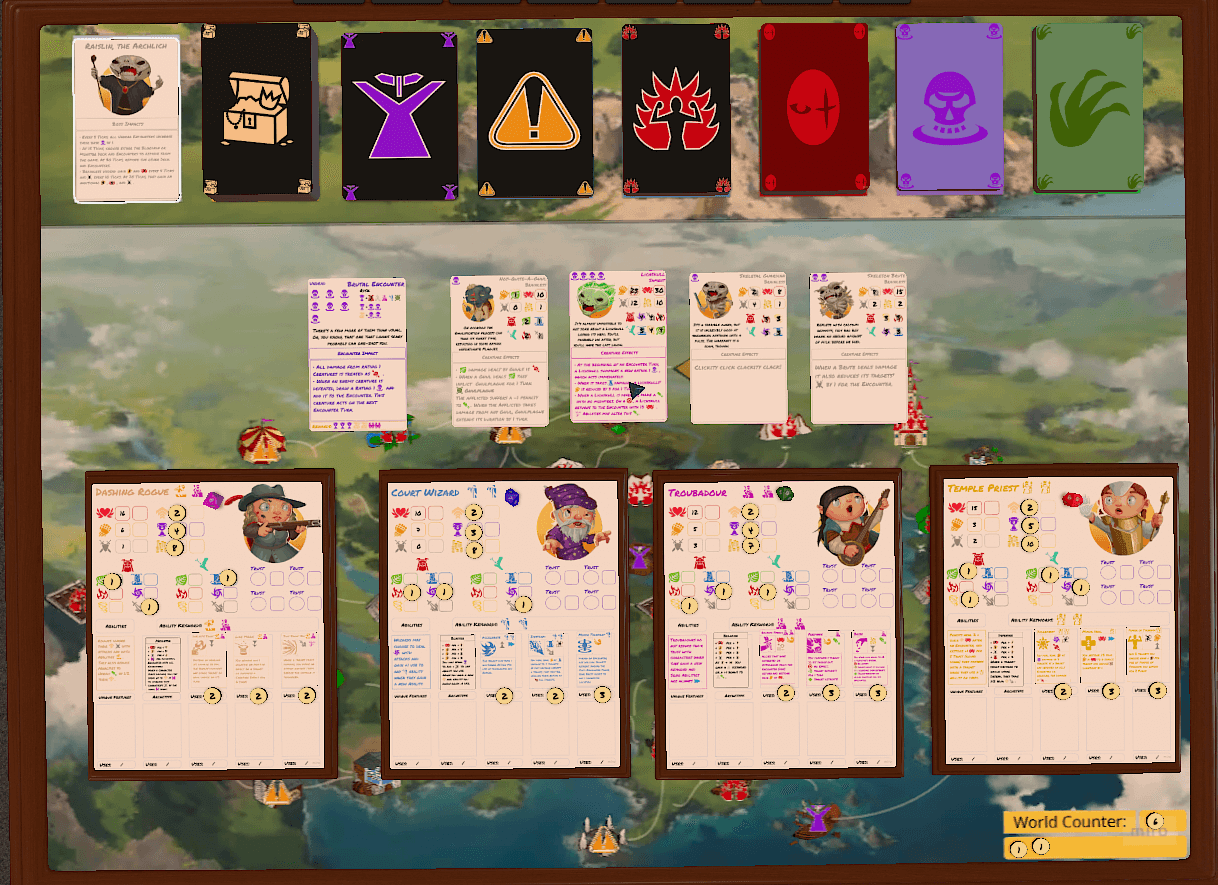
Goal: Encounters are the principal game loop, so they need to be dynamic to avoid stagnating per play-through.
Result: I made Encounter draws random, scale during gameplay, and include a rating system that can handle multiple opponents of varying difficulty, and added a “Risk” factor, allowing players agency to increase difficulty for resource gain.
- Encounter Deck. Each card includes unique scenario effects and determines the total “rating” of an Encounter. They also determine the Creature Type and include rewards to be self-contained. This creates an “in engine” solution for random generation and removes the need for an arbiter.
- Creatures & Rating. I crafted 50 unique creatures (~110 total cards), each with a difficulty rating that are drawn to match an encounter’s final rating. Creatures have special effects that can alter an encounter or rewards, and different combinations create tactical challenges to vary gameplay and reinforced unique playthroughs.
- Risk. Players may choose to increase an Encounter’s rating or grant enemy creature’s advantages for additional rewards.
- Scaling. As the game progresses, creatures become stronger despite their rating and Encounter’s increase their total base rating, but not their rewards, keeping pace with character progression.
Mechanic Highlight: Boss Impacts & The World Counter
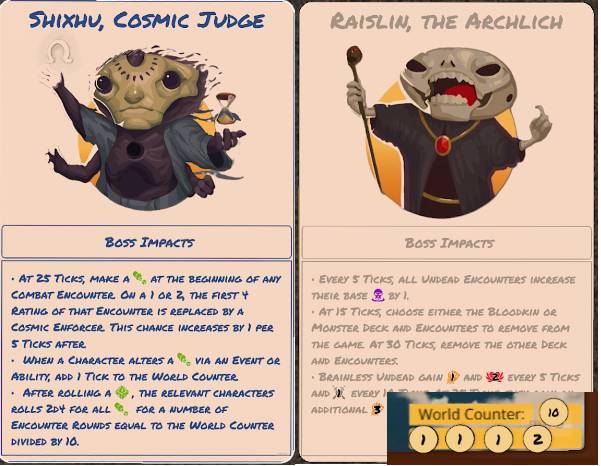
Goal: Create a scaling mechanic that keeps pace with player progression and creates a theme associated with the end-game villain.
Result: The World Counter auto-scales various attributes at known intervals to create a sense of a looming threat. Bosses alter and add what attributes are impacted, interfacing with the World Counter and emphasizing the power of certain creatures over others.
Techniques
- Ticks. The World Counter is measured in “Ticks”. Each Tick increases the counter by 1, and various actions add them: basic gameplay, such as movement, decisions in events, or as a consequence to losing combat.
- Scaling Impacts. At indicated World Counter values (usually 5 & 10) the game’s difficulty increases, usually by enhancing creature stats and a higher base rating.
- Theme Impacts. Bosses add additional caveats to the World Counter that focus on their Creature Type: some remove decks or enhance those creatures after a number of Counter Ticks, or they may alter the game’s basic rules, such as adding penalties to dice rolls.
- Design Theory. These techniques create difficulty solutions for a game based on progression: each serves to keep players engaged by challenging them throughout gameplay based on their exploration decisions.
Process Breakdown
Research, Ideation & Planning
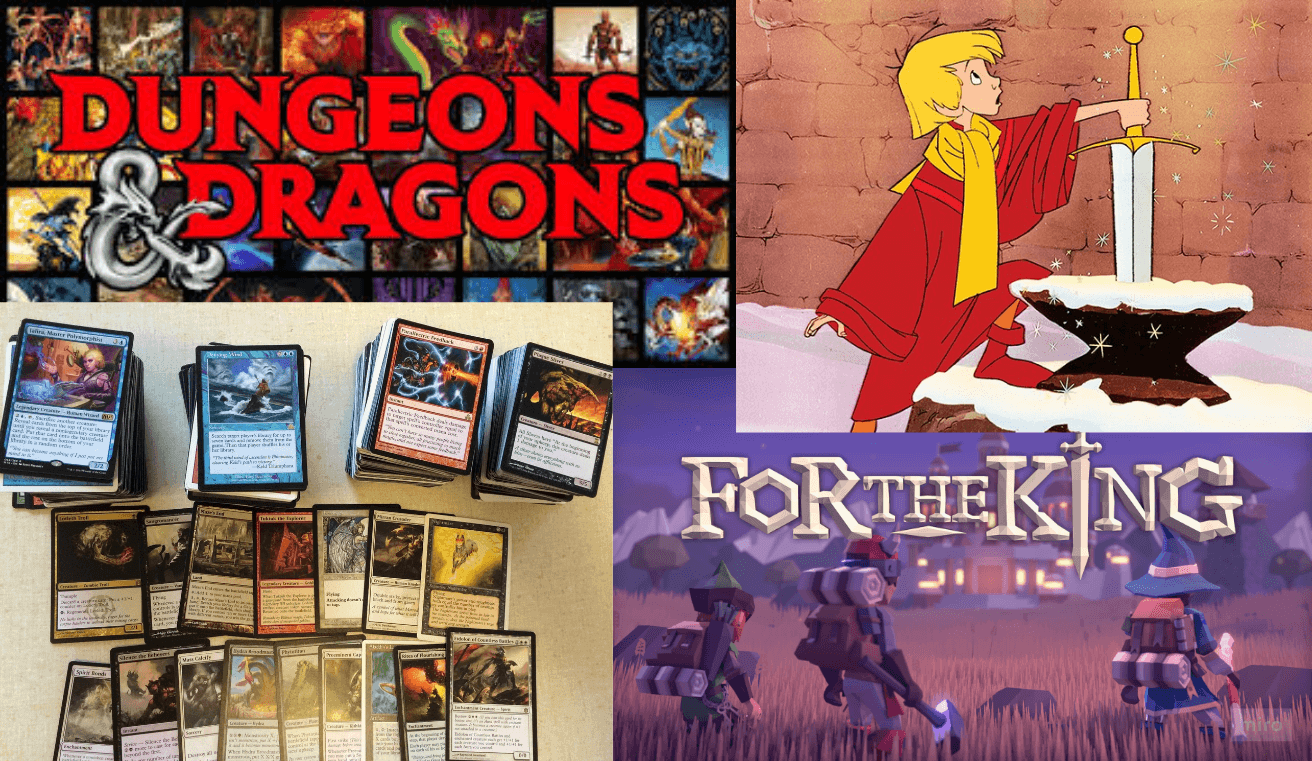
A fantasy RPG is my niche, so I leaned on existing knowledge and TTRPG resources to create a rogue-lite feel, highlighting progression and replayable adventures.
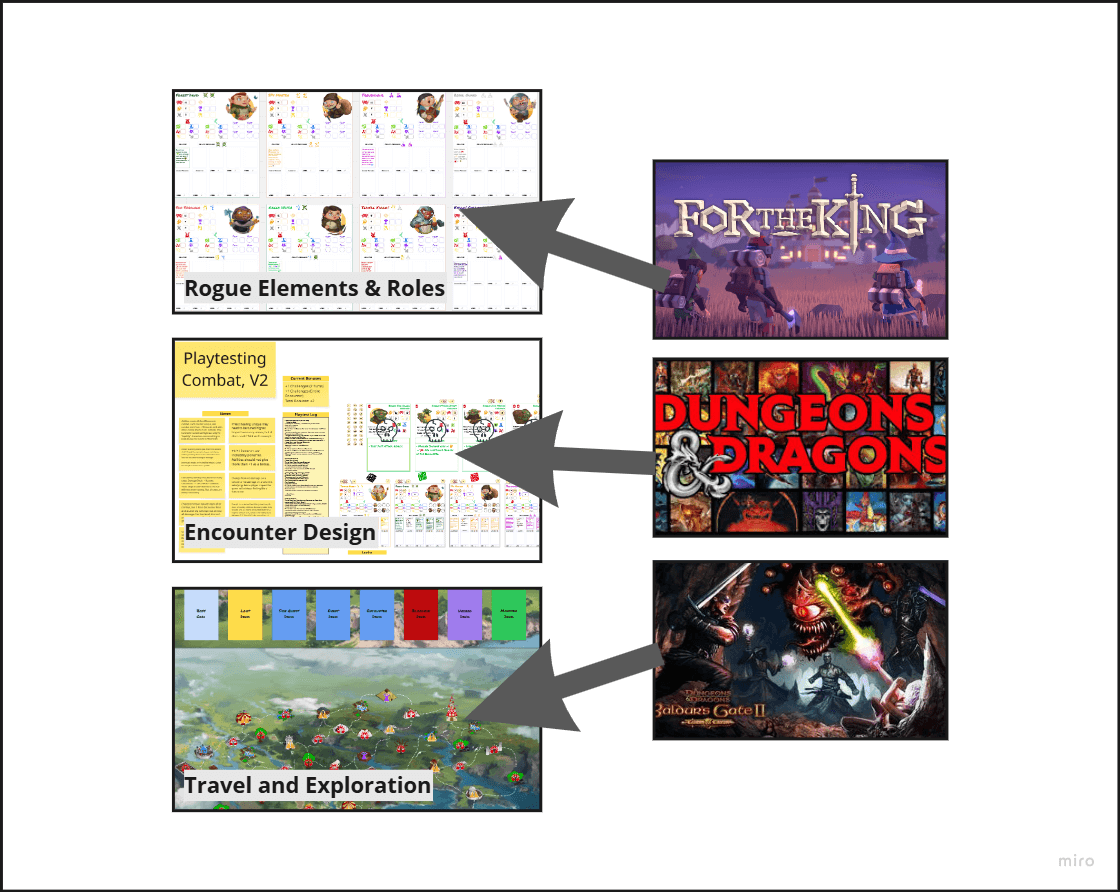
- Analyzing Games: For the King served as a point of reference for a fantasy and rogue elements, with classic archetypes and familiar themes incorporated from Magic: The Gathering and D&D.
- Fantasy Themes: Classic, and reliable, creating a traditional fantasy world with altered elements makes for easy resonance and allows players to explore familiar tropes with a new, interested spin.
Design Document - Rulebook
Prototyping
Paper Prototype
Highlight #1
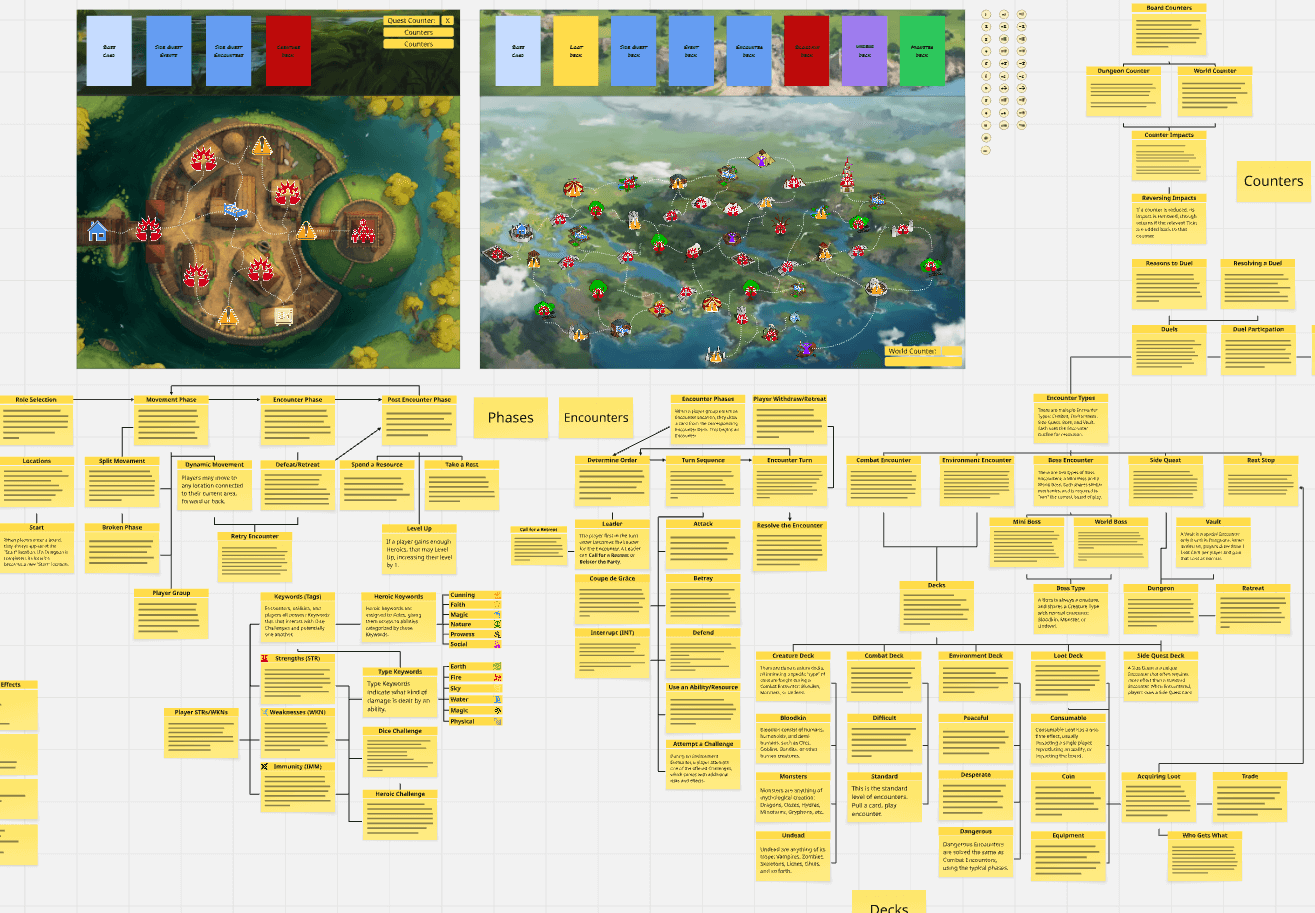
Intent: A robust, full outline of mechanics, their interplay and relations, creates an easy guide for designing and testing gameplay. This can identify problems and theory craft core design in addition to identifying bloat without depth.
Results:
- I was able to rapidly create a core game experience by identifying and iterating loops.
- Mechanics were always aware of one another during development, creating systems with consequence and cohesion.
Rapid Prototype
Highlight #2
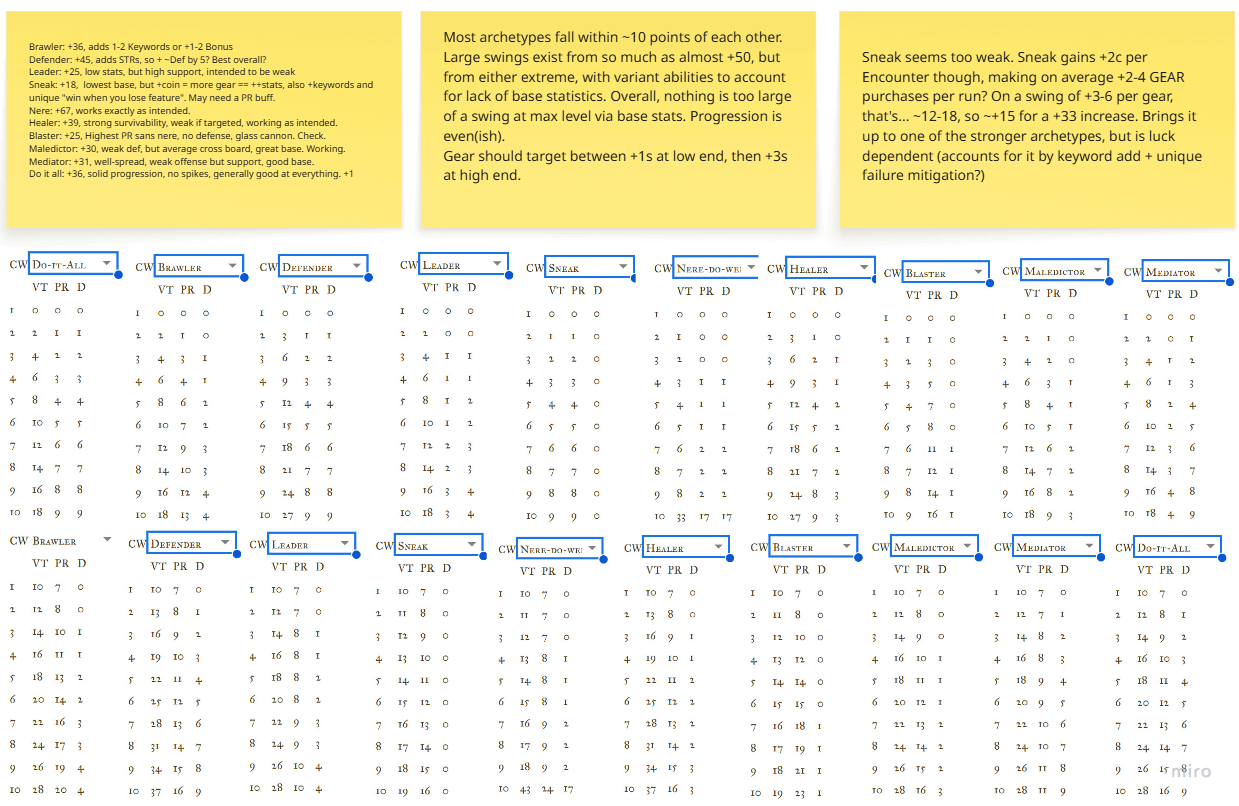
Intent: Create a view of progressive statistics between each Character Archetype to examine curves, balance, and level-by-level values to use for combat and encounter resolutions (Excel time!).
Results:
- Identified several optimum progression paths and brought them in line with the others.
- Values made opposition assets faster and less ambiguous to create.
- Smoothed out level progression and was able to augment ability acquisition and non-archetype related gains to incentivise non-min/maxed builds.
Rapid Prototype
Highlight #3
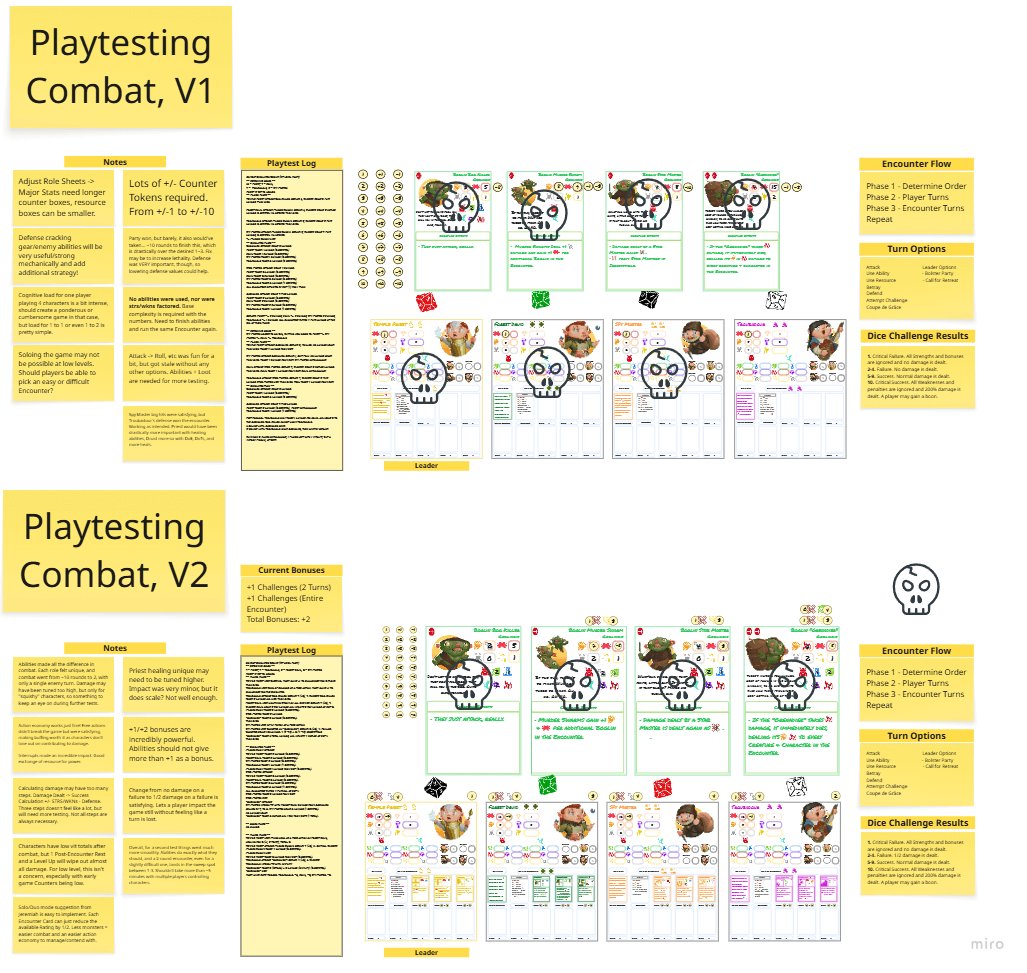
Intent: To rapidly solo test combat encounters to ensure gameplay is fluid, supporting elements are necessary, are not bloated nor do they add to much weight to player’s cognitive load.
Results:
- Identified that the initial execution was functional, but combat took too long and became exhausting after multiple encounters. The solution came from adding character abilities and equipment, which did extra work of adding satisfying progression elements outside of leveling. Ten rounds of back and forth was reduced to an average of two.
- Originally, enemies dealt damage to all players, which lead to too much tracking and was difficult to balance. This lead to implementing a random targeting mechanic (roll a d4, simple) for fair, engine-governed targets.
Implementation
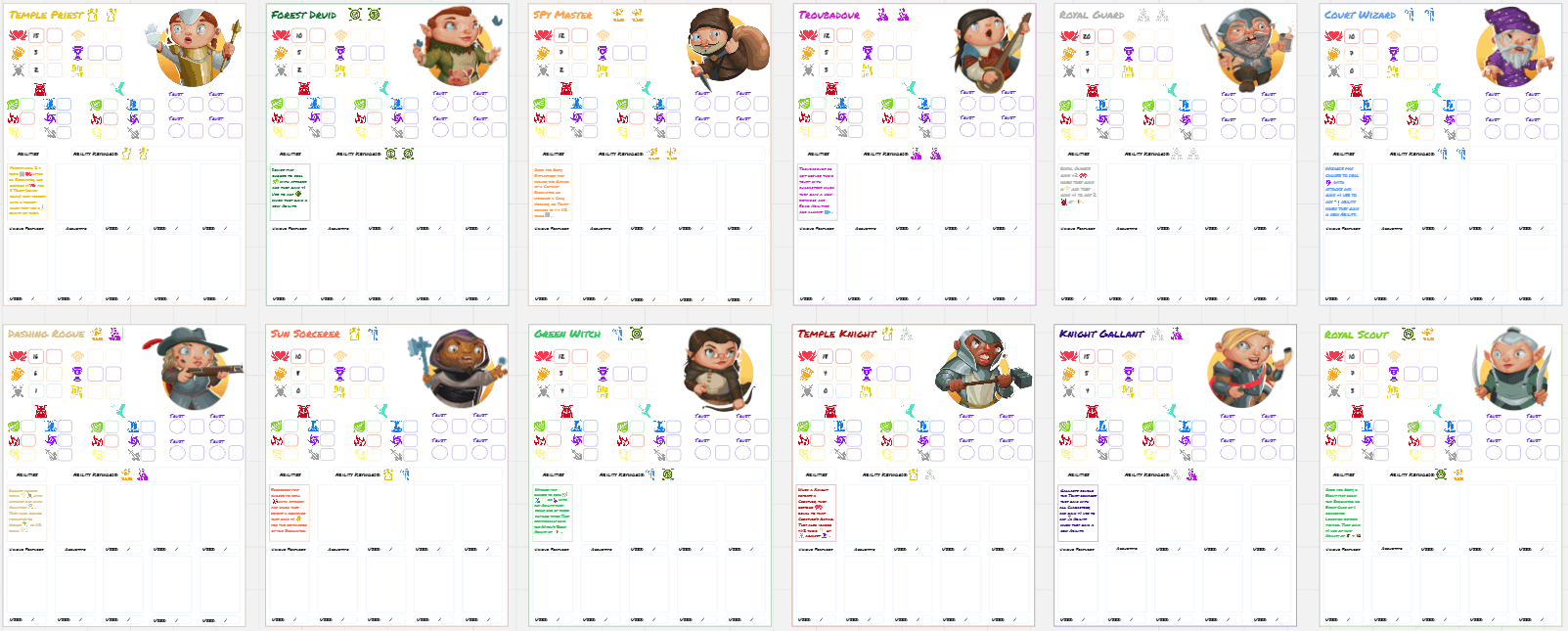
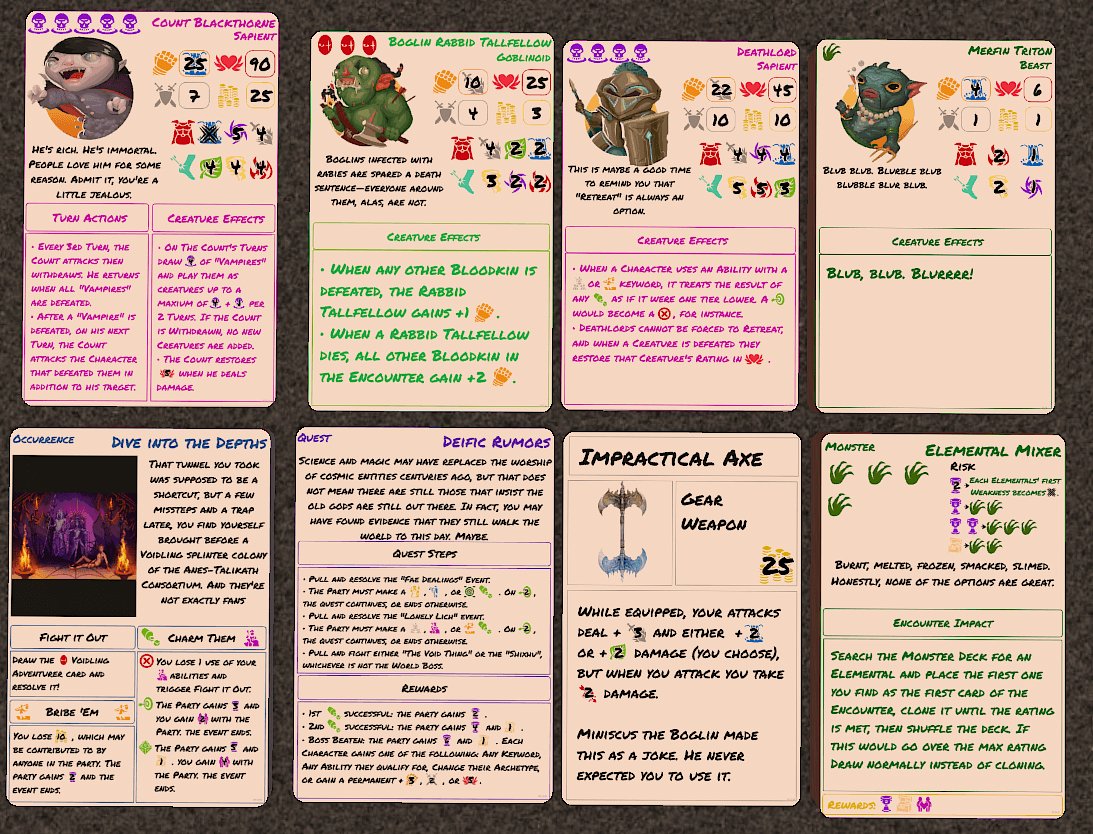
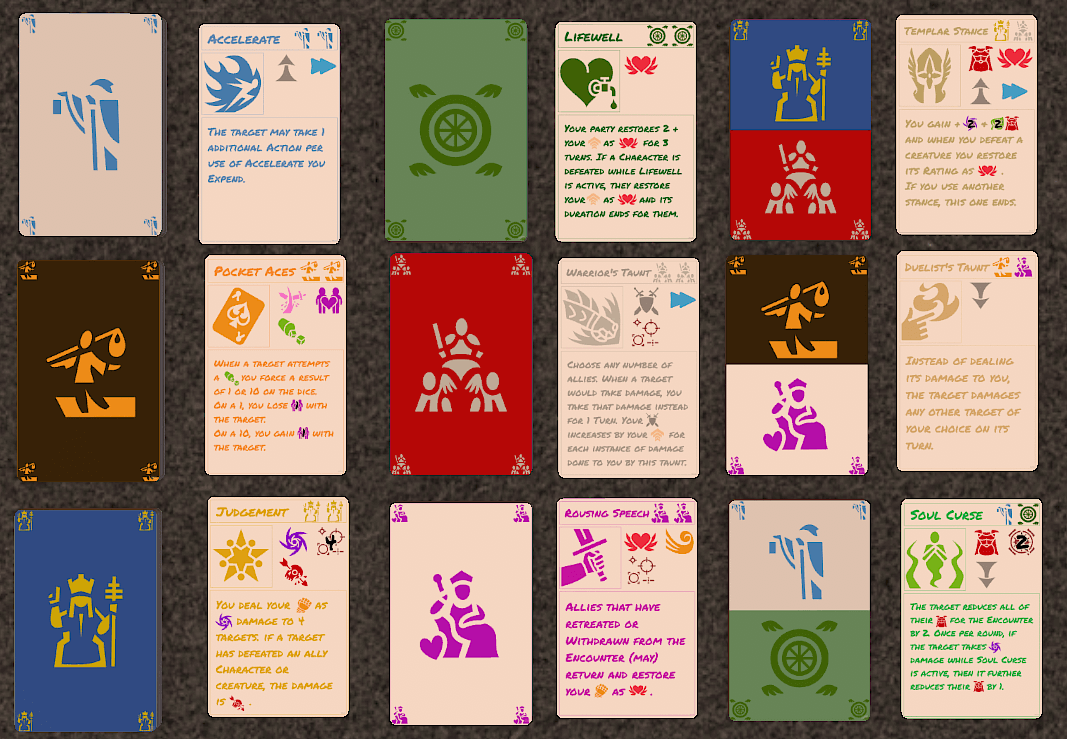
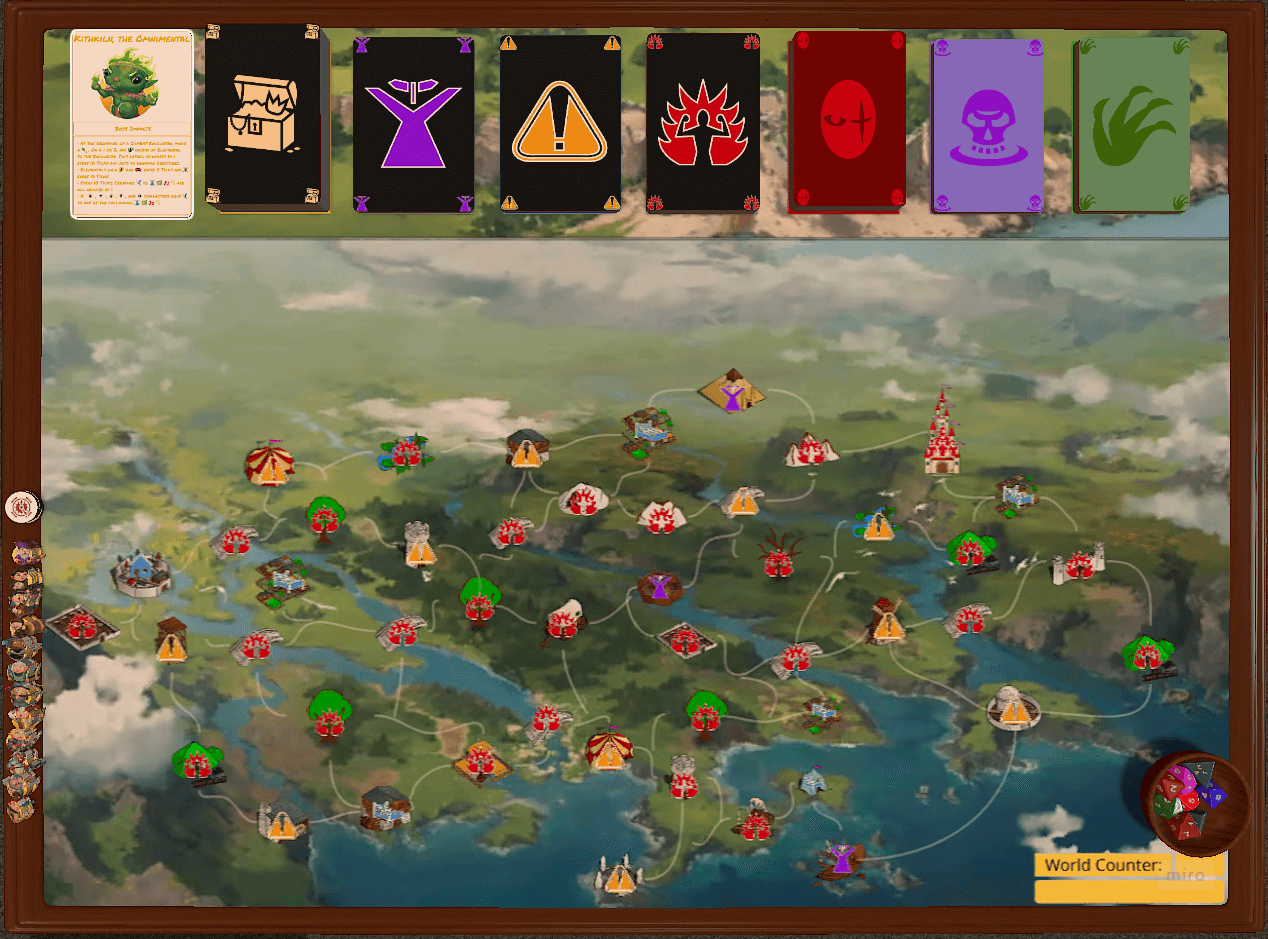
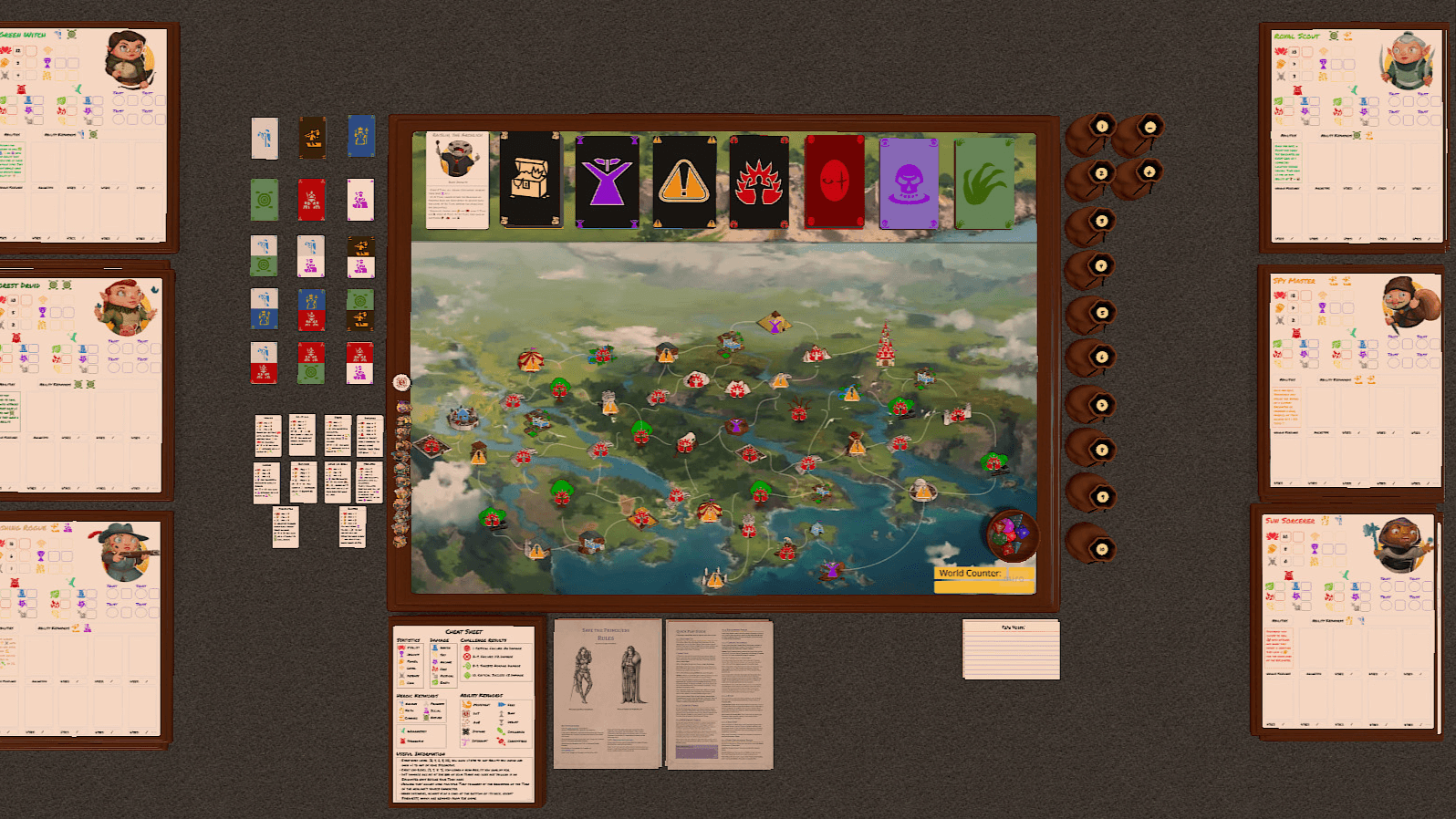
Results: After several playtests, Save the Prince/ess is a fully implemented board game, playable via Table Top Simulator with a minimal budget of less than $15.
Goal. Create my version of a rogue elements RPG with satisfying player choice, progression, and deep tactical gameloop that is not too complex for players to follow.
Execution:
- Dynamic Playthroughs. Every adventure is unique from another with a large amount of content and dynamic encounters that shift based on choice of bosses, time spent in game, roles, and loot and abilities acquired.
- Depth of Rules. Rules are complex for a board game, but after playtesting, players tend to grok the mechanics after a few game rounds, expediting play after only a single session.
- Adjustable Playtime. A full adventure can complete after 1 to 2 hours, or last as long as 8, depending on how players approach encounters and utilize tactical gameplay.
- Tuning, tuning, and more tuning. After each playtest, values were honed between abilities, loot, character statistics, and creatures until they were honed to a loose equlibrium.